



.webp)

In this article:
Berberine has exploded in popularity not just in clinics and research journals, but on social media—especially TikTok, where it’s often hyped as “nature’s Ozempic” for easy weight loss and blood sugar control. Influencers share before-and-after photos and “30 days on berberine” videos, helping turn this once-obscure plant compound into a viral wellness staple.
Here’s a video from popular TikToker, Kunal Sood, MD, known as “doctorsood” on TikTok, talking about berberine.
For people with Hashimoto’s disease or hypothyroidism, that hype can be especially tempting when the scale barely moves despite careful eating, exercise, and optimized thyroid function. Instead of a magic bullet, though, berberine is better thought of as one potential tool—backed by early but promising research on metabolism and blood sugar—within a broader thyroid and weight-management plan. Ahead, this article explores what the science actually shows, and whether this social media–famous supplement is safe and appropriate if you have a thyroid condition and struggle to reach or maintain a healthy weight.
Berberine is a plant compound known as an alkaloid extracted from herbs such as barberry, goldenseal, and Coptis (Huang Lian) and used in traditional Chinese and Ayurvedic medicine for centuries. More well-known examples of alkaloids include drugs like morphine, quinine, and poisons. Berberine is typically available as a liquid or capsule preparation.
Historically, berberine has been used for:
- High blood sugar and diabetes
- High cholesterol and fatty liver
- Obesity and metabolic syndrome
- Polycystic ovary syndrome (PCOS)
- Fertility challenges
- Skin issues and some infections
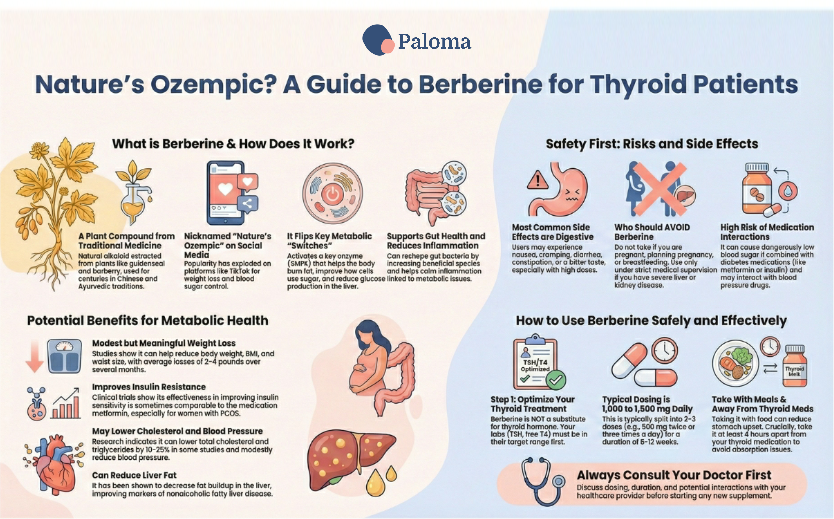
- Modern research suggests berberine works through several key mechanisms:
- It activates AMPK, a “metabolic switch” that helps the body burn fat and improve insulin sensitivity
- It reduces the liver’s production of glucose and improves how muscles use sugar
- It modulates gut bacteria and lowers inflammation
- It improves lipid metabolism and reduces fat buildup in the liver
These actions make berberine especially interesting for people dealing with both thyroid-related weight gain and metabolic issues like insulin resistance, high triglycerides, or non-alcoholic fatty liver disease.
Berberine has emerged as one of the most studied botanical compounds for metabolic health, with evidence that it can support blood sugar balance, insulin sensitivity, cholesterol levels, and even blood pressure in certain populations. While it is not a magic bullet or a replacement for lifestyle changes and medical care, research suggests that berberine may be a helpful add-on for people dealing with insulin resistance, type 2 diabetes, metabolic syndrome, or related cardiometabolic risks.
Berberine may improve insulin resistance
Insulin resistance is increasingly common worldwide and often goes hand in hand with weight gain, type 2 diabetes, high blood pressure, and abnormal cholesterol levels. In clinical trials, berberine has improved markers of insulin sensitivity and glucose control in people with type 2 diabetes, sometimes with effects comparable to those of standard medications such as metformin (Glucophage).
In women with polycystic ovary syndrome (PCOS), who are at higher risk for insulin resistance, several randomized trials and a 2018 meta-analysis found that berberine was roughly similar to metformin for improving insulin resistance and glucose and lipid parameters, and sometimes better when combined with other therapies. Because metformin can cause gastrointestinal side effects (such as diarrhea and nausea) and may reduce vitamin B12 levels over time, some patients and clinicians view berberine as a possible alternative or adjunct when metformin is not well tolerated. However, long-term safety data remain more limited for berberine.
Berberine may alter the gut microbiota
The gut microbiome plays a key role in metabolism, inflammation, and the development of conditions like obesity, insulin resistance, and fatty liver disease. Multiple animal and mechanistic studies suggest that berberine can reshape the gut microbiota, increasing certain beneficial bacteria (such as Akkermansia and Bifidobacterium) and reducing potentially harmful species linked to metabolic dysfunction.
By changing the composition and activity of gut microbes, berberine appears to:
- Strengthen the intestinal barrier and lower endotoxin (LPS)–driven inflammation.
- Influence gut-derived metabolites and bile acids that affect energy balance, glucose regulation, and lipid metabolism.
These microbiome effects are thought to be a critical mechanism behind berberine’s ability to improve blood sugar, cholesterol, and body weight in metabolic disease models.
Berberine may lower blood pressure
.webp)
High blood pressure commonly clusters with insulin resistance, type 2 diabetes, and weight gain, increasing the risk of heart attack, stroke, kidney disease, and vision loss. A meta-analysis of randomized trials indicates that berberine can modestly reduce blood pressure in people with metabolic disorders, alongside improvements in blood sugar and lipids, and may have a safety profile comparable to standard therapies when used for the short term.
Experimental studies in diabetic animal models suggest that berberine helps lower blood pressure, improve blood vessel function, and reduce vascular inflammation.
Over the past decade—and especially since 2022—several clinical trials, reviews, and meta-analyses have evaluated berberine’s impact on weight, waist size, and metabolic health.
Key findings from human studies include:
- A 2025 systematic review of clinical trials concluded that berberine significantly reduces body weight, body mass index (BMI), and waist circumference.pubmed.ncbi.nlm.nih
- A 2025 narrative review of preclinical and clinical data highlighted that doses around 1000–1500 mg per day for 12 weeks improved body weight, BMI, visceral fat, liver fat, and insulin sensitivity in people with obesity and metabolic syndrome.
- In a 90-day randomized, multi-center clinical trial, people receiving berberine plus lifestyle intervention lost more weight (about 5.2% of body weight) than the control group (about 3.0%). They reported greater subjective satisfaction with their weight loss.
- Earlier meta-analyses and clinical summaries report average weight loss of roughly 2–4 pounds over several months, with some individuals losing more—especially when berberine is combined with diet and exercise changes.
Taken together, these studies suggest that berberine can meaningfully support weight loss over 2 to 3 months, especially in people with obesity, insulin resistance, prediabetes, or fatty liver disease. However, the amount of weight loss is usually modest and depends on lifestyle changes in addition to the supplement.
Living with hypothyroidism or Hashimoto’s disease often means fighting an uphill battle with weight. When thyroid hormone is low, metabolism slows, your body burns fewer calories at rest, and it can be easier to gain weight and harder to lose it—even when you are doing “everything right.”
On top of a sluggish metabolism, many people with an underactive thyroid gland also struggle with:
- Fatigue, joint pain, and low mood can make regular exercise harder
- Fluid retention and constipation can show up in hypothyroid patients as bloating and weight gain
- Insulin resistance is also more common in people with hypothyroidism. It increases hunger, cravings, and fat storage
Because insulin resistance and hypothyroidism often cluster together, they can create a perfect storm for weight gain and weight-loss plateaus.
While berberine does not replace thyroid hormone, it may help address several common metabolic challenges in people with an underactive thyroid.medicalnewstoday+2
Improving insulin resistance and blood sugar
Insulin resistance is common in people with hypothyroidism and Hashimoto’s and is linked to central weight gain, sugar cravings, and increased risk of type 2 diabetes. Berberine has been extensively studied for its insulin-sensitizing effects, often compared with metformin.
Research shows that berberine can:
- Improve insulin sensitivity and markers of metabolic syndrome.
- Reduce HbA1c (a long-term marker of blood sugar control) in people with type 2 diabetes.
In women with PCOS—who often have both insulin resistance and a higher risk of thyroid issues—berberine has performed as well as or better than metformin for improving insulin, glucose, and body fat, with some people experiencing fewer digestive side effects.
Supporting gut health and inflammation
The gut microbiome plays a vital role in metabolism, weight, and immune balance, especially in autoimmune conditions like Hashimoto’s. Berberine appears to act as a “prebiotic-like” compound, reshaping the gut microbiota.
Studies suggest berberine may:
- Increase beneficial bacteria and reduce overgrowth of harmful species.
- Reduce gut-derived inflammation (metabolic endotoxemia) that contributes to insulin resistance and obesity.
- Improve gut barrier function and mucosal immunity.
Improving blood pressure, cholesterol, and liver fat
People with hypothyroidism are more likely to have high cholesterol, elevated blood pressure, and fatty liver disease—all of which make weight loss and long-term health more challenging.
Clinical research has shown that berberine can:
- Lower total cholesterol and triglycerides by around 10–25% in some studies.
- Modestly reduce blood pressure in people with metabolic syndrome or diabetes.
- Decrease liver fat and improve markers of non-alcoholic fatty liver disease.
Supporting these cardiometabolic risk factors can be particularly valuable for people with hypothyroidism, who already carry an increased risk of cardiovascular disease.
How To Maintain A Healthy Gut
Digestive issues like bloating, constipation, or gas can be resolved or improved with simple lifestyle changes

Before considering berberine, the most crucial step is optimizing your thyroid treatment. If thyroid hormone levels (especially TSH and free T4) are not in your target range, weight loss will be an uphill battle regardless of which supplements you take.
Work with your thyroid-savvy provider to:
- Confirm your hypothyroidism diagnosis (Hashimoto’s, primary hypothyroidism, post-surgical, etc.).
- Adjust your thyroid hormone medication dose until your thyroid lab results are optimal, and your symptoms are well controlled.
- Address iron, vitamin D, B12, and other nutrient deficiencies that can mimic or worsen fatigue and weight gain.
Once your thyroid is well managed, sustainable weight loss still depends on:
- A nutrient-dense diet of thyroid and gut-friendly foods that supports blood sugar balance and gut health
- Regular movement (including strength training) to maintain muscle mass and metabolism
- High-quality sleep, stress management, and consistent routines
Berberine, if appropriate, can be considered as an adjunct—a supporting tool layered on top of this foundation.
.webp)
Like all supplements, berberine has risks and is not right for everyone. Always talk with your healthcare provider—ideally one familiar with your thyroid history—before starting.
Common side effects
The most frequently reported side effects are digestive and tend to be dose-related, especially when starting too high or increasing too quickly. These can include:
- Nausea, stomach cramps, or abdominal discomfort
- Diarrhea or loose stools
- Constipation in some individuals
- A bitter taste in the mouth
In clinical trials using 1000–1500 mg daily for 8–12 weeks, these effects are typically mild to moderate and often improve when the dose is lowered or taken with food.frontiersin+2
Important precautions
You should avoid berberine or use it only under close medical supervision if:medicalnewstoday+2
- You are pregnant, planning pregnancy, or breastfeeding (berberine crosses the placenta and passes into breast milk in animal studies, and is not considered safe in these settings).
- You take diabetes or blood sugar medications, such as metformin, sulfonylureas, insulin, or glucagon-like peptide 1 receptor agonists (GLP-1s), because combining them with berberine can increase the risk of hypoglycemia.
- You are on blood pressure medications, as berberine may further lower blood pressure.
- You take multiple prescription medications that are metabolized by the liver; berberine can interact with certain drug-metabolizing enzymes and transporters.
- You have a history of low blood pressure, recurrent hypoglycemia, or severe liver or kidney disease.
Because supplements are not regulated like prescription drugs, quality varies widely. Choosing a reputable brand that uses third-party testing is essential to reduce the risk of contamination or inaccurate dosing.
There is no substantial evidence that berberine directly affects thyroid function in humans, but it may still interact indirectly with thyroid care.
Key practical points:
- Berberine may affect the absorption or metabolism of certain drugs, although data on thyroid medication are limited.
- Many clinicians recommend separating berberine and thyroid hormone doses by at least 4 hours, as with minerals and other interfering supplements, to minimize potential interactions at the gut level.
- If you start berberine, it is reasonable to recheck thyroid labs after 6 to 12 weeks to ensure your thyroid levels aren’t adversely affected.
Always tell your healthcare provider about any supplements you are taking, including berberine.
There is no single “official” dose of berberine for weight loss, but most clinical trials and expert sources use similar ranges.
Common dosing strategies include:
- 500 mg three times daily (1500 mg total) with meals
- 500 mg twice daily (1000 mg total), sometimes increased as tolerated
Studies suggest doses around 1000–1500 mg per day for 8 to 12 weeks may be effective for improving body weight, waist circumference, blood sugar, and lipids. However, starting lower—such as 250–500 mg once daily—and gradually increasing can help minimize digestive side effects.
Practical tips if your provider approves berberine:
- Take it with meals to reduce stomach upset.
- Space it at least 4 hours away from your thyroid medication.
- Monitor for symptoms of low blood sugar if you are on diabetes medications (shakiness, sweating, dizziness, confusion).
- Track your weight, energy, digestion, and thyroid-related symptoms over 8–12 weeks to see whether it is actually helping.
Berberine is usually studied for 2–3 months at a time; there is less long-term safety data beyond this, so many clinicians recommend taking breaks or periodically reassessing the need for continued use.
If you have hypothyroidism or Hashimoto’s thyroiditis and are thinking about berberine for weight loss, it is wise to bring it up with your thyroid care team.
Consider asking:
- Is berberine appropriate for me, given my thyroid labs, medications, and other health conditions?
- Are any of my current medications likely to interact with berberine?
- What dose and duration make sense for my situation?
- How should we monitor my thyroid labs and blood tests, blood sugar, and blood pressure while I am taking it?
Focusing on optimizing thyroid treatment and hormonal balance, optimizing gut health, and adding in GLP-1 medications when necessary – along with a sound plan for regular blood tests, nutrition, supplements, movement, sleep, and stress management – are the keys to successful weight loss, and are central to Paloma’s approach to supporting effective weight loss.
For some people, berberine can be a helpful tool —especially when insulin resistance, prediabetes, or fatty liver are part of the picture.
- Berberine is a popular metabolic supplement often marketed as “nature’s Ozempic,” especially on social media.
- Berberine is a plant alkaloid traditionally used in herbal medicine and now studied for blood sugar imbalances, insulin resistance, cholesterol, fatty liver, and blood pressure.
- Clinical trials and reviews show berberine can modestly reduce body weight, BMI, and waist circumference, particularly in people with obesity and metabolic issues.
- Hypothyroidism and Hashimoto’s thyroiditis make weight loss harder due to slower metabolism, fatigue, fluid retention, constipation, and more frequent insulin resistance.
- Berberine does not replace thyroid hormone but may help thyroid patients by improving insulin sensitivity, gut health, cholesterol, blood pressure, and liver fat.
- Common side effects are digestive and dose-related, including nausea, cramps, diarrhea, constipation, and a bitter taste.
- People who are pregnant or breastfeeding, on diabetes or blood pressure medications, or with severe liver or kidney disease should avoid or strictly medicalize berberine use.
- Typical studied dosing is 1000–1500 mg per day for 8–12 weeks, taken with meals and separated from thyroid medication, with close monitoring by a thyroid-savvy provider.
.webp)


