


.webp)
The standard instructions for taking levothyroxine – the synthetic drug used to treat hypothyroidism – is to take the medication first thing in the morning, on an empty stomach, and wait at least an hour before eating. This approach prevents food from getting in the way of absorbing your thyroid medication. Is there a way to take your medication sooner after eating without compromising your treatment? In this article, we take a look at the latest thinking.
In this article

Levothyroxine is a synthetic form of the thyroid hormone known as thyroxine, or T4, AND is the most commonly prescribed thyroid hormone replacement therapy. Levothyroxine is best known by brand names like Synthroid, Levoxyl, Unithroid, and Euthyrox.
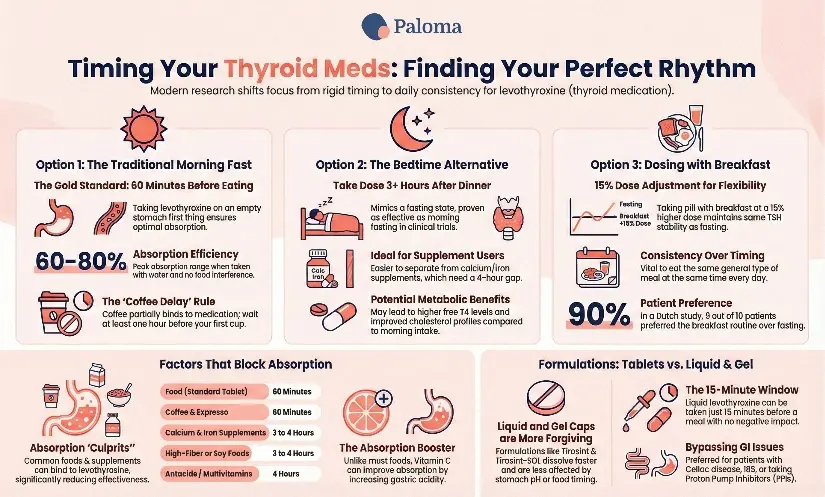
Most people with hypothyroidism take levothyroxine, primarily in tablet form. Because you absorb levothyroxine in your small intestine, dosing instructions recommend taking the tablets on an empty stomach. You should then wait an hour before eating to allow for the pills to dissolve and start being absorbed. (It’s also recommended to avoid coffee and supplements that contain calcium or iron, as they are factors that can impair thyroid medication absorption.)
Guidelines issued by the American Thyroid Association recommend taking levothyroxine on an empty stomach 60 minutes before breakfast for optimal and consistent absorption. Patients are also cautioned to avoid taking calcium supplements, iron supplements, and foods high in dietary fiber within several hours of eating.
Research shows that almost all hypothyroid patients take their medication in the morning. But because these guidelines are relatively stringent and specific, there’s a high level of non-adherence, and many patients do not take their levothyroxine as directed. That led the American Thyroid Association to recommend another option: taking levothyroxine at bedtime, more than 3 hours after eating dinner, (There’s another benefit to taking levothyroxine tablets at bedtime. It has also been shown to improve thyroid levels.)
Still, almost all patients continue to take their thyroid medication in the morning. As a result, there’s continued interest in finding ways to make that process as effective and convenient as possible, and to avoid problems with levothyroxine absorption.
Your Guide To Thyroid Medication
Optimizing your thyroid levels with thyroid hormone replacement medication is usually the first step in minimizing symptoms.
.webp)
Here’s good news for patients with thyroid disease who want to take their thyroid medication in the morning without waiting an hour to eat breakfast. A study out of Quebec and published in 2022 in the journal Thyroid has shown that levothyroxine absorption and effectiveness are significantly affected by the form of levothyroxine you’re taking. Specifically, new research shows that liquid forms of levothyroxine can be taken as little as 15 minutes before eating, with no negative impact on the absorption of levothyroxine.
Liquid forms of levothyroxine are not as commonly prescribed as tablets. In the U.S., levothyroxine oral solution is available under the brand name Tirosint-SOL. There’s also liquid levothyroxine in gel capsules, sold under the brand name Tirosint.
Liquid levothyroxine is absorbed more rapidly than in tablet form. Liquid levothyroxine is also less affected by other factors, including the stomach’s pH level, other medications, and conditions such as celiac disease, inflammatory bowel disease, chronic gastritis, H. pylori infection, ulcer, and other gastrointestinal illnesses.
Tirosint-SOL oral solution is dispensed in small plastic single-dose ampules. You take it by putting the solution in your mouth and swallowing. The gel capsules are swallowed normally. According to research, both Tirosint-SOL oral solution and Tirosint gel capsules “lower TSH levels more effectively in comparison to the tablets with the same dose, both in patients with and without malabsorption. The studies also showed that, when taking either form of Tirosint 15 minutes before eating, there was change in absorption and bioavailability as compared to taking the medication on an empty stomach.”
Liquid and gel capsule forms of levothyroxine may not be covered by your insurance plan. If insurance won’t cover these medications, consider asking your doctor to write a Dispense as Written (DAW) prescription. A DAW prescription prevents substitution, establishes your need for the medication to treat your underactive thyroid gland, and may encourage your insurer to cover liquid levothyroxine. The retail cost – and even insurance copays – can be pretty high for Tirosint and Tirosint-SOL. The manufacturer, however, has discount copay coupons and an affordable direct mail program that significantly reduce the cost. You can learn more about the “Tirosint Direct” cost savings program at their website.
If you’re a hypothyroid patient who has difficulty taking your medication and waiting an hour before breakfast, you may want to discuss the option of Tirosint or Tirosint-SOL with your doctor. This could help ensure that you’re absorbing your medication effectively and that there’s no impact on the bioavailability of levothyroxine. And that could translate to optimal wellness!
People with hypothyroidism who want to reduce or eliminate unresolved symptoms need to make optimizing thyroid function a priority. The Paloma home thyroid test kit makes it simple to test your thyroid hormone levels and evaluate your progress easily at home. You can also schedule a virtual visit with one of Paloma’s knowledgeable thyroid practitioners, who are fully committed to providing optimal thyroid treatment. Paloma’s doctors are knowledgeable about all facets of thyroid hormone replacement therapy, including liquid formulations, and will work diligently with you to ensure that you are getting the medication that is most effective for you.
Also, timing is just one issue that impacts the effectiveness of your levothyroxine therapy. At the Paloma blog, you’ll also find helpful articles that explain how and when to take your thyroid medication and several factors that affect thyroid medication.
{{dealinghypo="/subscription/snippets"}}
Frequently asked questions
How long should I wait to eat after taking thyroid medication?
Most experts recommend waiting 30–60 minutes before eating. This window allows the medication to be absorbed without interference from food or beverages like coffee.
Can I drink coffee after taking my thyroid pill?
It’s best to wait at least 60 minutes. Coffee can reduce medication absorption significantly, which may lower the effectiveness of your dose.
What happens if I eat too soon after taking my medication?
Eating too soon can reduce how much hormone your body absorbs. Over time, this may lead to unstable thyroid levels and persistent symptoms despite taking medication consistently.
Do certain foods interfere more than others?
Yes. Calcium-rich foods, iron supplements, soy, and high-fiber foods are known to impair absorption and should be spaced several hours away from your dose.
Can I take thyroid medication at night instead?
Yes. Taking it at bedtime can be effective if it’s done on an empty stomach, at least 3–4 hours after your last meal.
Is it okay to take supplements with my thyroid medication?
Most supplements—especially calcium and iron—should be taken at least 3–4 hours apart to avoid absorption problems.
What should I take my medication with?
Water is best. Other beverages, including coffee, milk, or juice, may interfere with absorption and reduce effectiveness.
Does timing really make a difference in how I feel?
Yes. Consistent timing helps maintain stable thyroid hormone levels, which can improve energy, metabolism, and symptom control over time.


%20(1).webp)


