


.webp)
In this article:
What do Lily Collins, the entire Kardashian clan, British model Cara Delevingne — and for us Boomers, actress/model Brooke Shields — all have in common? They all have thick, fabulous eyebrows! Unfortunately, many people with thyroid disorders can only dream of having star-quality brows, or keeping up with trends favoring full, feathery, laminated, and even bushy eyebrows.
While many signs and symptoms of hypothyroidism are invisible, hair loss is very visible. Coarse, dry, thinning hair and diffuse hair loss — from the head and body — are common symptoms of hypothyroidism.
Many people aren’t aware, however, that in addition to hair on the head, hypothyroidism can also increase the risk of hair loss from another visible area — the eyebrows. The medical term for eyebrow hair loss is “eyebrow hypotrichosis,” and it’s far more common in people with an underactive thyroid.
Loss of the outer third of the eyebrows — known as “lateral eyebrow loss,” the “Hertoghe sign,” or the “Queen Anne sign” — is considered a unique, characteristic, and almost definitive sign of hypothyroidism by many experts, and doctors have been noting it for well over a century. In some cases, it’s the first clinical sign of hypothyroidism.
But for the millions of people living with it day to day, the experience is a lot less clinical and a lot more personal. It’s the face you see in the mirror every morning. It’s filling in eyebrow pencil before you feel ready to face the world. It’s wondering whether the thinning will ever reverse — or whether those follicles are simply gone for good. The short answer: it depends. Even after thyroid hormone is optimized, brows may stay sparse or patchy for some people — but there is a meaningful range of options between “do nothing” and “permanent tattooed brows,” and this guide walks through all of them.
For an artistic depiction of apparent thyroid-related eyebrow loss, take a look at this famous 1434 painting by Dutch master Jan van Eyck. “The Arnolfini Portrait” depicts real-life Italian merchant Giovanni Arnolfini and his wife. Closeups of his wife reveal that she is missing the outer edges of her eyebrows, along with other signs that have led many thyroid experts to conclude that Arnolfini’s wife was in fact hypothyroid.

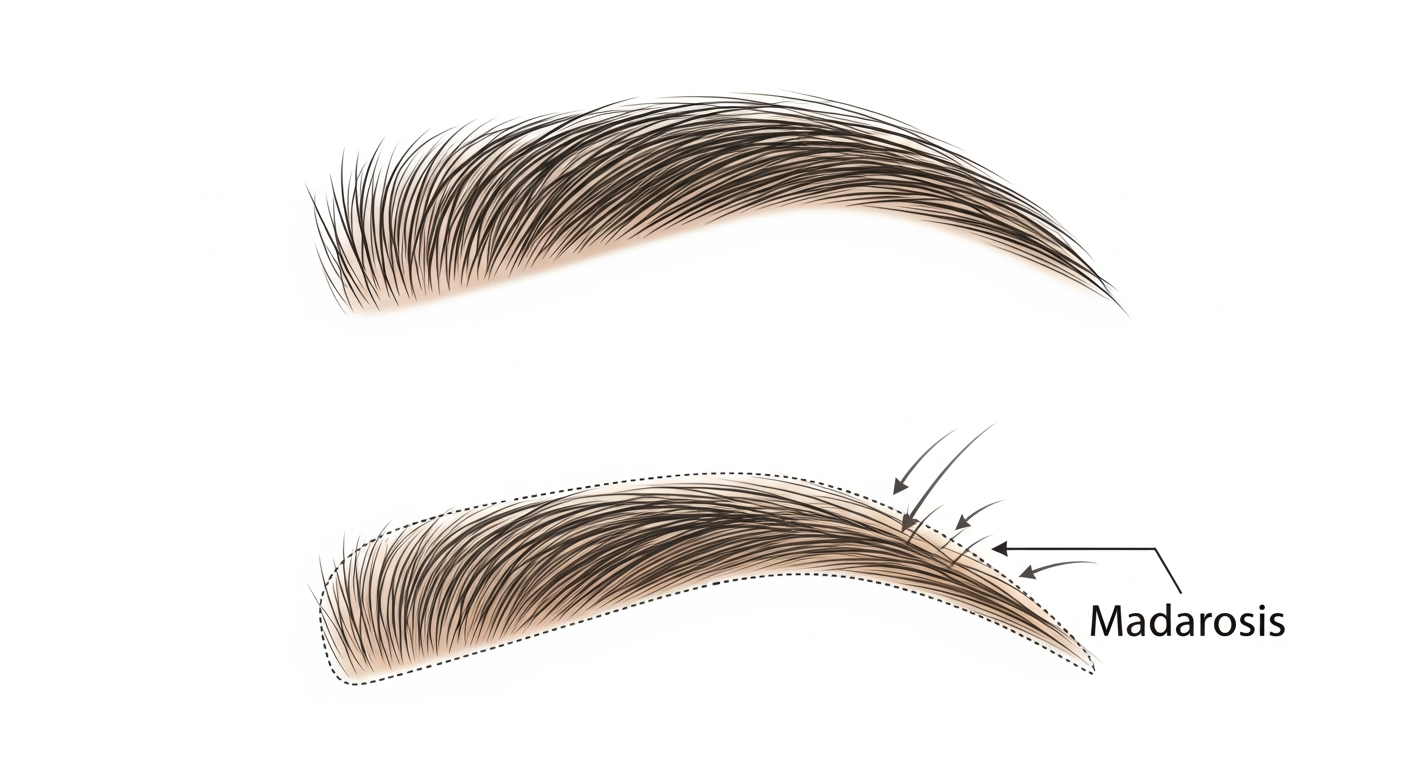
In medical terminology, the thinning or loss of eyebrow hair is referred to as madarosis or eyebrow hypotrichosis. While often dismissed as a cosmetic concern, this condition can serve as a critical diagnostic clue. Patients often notice a gradual thinning that begins at the periphery of the brow, leading to a diminished overall density. It is essential to distinguish this from simple mechanical thinning caused by cosmetic habits. When hypotrichosis is systemic rather than focal, it frequently correlates with hormonal fluctuations.
Hair follicles are among the most metabolically active tissues in the body, which makes them exquisitely sensitive to hormonal disruption. Thyroid hormones — primarily T3 and T4 — help set the pace at which cells function. When levels drop, the body shifts into a kind of energy-conservation mode, deprioritizing anything it considers non-essential. Hair maintenance falls into that category.
The outer third of the brow is particularly vulnerable, likely because the follicles in that region have a comparatively fragile blood supply and respond earlier to reduced nutrient delivery. That’s part of why lateral thinning has been used as a diagnostic clue for generations.
Several overlapping mechanisms are typically at work:
- Disrupted hair growth cycles. Thyroid hormones help regulate the anagen (growth) phase of the follicle cycle. When levels drop, follicles shift prematurely into the resting or shedding phase—a process called telogen effluvium—and may miniaturize over time.
- Autoimmune inflammation. Hashimoto's isn't only attacking the thyroid. Chronic systemic inflammation can generate cytokines that interfere with follicular activity, effectively locking follicles in a dormant state that fluctuates with antibody levels.
- Nutrient depletion. Low ferritin, vitamin D, zinc, and biotin commonly coexist with thyroid disease and compound the problem. Hair is metabolically hungry tissue—without the right raw materials, it simply can't build itself.
When brows have been thin or absent for a long time, some follicles may be permanently damaged or replaced by scar-like changes. That’s why optimizing thyroid levels is a necessary first step — but isn’t always sufficient on its own — for full regrowth. Hair regrowth tends to lag behind the rest of the body’s recovery; it’s often one of the last visible signs to return, which can make the wait feel discouraging even when treatment is working.
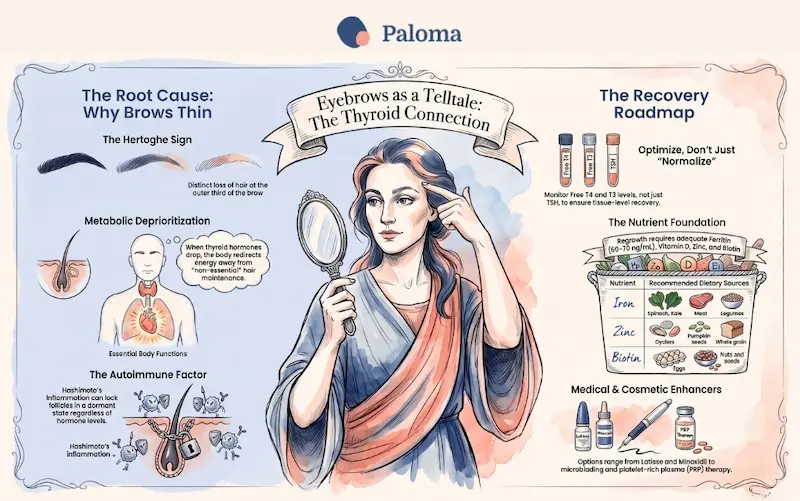
If you’re noticing that your eyebrows have become sparse and thin, you have a number of options to get back in the brow game — starting with the medical foundation, because cosmetic options work far better once the underlying driver is addressed.
1. Test for and treat undiagnosed hypothyroidism
When you notice loss of eyebrow hair or sparse patches, your first step is to get a complete panel of thyroid blood tests to determine if your thyroid is underactive. You can ask your doctor to run these tests, or grab a Paloma home thyroid blood test kit. If your results show hypothyroidism, your doctor will treat you with thyroid hormone replacement medication. In some cases, treatment alone will reverse the loss of eyebrow hair.
2. Optimize your hypothyroidism treatment — don’t just normalize it
When hypothyroidism treatment is less than optimal, you’ll often experience continuing symptoms, including thinning brows. Make sure your thyroid levels are not just “normal,” but optimal. That means working with your clinician to monitor symptom resolution alongside TSH — and specifically asking for Free T4 and Free T3, not just TSH alone.
TSH is a pituitary hormone, which means it tells you what your brain wants the thyroid to do; it doesn’t tell you what your tissues are actually receiving. It’s possible to have a “normal” TSH while still dealing with poor T4-to-T3 conversion or elevated reverse T3. If your brows are thinning and your labs look “fine,” it’s worth asking your doctor for a fuller panel.
And then: be patient. Because follicle cycles are long, hair regrowth typically takes 3 to 12 months to become visible. If you’ve just had a medication adjustment, don’t expect to see brow changes for weeks to months.
3. Address nutrient deficiencies
Low ferritin, vitamin D, zinc, and biotin are common companions to thyroid disease, and any of them can independently slow or stall hair regrowth. Many thyroid-focused clinicians aim for a ferritin level in the 50–70 ng/mL range for hair health specifically (targets vary by practitioner), and correcting vitamin D and zinc can meaningfully support the quality of regrowth and reduce ongoing shedding.
The key is to test, not guess — supplementing without a confirmed deficiency can sometimes cause more problems than it solves. Ask your doctor to check these levels alongside your thyroid panel.
Nutrient-rich dietary sources worth emphasizing while you work on this with your clinician:
- Iron: leafy greens, legumes, red meat
- Zinc: shellfish, pumpkin seeds, whole grains
- Biotin: eggs, nuts, seeds
- Vitamin D: fatty fish, fortified foods, and — critically — sunlight
4. Follow a healthy, anti-inflammatory diet
Healthy hair and a healthy thyroid both rely in part on your diet. Our article, How Hypothyroidism Affects Your Hair, Skin, And Nails, describes some of the foods and nutrients essential for hair health, including healthy fats, anti-inflammatory foods, and antioxidants.
What else can you do once you’re hypothyroid and your treatment is optimized? That’s the time to turn to specialized approaches to help enhance — or even regrow — your eyebrows. Cosmetic solutions in particular are underrated: they’re immediate, adjustable, and can genuinely restore confidence while you wait for medical treatment and longer-term regrowth strategies to do their work.
Brow enhancers (makeup)
The simplest way to get your brows in shape is using eyebrow-enhancing makeup products, including brow gels, thickeners, powders, and eyebrow pencils. Micro-tip pencils are especially good for drawing individual hair-like strokes in the outer third, where loss is most pronounced. Many terrific products — from inexpensive drugstore options to pricier makeup lines — can help. Brands frequently mentioned in beauty coverage and patient community forums include Anastasia Beverly Hills’ Brow Powder Duo, the NYX Micro Brow Pencil, Benefit’s tinted Gimme Brow gel, and e.l.f.’s Wow Brow fiber gel. (If you’re having a hard time choosing, Allure has a terrific “Best of Beauty” roundup of the best eyebrow makeup products on the market.)
A few shopping tips: look for smudge-resistant, long-wear formulas; choose a shade that matches your natural brow or hair color (slightly lighter often looks more natural than an exact match); and consider products labeled ophthalmologist-tested if you have dry eye or ocular sensitivity, which is common among Hashimoto’s patients. Brow stencils and angled brush-and-spoolie combo tools can also help if you’ve lost your natural brow shape and need guidance restoring symmetry.
Over-the-counter products to promote eyebrow growth
There are a number of products available to treat eyebrow hair loss and encourage growth, including Rapidbrow and RevitaBrow, as well as The Ordinary’s Multi-Peptide Lash & Brow Serum, which comes up often in regrowth communities. (For more options, Vogue has an excellent rundown of the best and most effective serums for eyebrows.) Traditional conditioning oils — castor, jojoba, or emu oil — are also widely used; evidence for them is largely anecdotal, but they’re low-risk for most people.
Minoxidil for brows
The over-the-counter hair loss drug minoxidil — also known by its brand name Rogaine — is FDA-approved for the scalp, not the eyebrows, but it’s widely used off-label by dermatologists for exactly that purpose. It’s thought to work by prolonging the anagen (growth) phase of the follicle, increasing blood flow and nutrient delivery to it, and potentially enlarging miniaturized hairs over time — which makes it most useful in patchy areas where follicles are still present but underperforming.
One study compared minoxidil for eyebrows against the pricier prescription option bimatoprost (Latisse); after 16 weeks of use, about half of participants had similar hair growth results with either one.
Because the skin around the eyes is thinner and more sensitive than the scalp, application has to be precise: a low concentration (often around 2%) is typically used, applied sparingly with a cotton swab or fine brush directly to the brow hair and skin beneath — never the eyelid margin — once or twice daily. Expect to wait several weeks to months for visible results, and ongoing use is usually needed to maintain any gains.
A caution: minoxidil can cause irritation or contact dermatitis, particularly in alcohol-based formulations (foam versions tend to be gentler), and unwanted hair can develop wherever the solution drips or transfers — cheeks and temples are common sites. Given the proximity to your eyes, it’s worth getting medical guidance before starting. And for Hashimoto’s patients specifically: minoxidil works by stimulating the follicles you still have — it doesn’t modulate the underlying autoimmune activity driving the disease.
Prescription Latisse (bimatoprost)
Speaking of Latisse, this prostaglandin-analog medication — best known for eyelash growth — has also been shown to help eyebrows grow longer, fuller, and darker, and dermatologists increasingly prescribe it off-label for that purpose. It’s applied once daily to the brow area with a sterile applicator, similar to the lash protocol. Results often begin to show at 1 to 2 months, with more noticeable changes by months 3 to 4, and continued use is typically needed to maintain them.
Latisse requires a prescription and can be pricey — the retail price can run around $150 a month and it’s not typically covered by insurance. (Pro tip: check GoodRx and SingleCare for coupons that can bring the monthly cost down to around $50.) If you’d like to see real “before and after” photos, check out this article from the medical journal Cureus.
Potential side effects include skin darkening or irritation at the application site; a rare iris-color-change risk is primarily documented with intraocular use but is worth raising with your doctor. Because Hashimoto’s patients can have a higher rate of dry eye and other ocular issues, it’s especially important to coordinate with both your prescribing clinician and an eye care provider before starting.
Microblading, nanoblading, and powder brows
Another popular option is semi-permanent eyebrow makeup, known as microblading. Similar to a tattoo, microblading uses a manual tool with tiny needles to deposit pigment in fine, hair-like strokes in the upper layers of the skin. Nanoblading is a similar technique that uses even finer needles for more delicate, realistic lines. Traditional eyebrow tattoos and powder, or ombré, brows go a step further, depositing pigment deeper into the skin for a longer-lasting, softly shaded effect rather than individual hair strokes — a good option when there’s very little brow hair left, or when a fully filled-in look is preferred.
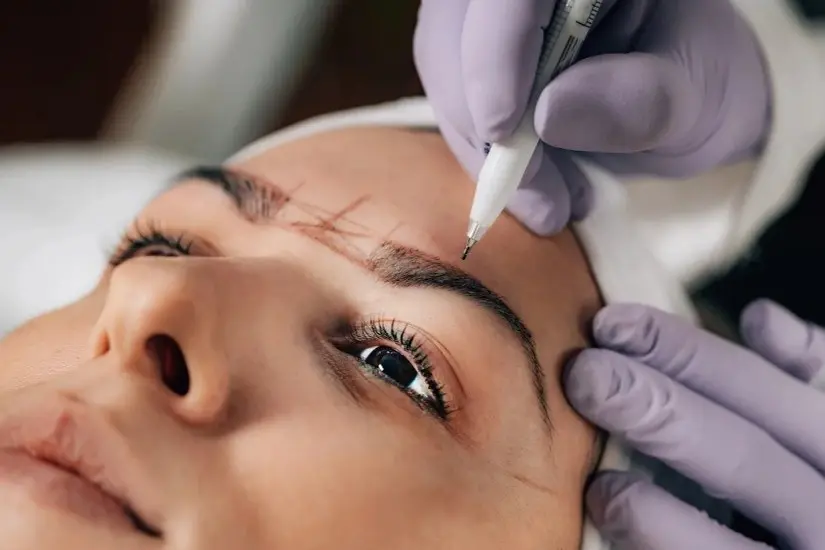
Microblading and nanoblading typically last one to three years before the pigment fades, letting you adjust shape and color as your preferences (or your face) change over time. Powder and tattooed brows tend to last longer but still fade gradually and may need touch-ups.
Before you book, run through this checklist:
- Confirm sterile technique, patch testing, and detailed aftercare instructions
- Disclose your autoimmune status, all medications (including anticoagulants), and your healing history
- Consider a patch test for pigment sensitivity, especially if you’ve reacted to other cosmetic products before
PRP (platelet-rich plasma) injections
PRP involves drawing a small amount of your own blood, concentrating the platelets, and injecting the resulting solution into the brow area. Platelets contain growth factors that may help stimulate dormant or underperforming follicles. Early dermatology evidence suggests PRP can improve density in thinning brows when follicles are still present but underactive; it’s typically done as a series of monthly sessions, with maintenance treatments as needed.
A few things to know: it’s minimally invasive, but it does involve needles and some discomfort. Results can be subtle and aren’t guaranteed — not everyone responds. Costs vary significantly and are generally not covered by insurance.
Eyebrow hair transplants
For brows where the follicles are no longer active at all, transplantation offers a long-lasting structural solution: individual follicles — often harvested from the scalp — are implanted into the brow area, typically in-office under local anesthesia.
A few nuances worth knowing: transplanted scalp hairs retain some of their original characteristics, which means they may grow longer than natural brow hair and need regular trimming. Outcomes depend heavily on the skill and aesthetic eye of the surgeon. And it’s best performed once your thyroid status is fully stable, to avoid continued shedding after the procedure. For many Hashimoto’s patients, transplantation is a considered “last resort” after topical, prescription, and cosmetic options have been explored — or simply the most permanent fix they’re looking for.
Some artists and clinics require a doctor’s note before working with people who have autoimmune conditions, which is worth asking about in advance. Autoimmune disease may also raise risks of pigment changes, slower healing, or local inflammation, though many patients still have excellent outcomes. It’s best to get your thyroid levels reasonably stable before scheduling, since weight or facial-volume fluctuations can throw off brow symmetry afterward. Discuss your autoimmune status, medications (including anticoagulants), and healing history with both your clinician and the artist. Confirm that sterile technique, patch testing, and aftercare are clearly explained.
Also, a reminder that any topical steroids used over a tattooed area should be applied cautiously and only under medical guidance.
Whole-body factors matter as much as what you put directly on your brows.
Be gentle with what you have
Over-plucking can worsen hypothyroid-related thinning, and repeated trauma to the follicle can even cause permanent loss. If you’re actively trying to regrow your brows, it’s worth pausing tweezing, waxing, or threading for several months to see what comes back on its own. Stick to gentle cleansers and avoid harsh acids or strong exfoliants right over the brow line.
Address stress and sleep
Stress-related telogen effluvium can compound thyroid-related shedding — the two often travel together. Regular movement, relaxation practices, and consistent sleep all support broader hair health, and while they’re easy to overlook, they’re genuinely meaningful, no-prescription-needed levers you can pull alongside everything else here.
There’s no single right path for thyroid-related brow thinning. The best approach usually layers medical optimization with gentle support, plus whichever cosmetic or procedural choices fit your situation and comfort level. And throughout it all, the emotional side matters too: brows frame the face and carry real expressive weight, so feeling self-conscious about losing them isn’t vanity — it’s a completely human response to a visible, daily symptom of an often-invisible disease. Reclaiming them, whether with a pencil, a prescription, or a procedure, is a legitimate goal worth pursuing with the same seriousness as any other part of your thyroid care.
If you’re wondering whether you’re hypothyroid, the Paloma Complete Thyroid Blood Test kit can get you started on the road to diagnosis, with easy and affordable testing to determine your thyroid hormone levels. Your at-home thyroid test kit comes with everything you need to collect and test your Thyroid Stimulating Hormone (TSH), Free T4, Free T3, and thyroid antibodies (TPO). You’ll also have the option to add on reverse T3 and vitamin D tests.
New and veteran hypothyroidism patients can also schedule a virtual visit with one of Paloma’s top thyroid providers to review lab results, build out the medical foundation described above, and coordinate next steps as you work through the cosmetic and procedural choices that fit your life — and, fingers crossed, get your eyebrows back too.
Can hypothyroidism really cause eyebrow hair loss?
Yes. One of the hallmark signs of hypothyroidism is thinning of the outer third of the eyebrows, a condition known as the Hertoghe sign. Low thyroid hormone levels disrupt the normal hair growth cycle, making eyebrow hairs more likely to shed.
Why do the outer edges of the eyebrows disappear first?
The hair follicles in the outer third of the eyebrow appear to be especially sensitive to reduced thyroid hormone activity and decreased nutrient delivery. As a result, this area often thins before other parts of the brow.
Will my eyebrows grow back after I start thyroid treatment?
Many people experience some degree of regrowth once their thyroid hormone levels are properly optimized. However, regrowth can take three to twelve months, and long-standing follicle damage may limit complete recovery.
Is a normal TSH enough to stop eyebrow thinning?
Not always. Some people continue to have symptoms despite a normal TSH, so healthcare providers may also evaluate Free T4, Free T3, and other factors to ensure thyroid treatment is fully optimized.
Can vitamin deficiencies contribute to eyebrow loss?
Yes. Low levels of iron (ferritin), vitamin D, zinc, and biotin are common in people with hypothyroidism and may slow healthy hair growth. Testing for deficiencies before taking supplements is the safest approach.
Do eyebrow growth serums actually work?
Some over-the-counter eyebrow serums may improve the appearance of fuller brows, especially when follicles are still active. Results vary from person to person, and they work best when the underlying thyroid condition is also being treated.
Can I use minoxidil or Latisse on my eyebrows?
Both medications have been used to encourage eyebrow growth, although minoxidil is used off-label for this purpose. Because these treatments are applied close to the eyes, it's important to discuss them with your healthcare provider before starting.
What cosmetic options are available if my eyebrows don't grow back?
Temporary makeup products, semi-permanent techniques such as microblading or powder brows, and eyebrow transplants can all improve the appearance of thinning brows. The best choice depends on your goals, budget, and the condition of your remaining hair follicles.
Does Hashimoto's disease affect eyebrow regrowth?
It can. The autoimmune inflammation associated with Hashimoto's may continue to interfere with hair follicles even after thyroid hormone levels improve, which is why managing the underlying disease is an important part of treatment.
How can Paloma Health help with thyroid-related eyebrow loss?
Paloma Health offers comprehensive at-home thyroid testing and virtual care with thyroid specialists who can evaluate your symptoms and optimize treatment. By identifying thyroid imbalances and related nutrient deficiencies, Paloma helps address the underlying causes of eyebrow thinning rather than simply covering up the symptom.
.webp)
Limited offer
20% off your first Thyroid Test
.webp)


