


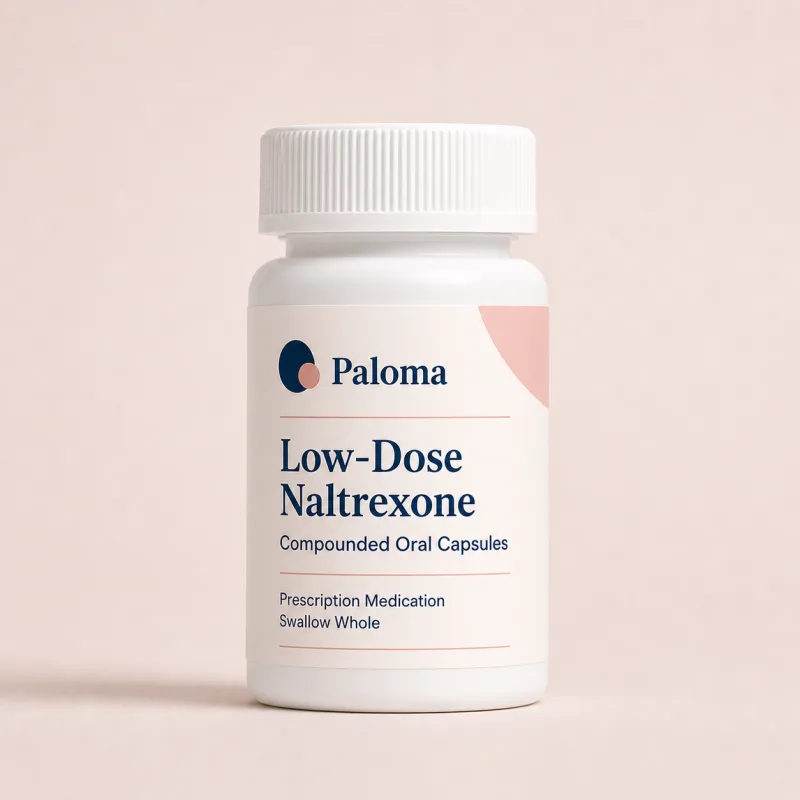
Low-Dose Naltrexone
A once-daily compounded medication used off-label to support immune balance and calm inflammation — for autoimmune conditions like Hashimoto's and lingering symptoms.
Low-dose naltrexone uses
- Used off-label to support immune balance and calm inflammation.
- A once-daily capsule, usually taken at bedtime.
- Considered for autoimmune conditions and lingering symptoms.
Good to know
- Formulation. Compounded low-dose naltrexone capsule; dose is titrated over the first month; prescription-only, prescribed off-label.
- Not with opioids. It can’t be combined with opioid medications — and tell us before any surgery, procedure, or dental work, as it usually needs pausing in advance.
- Not in pregnancy. Not prescribed during pregnancy or breastfeeding.
- Liver check. Your clinician checks liver health and asks for a liver blood test about once a year.
- Medication guide. Read the medication guide (PDF).
Personalized care with low-dose naltrexone
A different approach to lingering symptoms.
When your labs look fine but you still don't feel right
You're doing everything right and still living with fatigue, brain fog, or aches that don't add up. LDN is a clinician-guided option designed for exactly that gap.
- Support immune balance. Used off-label to support immune regulation and calm inflammation.
- For lingering symptoms. Considered when fatigue, brain fog, or aches persist despite standard treatment.
- Works with your thyroid care. A different lever than hormone replacement — often used alongside it.
- Once daily, clinician-guided. Taken at bedtime, with dosing tailored and monitored over time.
A different lever than more thyroid medication
If you're already optimized on thyroid medication but still don't feel right, more hormone isn't always the answer. LDN takes a different approach — supporting immune balance and inflammation rather than replacing hormone — which is why it's often used alongside your existing thyroid care, not instead of it.
What low-dose naltrexone does
At very low doses, naltrexone briefly blocks opioid receptors, which is thought to prompt your body to make more of its own endorphins and to modulate immune activity and inflammation.
- Very low dose. A small fraction of naltrexone’s standard dose, compounded to order.
- Once daily. Usually taken at bedtime.
- Off-label, emerging evidence. Not FDA-approved for these uses; the evidence is still developing.
- Not with opioids. Because it blocks opioid receptors, it can’t be combined with opioid medications — your clinician checks this first.

1
Order a test

2
Collect a sample

3
See a doctor
.svg)
4
Get treated
A gradual start, guided by your clinician
- First weeks. Vivid dreams or lighter sleep are common early on and usually settle; taking it earlier in the evening can help.
- Dose ramp. Your clinician starts low and steps up over the first month — often 1.5 mg, then 3 mg, then your maintenance dose.
- Over time. Benefits, if they come, build gradually, and your clinician adjusts based on how you respond.
Read your medication guide
Review the full medication guide for additional product and safety information.



Frequently asked questions

How does LDN work?
LDN is thought to temporarily block opioid receptors at low doses, which may influence endorphin activity and immune signaling. It is used off-label and research is still evolving.
How long does it take to see results?
Some patients notice changes within a few weeks, but many need 8–12 weeks of consistent use to evaluate response. Benefits can vary from person to person.
Is LDN FDA-approved for autoimmune disease or inflammation?
No. LDN is an off-label use of naltrexone. Your clinician will determine whether it is appropriate based on your health history and current medications.
When should I take LDN?
LDN is commonly taken once daily, often at bedtime. If it causes vivid dreams or sleep disruption, your clinician may recommend taking it earlier in the day.
What are the possible side effects?
Common effects are usually mild and often ease within the first weeks — vivid dreams or sleep changes (the most common), nausea, headache, dizziness, fatigue, or mild aches. Message your care team if they persist, or for changes in mood or new or worsening anxiety. Stop and seek care right away for signs of a liver problem (yellowing of the skin or eyes, dark urine, or severe stomach pain) or a severe allergic reaction (call 911); for new or worsening depression or thoughts of harming yourself, call or text 988, or call 911.
Who should not use it?
It can’t be combined with opioid medications, and it isn’t prescribed during pregnancy or breastfeeding. Tell your clinician about everything you take — especially opioids and medications for mood, anxiety, or sleep — and let us know before any surgery, procedure, or dental work, since it usually needs to be paused in advance so pain control and anesthesia work properly.
How does the process work?
Complete an online health questionnaire about your medical history, current medications, and treatment goals. A licensed clinician reviews your information and determines whether treatment is appropriate. If prescribed, you’ll receive treatment instructions and can complete checkout for medication delivery.
Do I need a video appointment?
Eligible patients can receive care through an online questionnaire and messaging, without scheduling a video call. Your clinician may recommend a live or in-person visit if additional evaluation is needed.
Which states are eligible for online questionnaire-based visits?
Our asynchronous visits are currently available in:
Arizona, California, Colorado, Florida, Illinois, Iowa, Maryland, Massachusetts, Michigan, Minnesota, Montana, Nebraska, Nevada, New Hampshire, New Jersey, New Mexico, New York, North Carolina, North Dakota, Ohio, Oklahoma, Oregon, Pennsylvania, South Carolina, South Dakota, Tennessee, Texas, Utah, Virginia, Washington, Wisconsin, and Wyoming.
Availability is confirmed during intake. Eligibility also depends on your medical history and the medication requested. If your state isn’t listed, asynchronous care is not currently available there.
Is a prescription guaranteed?
No. A prescription is issued only when a licensed clinician determines that treatment is appropriate for you. Completing the questionnaire does not guarantee a prescription.
What is a compounded medication?
A compounded medication is prepared by a pharmacy according to a prescription to meet an individual patient’s needs. Compounded medications are not FDA-approved, and the FDA does not review their safety, effectiveness, or quality before they are marketed.
How will I receive my medication?
After your prescription is approved and payment is completed, our licensed partner pharmacy processes your order and ships it to the address confirmed at checkout. You’ll receive tracking information by text or email once it ships. Preparation and delivery times can vary.
Can I use insurance for my medication?
Medication costs and prescription coordination fees are self-pay and are not billed to insurance. You’ll see a breakdown of these costs before confirming payment.
How do refills work?
Refills require a valid prescription and remaining authorized refills. Depending on your medication, you may need to complete a health check-in before a refill can proceed. When your prescription expires or you run out of authorized refills, a new clinical evaluation may be required.
Can I change or cancel automatic refills?
Yes. Use the “Manage refills” link in your refill notification or patient portal to manage upcoming refills, update shipping or payment details, or cancel automatic refills. Make changes before the scheduled charge date.
Who can I contact with questions?
Contact your Paloma care team with questions about your treatment or prescription. For help with orders, shipping, or refills, email contact@palomahealth.com.
Important safety information
LDN is compounded and used off-label. It is not FDA-approved for the treatment of autoimmune disease, thyroid disease, Hashimoto’s, inflammation, pain, or fatigue.
Do not use LDN if you are currently taking opioid medications, opioid-containing cough medicines, or opioid pain relievers, as naltrexone can block opioid effects and may cause withdrawal symptoms.
Tell your clinician if you have liver disease, kidney disease, are pregnant or breastfeeding, or are taking any new medications or supplements. Side effects may include vivid dreams, sleep changes, headache, nausea, mood changes, or fatigue.
Active ingredients
- Naltrexone
Inactive ingredients
- Microcrystalline cellulose
- Magnesium stearate
- Vivid dreams or sleep changes
- Headache
- Nausea or stomach upset
- Fatigue
- Mood changes or irritability
store at room temperature
Do not take LDN with opioid medications or opioid-containing products. Use with caution if you have liver disease, kidney disease, are pregnant or breastfeeding, or have a history of significant mood changes. Stop and contact your clinician if you experience concerning symptoms.
Read your medication guide
Review the full medication guide for additional product and safety information.
Compounded medications
More options for your care.
Explore additional options for hair, skin, sexual wellness, and more—alongside the thyroid, HRT, and weight loss care we provide through live visits.



Compounded drug products are not approved or evaluated for safety, effectiveness, or quality by the FDA. Rx Required.


