


.webp)
In this article
For many women, estrogen cream is a small tube with a big reputation. Used correctly, it can ease vaginal dryness, painful sex, irritation, and urinary symptoms of menopause. As women move through perimenopause and menopause, declining estrogen levels don’t just trigger hot flashes, sleep, and mood. Reduced estrogen can also slow collagen production, making skin thinner, drier, and less elastic.
Enter estrogen creams, including prescription estradiol and estriol formulations. Once used primarily to address menopausal symptoms, these topical hormones are now attracting attention for their potential to improve skin thickness, hydration, elasticity, and overall appearance. Advocates call them a powerful anti-aging tool, while critics urge caution about safety and long-term use. So what does the science actually say? Can applying estrogen to the skin really help turn back the clock—or is the promise greater than the proof?
Historically, hormone replacement therapy was often approached through systemic delivery, such as pills or patches. However, current medical practice has shifted toward localized and transdermal estrogen delivery. By applying medication directly to the affected tissue, patients can achieve therapeutic results without the systemic peaks and valleys associated with oral medications, and, bypassing liver metabolism. This shift prioritizes localized healing, effectively treating an issue at the source while maintaining a safer, lower-exposure profile.
Estrogen creams are topical hormone preparations designed to deliver estrogen directly to tissues that have become thin, dry, or irritated when estrogen levels fall, most often during perimenopause and menopause. The best-studied FDA-approved vaginal estrogen creams contain estradiol or conjugated estrogens, and they are prescribed for vulvar and vaginal atrophy, also called genitourinary syndrome of menopause, known as GSM. GSM can include dryness, burning, irritation, pain with sex, urinary urgency, urinary frequency, and a higher risk of recurrent bladder infections.
Estrogen creams are often preferred for their emollient properties, providing immediate soothing relief alongside the active hormone. When measuring a small amount, creams allow for more precise dosing. Also, while oral options must be processed by the liver, creams are absorbed directly.
Why is estrogen cream used?
The most common reason is simple: comfort. Estrogen creams can restore moisture, reduce burning and irritation, improve tissue elasticity, and make sex less painful by improving the quality of vaginal and vulvar tissue. These creams also lower vaginal pH and help support healthier vaginal flora, which may matter for urinary and recurrent infection symptoms as well.
Some women also seek out estriol or estradiol creams for broader menopausal concerns, including external dryness, skin fragility, or discomfort that goes beyond the vagina itself. In these situations, the treatment plan may be individualized to symptoms, anatomy, and personal preference. But it is important not to assume that all estrogen creams do the same thing or are absorbed in the same way.
Estradiol is the most potent form of human estrogen and is made by the ovaries before menopause. Estradiol cream is one of the standard treatments for moderate to severe vaginal symptoms related to estrogen loss. The goal is local relief, not whole-body hormone replacement, and when used as directed, low-dose vaginal estradiol generally keeps blood estrogen levels in the postmenopausal range. The cream is usually applied with an applicator inside the vagina, and some women also use a small amount at the vaginal opening or vulva when dryness and irritation are external as well.
Clinicians often prescribe estradiol cream when symptoms are not adequately relieved by lubricants or moisturizers alone, or when symptoms are affecting quality of life, intimacy, and sleep. Guidelines recommend local low-dose vaginal estrogen for GSM because it is effective and has a high margin of safety. The North American Menopause Society also lists low-dose vaginal estrogen among the most effective options for GSM.

Estriol is also a naturally occurring estrogen and is associated with post-menopause. It is weaker than estradiol and is often described as a “gentler” estrogen. In practice, estriol cream is most often discussed in two settings: vaginal or vulvar symptom relief during menopause, and compounded topical skin products marketed for dryness, collagen support, and fine lines.
Because estriol has a lower affinity for receptors, it is often favored when you want ongoing support but wish to minimize potential side effects. Think of estriol as the foundational component of a long-term care strategy, offering steady, reliable support for the delicate tissues of the pelvic floor and skin.
Managing genitourinary syndrome of menopause (GSM)
GSM encompasses a wide range of symptoms, including dryness, burning, and irritation. Effective treatment with estrogen creams focuses on restoring the natural environment of the vaginal canal, essentially resetting the tissue to a healthier, more resilient state.
Reversing vulvovaginal atrophy (VVA) and pelvic floor health
VVA can lead to thinning tissues and increased fragility. Topical estrogen cream acts as a restorative agent, thickening the outer layer of the skin. This is not merely cosmetic; it is a structural necessity for pelvic floor health. Proper estrogen levels ensure that the tissues remain elastic, preventing painful micro-tears that can occur during daily activity or intimacy.
Urinary health: Reducing the frequency of urinary tract infections (UTIs)
The role of estrogen in urinary health is profound. Vaginal atrophy often shifts the local microbiome, making the bladder susceptible to recurrent infections. By restoring the estrogen-dependent tissue, the body can better maintain a healthy pH and bacterial balance, effectively reducing the frequency of UTIs.
Research suggests that women can lose as much as 30% of their skin’s collagen during the first five years after menopause.
Estrogen creams have moved into the beauty and skin care space. Collagen production decreases significantly due to the drop in estrogen levels. For some women, especially in midlife, estradiol or estriol creams are being used to target skin dryness, thinning, fine lines, and elasticity.
The idea makes sense: estrogen helps your skin produce collagen, retain moisture, and maintain elasticity, so when estrogen levels fall during perimenopause and menopause, skin can look drier, thinner, and less firm. In small studies, topical estrogen has been linked to improved skin thickness, hydration, and wrinkle depth, including comparisons of estradiol and estriol creams applied to the face. Dermatology research suggests the potential benefits are real, but the evidence is still somewhat limited.
Branded or FDA-approved estrogen creams have standardized ingredients, labeled doses, and more predictable absorption. Common brand names of estrogen creams include Estrace (estradiol vaginal cream) and Premarin Vaginal Cream (conjugated estrogens). Compounded creams are mixed by a compounding pharmacy. They can be useful when you need a dose or formulation that is not commercially available, or when you have an allergy to a particular filler or ingredient.
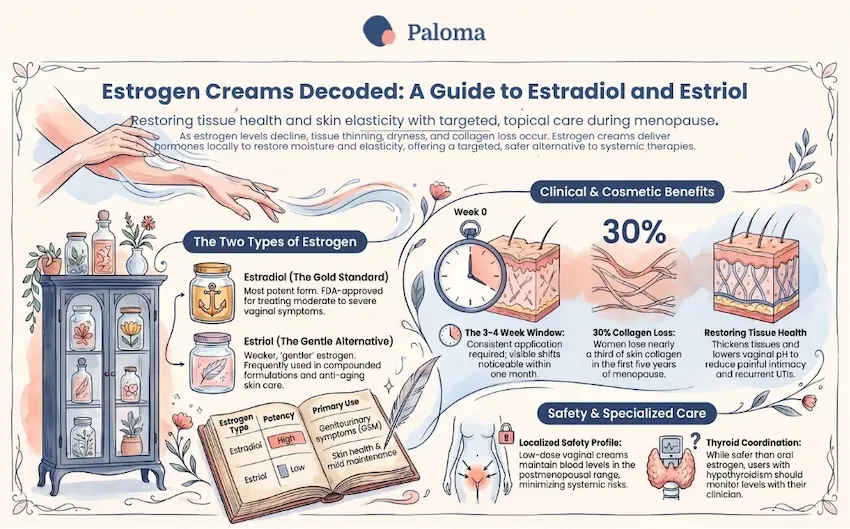
Low-dose vaginal estrogen is generally considered safe, and studies have not shown increased risk of breast cancer, uterine cancer, or blood clots in women using vaginal estrogen. Even so, every estrogen product carries warnings because there are specific cases where estrogen cream may not be advisable, such as in patients with certain types of hormone-sensitive cancers. That is why history still matters: women with unexplained vaginal bleeding, a history of estrogen-sensitive cancer, active blood clots, stroke, or significant liver disease need individualized medical review before starting therapy. Always be transparent about your medical history. Your physician will perform a comprehensive review to determine if topical estrogen is safe for your specific profile, ensuring you are not putting your health at risk.
Side effects are generally rare – and mild -- with topical delivery. When they do occur, they can include breast tenderness, headache, nausea, spotting, or local irritation, depending on the product and dose. These are often signs that the dose might be too high or the product formulation is not ideal. A simple adjustment usually resolves these concerns quickly.
Dermatology experts caution that, in some women, estrogen-containing facial creams may irritate the skin, cause redness or discoloration, and aggravate conditions such as rosacea or eczema.
Many midlife women are on thyroid hormone replacement for hypothyroidism. It’s important to know that estrogen can raise thyroxine-binding globulin (TBG), which can alter the amount of circulating thyroid hormone available and may increase dosage requirements when estrogen is given systemically. That interaction is most relevant with oral estrogen, but any hormone therapy discussion in a woman with hypothyroidism should be coordinated with thyroid follow-up.
Low-dose vaginal estrogen cream is different from systemic estrogen because it is intended to act locally, and standard references note that blood estrogen levels generally remain in the postmenopausal range when the medication is used as directed. That means vaginal estrogen cream is much less likely than oral estrogen to affect thyroid hormone dosing. However, clinicians still recommend monitoring thyroid symptoms and test levels if estrogen therapy is started or changed.
Most low-dose vaginal estrogen regimens begin with daily use for a short period, then taper to maintenance dosing a few times per week. However, exact directions vary by product. Estradiol vaginal cream is commonly used for moderate to severe symptoms of vulvar and vaginal atrophy. Maintenance matters because symptoms often return if treatment stops too soon.
Consumers should follow the prescribed schedule carefully and use the provided applicator or dosing instructions. If you’re also using systemic hormone therapy, your clinician should adjust the plan so you are not overtreating or duplicating estrogen exposure.
When can you expect to see results?
Biological change takes time. You will not see results right away with estrogen cream. Most women notice a shift within three to four weeks of consistent application. Intermittent use leads to intermittent results. For the best results, consistent application is necessary.
When estrogen cream is the right fit, the results can be meaningful. You may notice less dryness, less irritation, easier intimacy, and fewer urinary symptoms – or an improvement in facial skin elasticity and fine lines – after a few weeks of consistent use. Because it works locally, it can be a practical option for women who do not want — or cannot use — systemic hormone therapy.
That said, estrogen cream is not a quick fix, and it won’t address every cause of discomfort. If pain, dryness, or irritation persists, it may be a sign of something else, such as pelvic floor issues, infection, skin conditions, or another hormone imbalance. That’s where Paloma Health can make a difference, providing an expert support team for your thyroid, perimenopause, and menopause care – all in one place.
Estradiol cream is the best-studied option for menopausal vaginal and vulvar symptoms, while estriol cream is more often found in compounded formulas and skin-focused products. Both can play a role in the right setting. For women with hypothyroidism, estrogen cream is still generally an option, and Paloma Health can help make sure your thyroid care and menopause care stay in sync.
What is estrogen cream used for?
Estrogen cream is most commonly used to treat vaginal dryness, irritation, burning, painful intercourse, and urinary symptoms associated with menopause. It helps restore moisture and elasticity to tissues affected by declining estrogen levels. Estrogen creams are also increasingly used to help restore elasticity and improve collagen levels in skin.
What’s the difference between estradiol and estriol cream?
Estradiol is the strongest and most extensively studied form of estrogen used in prescription creams for menopausal symptoms. Estriol is a weaker estrogen, often described as gentler, and is commonly found in compounded formulations and some skin-focused products.
How quickly does estrogen cream work?
Most women notice improvement within 3 to 4 weeks of consistent use. Full benefits may continue to develop over several months as tissues gradually regain thickness and hydration.
Can estrogen cream help with urinary tract infections?
Yes. By restoring healthy vaginal tissue, lowering vaginal pH, and supporting beneficial bacteria, estrogen cream may help reduce the risk of recurrent urinary tract infections in postmenopausal women.
Is estrogen cream safe?
Low-dose vaginal estrogen is generally considered very safe for most women and has not been linked to increased risks of breast cancer, uterine cancer, or blood clots in major studies. However, women with certain medical conditions should discuss their individual risks with a healthcare provider.
Can estrogen cream improve aging skin?
Some studies suggest that topical estrogen may improve skin thickness, hydration, elasticity, and collagen production. While the results are encouraging, researchers say larger studies are needed to confirm its long-term effectiveness and safety for cosmetic use.
Can women with hypothyroidism use estrogen cream?
In most cases, yes. Because low-dose estrogen cream acts primarily at the local tissue level, it is much less likely than oral estrogen to affect thyroid hormone requirements, though monitoring is still recommended.
Are compounded estrogen creams better than prescription brands?
FDA-approved products offer standardized doses and predictable absorption, while compounded creams are useful when a customized formulation is needed. The best choice depends on a woman’s symptoms, medical history, and treatment goals.

.jpg)
.webp)


%20(1).webp)


