



.webp)
In this article
You’ve probably done the math on your thyroid medication. Maybe you’ve even grimaced at a specialist co-pay or stared down an exorbitant lab bill. But if you’ve never sat down and added up the total cost of living with hypothyroidism — not just the prescriptions, but the missed work, the supplements, the second opinions, the dietary overhauls, the years of wrong diagnoses — the number would likely stop you cold!
Hypothyroidism doesn’t just cost you energy. It costs you money. Quietly, persistently, and across more categories than any single doctor’s visit ever illuminates.
This isn’t a reason to despair. It’s a reason to get strategic. Because once you see the full picture of what hypothyroidism is actually costing you, you can make smarter decisions about how you manage, advocate, and spend — and stop leaving real money on the table.
Who is affected?
The American Thyroid Association estimates that at least 20 million Americans have some form of thyroid disease, and that up to 60 percent of them are unaware of their condition. Women bear the heaviest burden: you are five to eight times more likely than a man to have a thyroid problem, and one in eight women will develop a thyroid disorder during her lifetime.
That means tens of millions of people — the majority of them women — are navigating a chronic condition that affects virtually every system in the body: metabolism, cardiovascular health, mood, cognition, fertility, and more. And we’re doing it inside a healthcare system that often under-tests, under-diagnoses, and under-treats the condition.
The financial consequences of that gap are staggering.
The direct costs: What you’re already paying
There are some obvious direct costs of your thyroid care that you’ve been paying along the way.
Medication

Thyroid hormone replacement medication is the most obvious cost. Research published in the Journal of Medical Economics found that the direct medical costs attributable to hypothyroidism range from $460 to $2,555 per patient per year, depending on which medication you’re prescribed and your health insurance coverage. Levothyroxine — the most commonly prescribed thyroid medication and the #1 most filled prescription in the United States in 2023 — sits at the lower end of that range. But patients who require natural desiccated thyroid (NDT), combination T4/T3 therapy, or compounded formulations pay significantly more, particularly given inconsistent insurance coverage for these alternatives.
Specialist visits
Your primary care physician’s familiarity with thyroid disease is often limited. Studies show that general practitioners receive less than a day of thyroid-focused training during medical school. That pushes many hypothyroid patients toward endocrinologists, who command higher co-pays and longer wait times. If your symptoms persist despite treatment — which they do for a meaningful percentage of patients — you may be adding functional medicine doctors, integrative physicians, or naturopaths to your care team – usually entirely out of pocket.
Lab testing
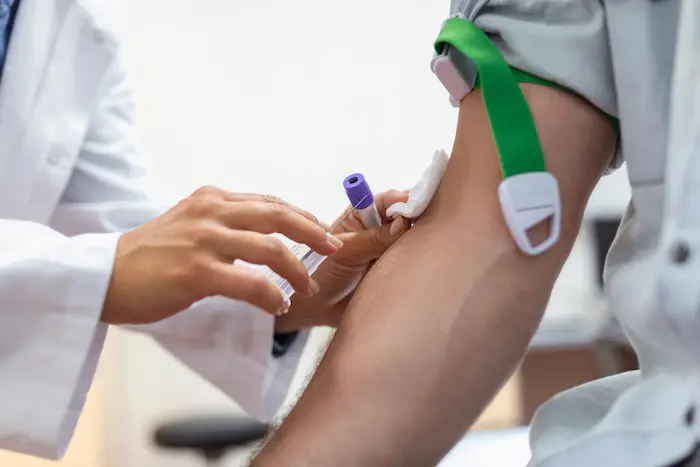
Here’s where the costs become genuinely opaque. Standard care often means a TSH-only test, ordered once or twice a year. But many thyroid patients and informed physicians know that a complete picture requires three more tests: Free T3, Free T4, and Thyroid Peroxidase (TPO) antibodies. That full thyroid panel, if your insurance decides it’s not “medically necessary,” can run $200–$500 per draw when done through a hospital or commercial lab — and it may need to happen multiple times per year while your dosage is being optimized.
Downstream conditions
This is the cost that seldom gets attributed to hypothyroidism, even though the research is clear. Untreated or poorly managed hypothyroidism significantly raises your risk of high cholesterol, depression, cardiovascular disease, and weight gain. Cholesterol-lowering medications alone can cost up to $2,177 extra per year. Antidepressants, cardiovascular workups, and weight management programs — the downstream spending compounds across years.
One comprehensive analysis estimated the total economic burden of hypothyroidism in the United States at between $384 million and $2.1 billion annually, depending on how broadly the downstream costs are accounted for. That’s not an abstract number. It’s built, in part, from your pharmacy receipts.
Hidden costs: What you're not adding up
The diagnosis delay tax
Because hypothyroidism develops slowly and mimics so many other conditions — depression, burnout, perimenopause, normal aging — many patients wait years before receiving a correct diagnosis. During that time, you can accumulate costs that are never attributed to your thyroid: psychiatric evaluations, antidepressants prescribed for what is actually thyroid-driven mood dysregulation, sleep studies, weight-loss programs, repeated blood panels chasing other explanations. These costs are real, they’re documented in patients’ financial histories, and they functionally end up as a hefty tax on your delayed diagnosis.
The supplement spending spiral
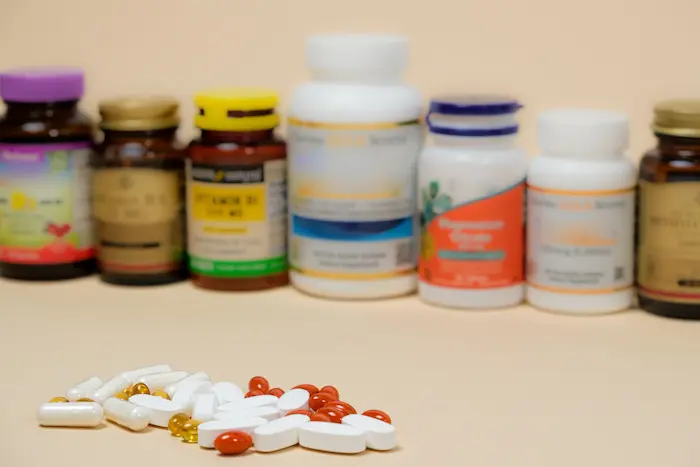
Connect with any hypothyroid patient community, and you’ll find a shared, somewhat rueful conversation about supplement spending. Selenium, magnesium, vitamin D, zinc, iron, B12, iodine — the list of nutrients that influence thyroid function or are commonly depleted in hypothyroid patients is long. Without guidance, it’s easy to spend $100 to $200 per month on supplements of varying quality and clinical relevance. Some of that spending is genuinely beneficial. Much of it is not.
The food budget creep
An anti-inflammatory, gluten-mindful, selenium-rich, iodine-adequate diet is not cheap. The nickname “Whole Paycheck” is spot on. A Whole Foods run for organic produce, wild-caught fish, high-quality proteins, and unprocessed foods adds meaningfully to monthly grocery bills. One 2020 analysis found that anti-inflammatory eating patterns cost approximately $1.50 more per day than a standard diet, which adds up to over $500 per year before a single supplement is purchased.
The career cost: The number nobody talks about
The effect on your career may represent the largest cumulative financial impact, and it is almost entirely invisible in conventional discussions of hypothyroidism costs.
Research consistently shows that chronic illness drives substantial productivity loss through both absenteeism (days missed) and presenteeism (days worked at reduced capacity). A landmark study published in the *Journal of Occupational and Environmental Medicine* found that presenteeism — showing up to work while chronically unwell — accounts for 64 percent of total health-related costs, dwarfing both absenteeism and direct medical expenses, at an estimated $3,055 per person per year.
Hypothyroid patients are acutely vulnerable to presenteeism. Brain fog, fatigue, slowed cognition, and depressive symptoms are among the most commonly reported hypothyroid complaints — and they are precisely the symptoms that erode the quality of work performed while you’re technically present. The research on hypothyroidism specifically confirms this: direct and indirect costs of hypothyroidism include “significantly higher absenteeism and long- and short-term disability costs” compared to people without the condition.
Here is the fuller picture of what this can look like across a career:
- Years of underperformance before diagnosis. If your thyroid was quietly underactive for three, five, or ten years before you got an accurate diagnosis, you were operating at diminished cognitive and physical capacity for that entire period — in performance reviews, in salary negotiations, in the professional risks you did or didn’t take.
- Short-term disability claims. For patients who experience thyroid crises or whose condition destabilizes, short-term disability is a real possibility. Short-term disability typically replaces only 60 to 70 percent of salary.
- Career narrowing. Many hypothyroid patients, particularly those with Hashimoto’s, quietly restructure their professional lives around their capacity — turning down promotions, avoiding high-demand roles, working fewer hours, or leaving the workforce earlier than planned. These choices are individually rational. Cumulatively, they represent a significant earnings gap.
None of this appears in a thyroid patient’s explanation of benefits. But it is arguably the biggest financial consequence of living with this disease.
.webp)
The reclaim strategy: How to fight the invisible tax
Understanding the cost is step one. Here’s how to actually claw some of it back.
Max your HSA or FSA — and use it aggressively for thyroid care
If you have access to a Health Savings Account (HSA) or a Flexible Spending Account (FSA) through your employer or health plan, your thyroid condition creates a meaningful opportunity to spend pre-tax dollars.
The following thyroid-related expenses are typically HSA/FSA eligible without any additional documentation:
- Doctor visit co-pays and specialist fees
- Prescription thyroid medications
- At-home thyroid test kits (including comprehensive panels)
- Lab testing ordered by a physician
And with a Letter of Medical Necessity (LMN) from your thyroid provider, the following may also become eligible:
- Supplements like selenium that are documented to help Hashimoto’s
- Other condition-specific supplements your provider has documented as part of your treatment protocol
The math is straightforward: if you’re in the 22% federal tax bracket and you spend $2,000 on thyroid-related expenses per year, routing that spending through an HSA saves you $440. That’s $440 that would have otherwise gone to the IRS. In 2026, HSA contribution limits are $4,400 for individuals and $8,550 for families — substantial room to work with.
Action step: Request a Letter of Medical Necessity from your thyroid provider for any supplements that are part of your documented care protocol. Keep all receipts and submit them.
Appeal insurance denials for lab work
Insurance denials for “expanded” thyroid panels — Free T3, Free T4, TPO antibodies are common, but they are often successfully overturned on appeal. The key is documentation. Ask your provider to submit a letter of medical necessity that explicitly ties each marker to your clinical picture. Insurance companies are required to have an appeals process, and they bank on patients not using it.
Action step: When a lab claim is denied, request the specific denial code, ask your provider to write a supporting appeal letter, and submit a formal appeal. Success rates for first-level appeals are higher than most patients assume.
Switch to at-home testing or a discount lab to reduce per-draw costs and co-pays
Your doctor may add a markup to in-office blood tests. And blood tests done through your health insurance may also come with hefty co-pays. When markups and co-pays are high, at-home and direct-to-consumer lab testing can be a cost-saving option.
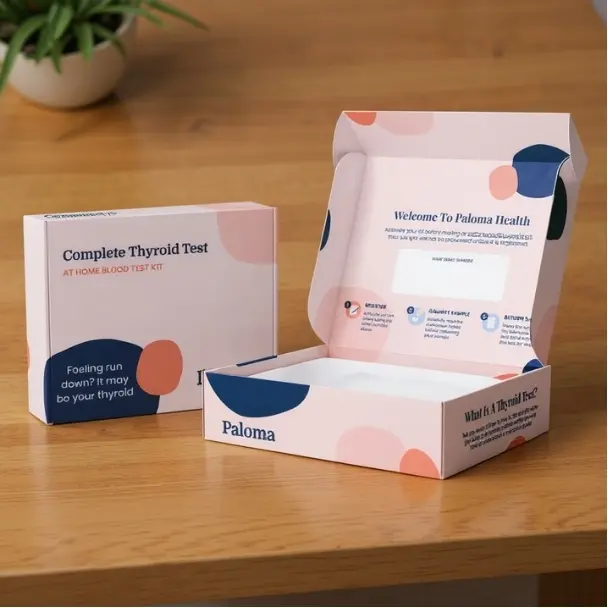
For ongoing thyroid monitoring, at-home testing kits have dramatically changed the cost equation. Comprehensive at-home thyroid panels — including TSH, Free T3, Free T4, and TPO antibodies — are available from providers such as Paloma Health and are both convenient and significantly less expensive than hospital- or lab-based blood draws.
Direct-to-consumer laboratory tests are also a powerful way to cut testing costs. Labs like Paloma’s JustLabs offer a very low-priced way to get laboratory tests at minimal markup.
Critically, at-home and laboratory thyroid tests are also HSA and FSA-eligible, meaning you can pay for them with pre-tax dollars. This turns a regular monitoring expense into a tax-advantaged one.
Action step: Compare your blood test markups or co-pays with the costs of at-home or direct-to-consumer lab tests, and determine which option offers the greatest savings.
Push for employer benefit coverage
If you have documented hypothyroidism or Hashimoto’s, your employer’s benefits coordinator may not be aware that a specialized thyroid care platform like Paloma exists — and that covering it could meaningfully reduce the company’s healthcare costs by improving your long-term management.
Research shows that chronic disease, including thyroid disease, costs employers significantly more through productivity loss and downstream health expenses than it costs to manage the condition well upfront. This is a legitimate business conversation, not a personal favor. Some employers, particularly larger ones, have added virtual specialty thyroid care like Paloma to their benefits packages precisely because the return on investment makes sense. You have both the standing and the data to raise this.
Action step: Connect with your HR or benefits team. Ask whether your plan covers virtual visits with a thyroid specialist. If it doesn’t, ask whether there is a process for requesting additions to the benefits package. Come with the research.
Treat supplement spending like a medical protocol, not a wellness habit
The supplement category is where money is most easily wasted. Many thyroid patients spend hundreds of dollars per month on products that haven’t been tested in relevant populations, aren’t dosed appropriately for their condition, or are redundant with each other.
The most evidence-supported supplements for Hashimoto’s and hypothyroidism include selenium, vitamin D (for deficiency, which is highly prevalent in this population), and magnesium. These are also among the most affordable. Work with your thyroid provider or a thyroid-informed nutritionist to build a targeted, documented supplement protocol — then route it through your HSA. You’ll spend less and get more.
Action Step: Audit your supplement regimen and eliminate anything that isn’t tied to a documented deficiency, thyroid-specific need, or provider recommendation.
Know what disability accommodations you’re entitled to
Under the Americans with Disabilities Act, many cases of hypothyroidism — particularly those significantly affecting energy, cognition, or daily functioning — may qualify as a disability. This doesn’t mean you’re disabled; it means you may be entitled to reasonable workplace accommodations: more flexible scheduling to accommodate morning medication timing, the ability to work from home on low-energy days, adjusted lighting, or modified deadlines during flares.
A webinar hosted by Paloma Health addressed this issue directly — but it remains largely unknown to the hypothyroid community at large. If your condition affects your work, you have standing to ask.
Action Step: If hypothyroidism symptoms are affecting your job performance, schedule a conversation with your healthcare provider and human resources department to discuss potential workplace accommodations.

A note from Paloma
Hypothyroidism isn’t a cheap condition to have. Between direct medical costs of around $2,500 per year, downstream spending on conditions that are never attributed to thyroid dysfunction, supplement and diet costs, and the often-invisible career consequences of years of underperformance or misdiagnosis, the true financial burden is substantially higher than any single line item suggests.
But it is also a burden you can actively reduce. Membership with Paloma Health can help streamline your care with virtual support and more predictable, highly affordable access to optimal thyroid-focused guidance. Paloma’s convenient home blood test kit offers a more convenient, lower-friction way to monitor your thyroid levels. For thyroid and other medical testing, Paloma’s JustLabs service offers deeply discounted costs on your lab work.
Paloma’s Daily Thyroid Care supplement can simplify your supplement routine by consolidating key thyroid-supporting nutrients into a single capsule.
Using HSA/FSA funds, targeted supplement spending, insurance appeals, and employer benefits can all help you recover hundreds — and potentially thousands over time — of dollars that the invisible illness tax has been quietly collecting.
Your thyroid condition doesn’t have to cost you everything it’s been costing you. That starts with seeing the full picture and choosing the most cost-conscious care path available.
Frequently asked questions
Does hypothyroidism really cost more than just my medication?
Yes — significantly more. Beyond prescription costs, hypothyroid patients often pay for specialist visits, expanded lab panels, supplements, dietary changes, and treatment for downstream conditions like high cholesterol and depression that are frequently never attributed to the thyroid.
How much does hypothyroidism cost per year on average?
Research published in the Journal of Medical Economics estimates direct medical costs range from $460 to $2,555 per patient per year, depending on medication type. When indirect costs like productivity loss and downstream health conditions are included, the total economic burden runs into the billions nationwide.
What is presenteeism, and why does it matter for thyroid patients?
Presenteeism means showing up to work while chronically unwell and performing at reduced capacity — and it’s where the biggest financial losses hide. For hypothyroid patients experiencing brain fog, fatigue, and slowed cognition, studies estimate presenteeism costs roughly $3,055 per person per year in lost productivity.
Can I use my HSA or FSA for thyroid-related expenses?
Yes, and most patients underuse this benefit considerably. Doctor visits, prescription medications, and at-home thyroid test kits are typically eligible for HSA/FSA benefits. At the same time, condition-specific supplements like selenium may qualify with a Letter of Medical Necessity from your provider.
What is a Letter of Medical Necessity, and how do I get one?
A Letter of Medical Necessity is a document from your physician that connects a specific treatment or supplement to your diagnosed condition, making it eligible for HSA/FSA reimbursement. Ask your thyroid provider to write one for any supplements that are formally part of your care protocol.
Can I appeal if my insurance denies coverage for a full thyroid panel?
Absolutely — and it’s worth doing. Insurance companies are required by law to have an appeals process, and denials for expanded panels like Free T3, Free T4, and TPO antibodies are frequently overturned when your provider submits a letter documenting medical necessity.
Are at-home thyroid tests as reliable as lab draws, and do they save money?
Comprehensive at-home thyroid panels from reputable providers test the same markers as in-lab draws and are clinically validated. They are also HSA- and FSA-eligible, making them a more convenient and often less expensive option for ongoing monitoring.
Could my thyroid condition be affecting my career and earnings?
Research strongly suggests yes. Years of undiagnosed or poorly managed hypothyroidism can mean years of reduced cognitive performance, missed opportunities, and career decisions made under the constraint of chronic fatigue — a cumulative earnings gap that never appears on a medical bill.
How can I make the case to my employer for better thyroid benefits?
Employers lose significant money to chronic illness through productivity loss and downstream healthcare costs, so improved thyroid coverage is a business case, not just a personal request. Contact your HR or benefits team with data on the cost of untreated hypothyroidism, and ask whether virtual thyroid specialty care is covered or can be added to the plan.
What supplements are actually worth the money for hypothyroidism?
The most evidence-supported options are selenium, vitamin D (for deficiency, which is common in this population), and magnesium — and they’re also among the most affordable. Work with your thyroid provider to build a targeted, documented protocol rather than spending broadly on products with weaker clinical backing.
Download our Thyroid Guide
Find inspiration for a healthy way to support your thyroid


%20copy.webp)
%20(1).webp)


