


.webp)
In this article
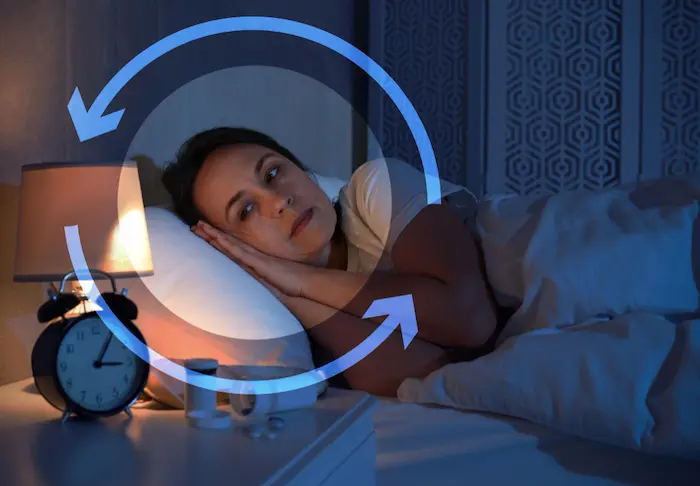
It's 3:07 a.m. You were sound asleep an hour ago. Now your eyes are wide open, your heart is thudding just a little too fast, and your brain has decided this is the perfect time to replay every unresolved conversation from the last decade, and make endless to-do lists. You're exhausted — bone-tired, actually — but somehow totally unable to drift back off. An hour passes. Maybe two. Then, just as you finally doze, the alarm goes off.
If this sounds familiar, you're not broken, you’re not “bad at sleeping,” you're not imagining it, and you're definitely not alone. We call this pattern "3 a.m. wake-up syndrome"—a name for something incredibly common among women in their late 30s, 40s, 50s, and beyond. “3 a.m. syndrome” isn’t a formal medical diagnosis with a single lab test and a one-size-fits-all treatment. It’s a consumer-friendly label for a very specific lived experience: early morning awakenings, often with heightened alertness, warmth, anxiety-like symptoms, and difficulty returning to sleep.
It's not insomnia in the classic sense (you can usually fall asleep just fine), and it isn't necessarily a hot flash waking you either. It's something more specific: a regular pattern of waking in the middle of the night, mind suddenly alert, body somehow both wired and worn out.
For many women, this pattern shows up right around perimenopause — the years-long hormonal transition leading up to menopause — and it often travels with a cluster of other symptoms: hot flashes, mood swings, anxiety that seems to come out of nowhere, and a stress response that feels dialed up to eleven. Understanding what's actually happening in your body at 3 a.m. is the first step toward doing something about it.
What is 3 a.m. wake-up syndrome?
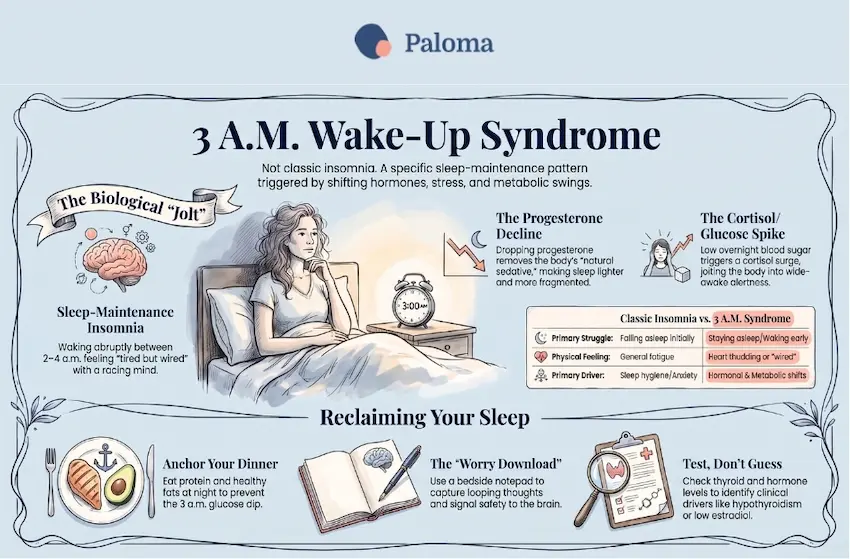
3 a.m. wake-up syndrome describes a specific, recurring sleep-maintenance problem: falling asleep without much trouble, then waking abruptly somewhere between 2 a.m. and 4 a.m., wide awake and alert, with racing thoughts, physical restlessness, or both — and then struggling for 30 minutes, an hour, or longer to fall back asleep.
Sleep researchers would call this pattern sleep-maintenance insomnia, as opposed to trouble falling asleep initially. It's one of the most common — and most under-discussed — complaints among women in perimenopause, and research confirms it's a distinctly midlife phenomenon: sleep-maintenance problems increase sharply as women move through the menopausal transition, and middle-of-the-night waking is specifically called out as the dominant complaint — even independent of hot flashes.
What makes 3 a.m. specifically significant is timing. It sits at the point in the night where several biological systems intersect: the tail end of your deepest sleep, the beginning of your body's natural overnight cortisol rise, and — for many women — the lowest point of overnight blood sugar. When any one of those systems is even slightly out of balance, 3 a.m. is often where it shows up.

Why perimenopause disrupts sleep at 3 a.m.
Perimenopause can begin in your late 30s or 40s, sometimes years before periods become noticeably irregular, and it's defined by dramatic swings — not just declines — in estrogen and progesterone. Those swings interact directly with your sleep architecture, and they often show up in the same window as other perimenopause and hypothyroidism symptoms that women in this age group experience.
Estrogen helps regulate the neurotransmitters that keep you in deep sleep, and it plays a role in body-temperature regulation. As estrogen fluctuates and eventually declines, sleep becomes lighter and more fragmented, and your body's internal thermostat becomes less stable — part of why hot flashes and night sweats so often arrive alongside sleep disruption.
Progesterone matters just as much, and it's often overlooked. Progesterone converts in the brain into a compound called allopregnanolone, which acts on the same calming GABA receptors targeted by anti-anxiety medications and sleep aids — in effect, your body's own nightly sedative. In perimenopause, progesterone is frequently the first hormone to decline — often years before estrogen does — which means many women lose that natural calming effect long before they notice classic "menopause" symptoms. Research using serum hormone sampling has found that lower estrogen and higher follicle-stimulating hormone (FSH) levels independently predict more nighttime awakenings, even after accounting for hot flashes and mood.
Large-scale data from the Study of Women's Health Across the Nation (SWAN), which has followed thousands of women through the menopause transition for more than two decades, confirms that sleep problems — especially waking in the middle of the night — rise sharply during perimenopause and can persist into postmenopause, occurring even in women who never experience a single hot flash.
The adrenal and cortisol connection
Here's where 3 a.m. wake-up syndrome gets its name, and where most explanations of perimenopausal sleep stop short. Cortisol—often called "the stress hormone," though it's more accurately your body's primary alertness and energy-mobilization hormone—follows a daily rhythm. It should be at its lowest point in the deep hours of the night and begin rising gradually around 6 a.m. to help you wake up.
In many women navigating perimenopause, that rhythm gets disrupted. First, declining estrogen and progesterone directly affect the hypothalamic-pituitary-adrenal (HPA) axis—the communication loop between your brain and adrenal glands that governs your stress response—making it more reactive and less able to stay quiet overnight. Research comparing people with chronic insomnia to good sleepers has repeatedly found measurable differences in HPA axis activity, including a blunted overnight decline in cortisol.
Second, many women in midlife are also carrying a heavier chronic stress load — careers, caregiving for kids and aging parents simultaneously, financial pressure — right at the exact moment their hormonal buffering system is becoming less resilient. Elevated or irregular cortisol patterns are consistently associated with worse mental and physical health outcomes, including poorer sleep continuity.
Blood sugar plays a supporting role, too. If dinner was light on protein or heavy on refined carbohydrates, blood glucose can dip overnight; your body responds to a glucose dip the same way it responds to any perceived threat — by releasing cortisol and adrenaline to raise blood sugar back up. That hormonal surge is often enough to pull you out of deep sleep and into wide-awake alertness, which is part of why so many women describe the 3 a.m. wake-up as feeling like a jolt rather than a gentle stirring.
Thyroid function belongs in this conversation, too. Both an underactive thyroid (hypothyroidism) and an overactive one (hyperthyroidism) are well-documented disruptors of sleep continuity, and thyroid changes often overlap with the same years perimenopause is unfolding, which makes it worth ruling out as part of the full symptom picture.
Signs and symptoms of 3 a.m. wake-up syndrome
Not every 3 a.m. wake-up looks the same. Here's the fuller constellation of signs that tend to travel together with this pattern:
- Waking consistently between 2 a.m. and 4 a.m., most nights of the week
- Sudden mental alertness immediately upon waking — no grogginess, just "on"
- Feeling "tired but wired" — exhausted, yet physically unable to settle
- A faster heartbeat, mild palpitations, or a jittery, adrenaline-like feeling
- Night sweats or waking up overheated, sometimes needing to change clothes or sheets
- Difficulty falling back asleep for 30 minutes to an hour or longer
- Waking to urinate, which then triggers full mental alertness rather than a quick return to sleep
- Jaw clenching, teeth grinding, or waking with a tense neck and shoulders
- Daytime fatigue, brain fog, irritability, or low mood despite spending enough time in bed
- Increased cravings for sugar, caffeine, or refined carbohydrates the next day
- A pattern that's noticeably worse after alcohol, a late or sugary dinner, a high-stress day, or a skipped meal
- Irregular periods, hot flashes, or mood swings occurring around the same stretch of life
Another common detail in first-person accounts is that your mind doesn’t just wake—it launches. That can include:
- A sudden sense of anxiety, unease, or even panic that appears out of nowhere
- Rumination -- a racing or looping mind, often replaying stress, to-do lists, or worries
- Focusing on intrusive worries
- Making mental “to-do” lists
- Scanning your environment for safety
A trauma-therapist-framed perimenopause insomnia guide describes the 3 a.m. wake-up as driven by vasomotor arousal, cortisol spike, and the HPA-estradiol interaction (and notes the pattern can be especially vulnerable for driven women).
If several of these symptoms sound familiar—especially the combination of an abrupt, wide-awake waking and a racing heart or mind—that's a strong signal that hormonal and stress-response changes, not just "bad sleep hygiene," are driving the pattern. It's also worth reviewing the full range of perimenopause and menopause symptoms, since sleep disruption rarely travels alone.
Symptoms to explore further
If you have any of the following symptoms, it’s time to talk with your health care provider:
- Symptoms of sleep apnea (for example, loud snoring, gasping, choking during sleep, or excessive daytime sleepiness)
- Persistent insomnia affecting your daily life for weeks/months
- Night sweats that do not respond to lifestyle changes and may signal a need for clinician evaluation
What the research really shows
It's worth pausing on what the science actually says, because "hormones" can become a vague catch-all. The research is more specific.
First, timing matters. Large longitudinal studies, including SWAN, show that self-reported sleep difficulty during perimenopause rises from roughly 16%–42% before perimenopause to 39%–47% during it, and middle-of-the-night waking—rather than trouble falling asleep—is the dominant complaint.
Second, hot flashes explain some, but not all, of this. It's tempting to assume every 3 a.m. wake-up is a hidden hot flash, and that nocturnal vasomotor symptoms genuinely drive awakenings. But research that tracks hormone levels directly, rather than relying on symptom reports alone, has found that lower estradiol and higher FSH predict more nighttime awakenings even after statistically accounting for hot flashes and depressive symptoms — meaning something about the hormonal shift itself is disrupting sleep continuity, separate from a hot flash you can consciously feel.
Third, the stress-hormone piece is measurable, not just anecdotal. Researchers studying chronic insomnia — a group that skews heavily toward midlife women — consistently find altered patterns of cortisol secretion across the 24-hour cycle, including a rhythm that doesn't dip as low overnight as it should. A separate longitudinal study tracking perimenopausal women's hormones directly over a full year found significant individual variability in cortisol secretion patterns, underscoring just how personal this picture can be.
Finally, progesterone's role is one of the more encouraging findings in this whole picture. In controlled studies, oral micronized progesterone given at bedtime has been shown to reduce the amount of time women spend awake after initially falling asleep and to increase slow-wave (deep) sleep. This is one reason hormone replacement therapy is a legitimate, evidence-based option worth discussing with a clinician for some women, not just a lifestyle question.
Taken together, the research points to a layered explanation: hormonal shifts affecting sleep directly, a more reactive stress-response system amplifying nighttime arousal, and blood sugar dynamics adding a metabolic trigger. For patients, the practical implication is this: if you've only ever been told to "improve your sleep hygiene," you've been given a partial answer to a problem that's substantially hormonal.

Your next steps
You can't reset your hormones overnight, but you can influence several of the levers involved — and you don't have to do it alone.
How to reduce how often you wake
- Track the pattern for 1–2 weeks. Keep track of bedtime, exact wake time, symptoms at waking (hot? sweaty? racing heart? anxious?), caffeine/alcohol timing, and any night bathroom trips. This helps you and your clinician connect triggers to timing. (This is especially helpful because perimenopause patterns often cluster around early-morning hours and include warmth/alertness.)
- Focus on temperature stability. If night sweats or feeling hot are part of the awakening, treat temperature stability as a target. Perimenopause explanations emphasize warmth/vasomotor arousal and a wide-awake state between 2–4 a.m. Also make sure to keep your bedroom cooler, use breathable bedding, and wear moisture-wicking sleepwear to reduce the odds of a temperature-triggered waking.
- Anchor your dinner with protein and fat, not just carbohydrates. A dinner heavy in refined carbs and light on protein makes an overnight blood sugar dip — and the cortisol spike that follows — more likely. Aim for a protein source and some healthy fat at your evening meal.
- Watch alcohol, especially close to bedtime. Alcohol can help you fall asleep faster, but as it metabolizes overnight, it tends to trigger exactly the kind of abrupt middle-of-the-night waking this syndrome describes.
- Build in daytime stress regulation, not just bedtime relaxation. Because the HPA axis is part of what's dysregulated, short, regular practices during the day—a walk, breathwork, even five quiet minutes—tend to help overnight cortisol rhythms more than a single relaxing bedtime routine alone.
- Get your thyroid and hormones checked. Because thyroid dysfunction, low progesterone, and blood sugar issues can each drive this pattern independently, a simple lab panel can clarify what's going on instead of leaving you guessing.

How to get back to sleep once you're awake
- Don't check the time or your phone. Both increase alertness and cognitive engagement — exactly what you don't want at 3 a.m.
- Try a "worry download." If your mind is looping on tomorrow's to-do list, keep a notepad by the bed and jot down a two- or three-word reminder, then set it aside. The goal is to signal to your brain that the thought is captured and doesn't need active holding.
- Use slow, extended-exhale breathing. A longer exhale than inhale (in for four counts, out for six to eight) activates your parasympathetic nervous system and can help downshift a racing heart or mind.
- Get up if you're truly wide awake. Lying in bed anxious and frustrated can train your brain to associate the bed with wakefulness. If 20 minutes pass with no sign of drifting off, get up, keep the lights low, and do something calm and boring until you feel sleepy again.
- Keep a light snack within reach if blood sugar is a suspect. A small, protein-rich snack—a few almonds, a spoonful of nut butter—before bed can sometimes prevent the overnight dip that triggers a cortisol-driven waking.
None of these changes are a substitute for finding out what's actually driving your particular pattern — but together, they address the three most common drivers: blood sugar swings, an overactive stress response, and a bedroom environment working against you. If low mood is part of your nighttime picture, it's also worth reading about the overlap between depression and perimenopause.
A note from Paloma
If 3 a.m. has become a fixture in your nightly routine, please hear this: you are not imagining it, you are not failing at sleep hygiene, and you don't have to just live with it. This pattern is common, it's explainable, and for most women, it's treatable.
The challenge is that 3 A.M. Wake-up Syndrome sits at the intersection of several systems — reproductive hormones, adrenal and stress-response function, thyroid health, and blood sugar regulation — and most healthcare visits aren't built to look at all of them together. That's exactly the gap Paloma Health exists to close, especially given the real obstacles many women face in getting perimenopause and menopause symptoms taken seriously.
Paloma's clinicians specialize in the overlap between thyroid health and hormonal transitions like perimenopause and menopause, because in real life these systems don't operate in isolation — a sluggish thyroid can look a lot like perimenopause, and unmanaged perimenopause can make an existing thyroid condition feel worse. A good starting point is comprehensive at-home thyroid testing, which checks the key markers that can influence sleep, energy, and mood long before symptoms are severe enough to send you looking for answers at 3 a.m.
From there, you can connect with a Paloma thyroid doctor for a personalized treatment plan, or work with a Paloma thyroid nutritionist on the blood-sugar and nutrition strategies that make such a difference for overnight cortisol swings. For ongoing support between visits, Paloma also offers thyroid-friendly supplements and a full membership plan that bundles testing, provider visits, and nutrition coaching so your thyroid, hormone, and sleep concerns are managed together instead of as separate appointments.
If you're tired of being told to "just relax" or to cut back on caffeine, and you want an actual explanation for what's happening in your body at 3 a.m., that's a conversation worth having with a clinician who treats thyroid and hormonal health as connected — because they are.
Hormonal Challenges Waking You Up? Video chat with a hormone specialist
Get answers and treatments in minutes without leaving home - anytime. Consult with a U.S. board certified doctor who treats hormonal issues via high-quality video. Insurance accepted.
ScheduleFrequently asked questions
What causes waking up at 3 a.m. specifically?
Around 3 a.m., deep sleep is ending, your body's overnight cortisol rise is beginning, and blood sugar is often at its lowest, so hormonal or blood sugar imbalances tend to surface in this window. In perimenopause, declining estrogen and progesterone make this timing especially common.
Is waking at 3 a.m. a sign of perimenopause?
It can be. Research shows middle-of-the-night waking increases sharply during perimenopause, even in women who aren't having hot flashes, and it's one of the most consistently reported sleep complaints of this life stage.
What is the difference between 3 a.m. wake-up syndrome and insomnia?
Classic insomnia often involves trouble falling asleep in the first place, while 3 a.m. wake-up syndrome describes falling asleep normally, then waking abruptly partway through the night. Clinically, this pattern is sometimes called sleep-maintenance insomnia.
Can low blood sugar cause middle-of-the-night waking?
Yes. If blood sugar dips overnight, your body releases cortisol and adrenaline to bring it back up, and that hormonal surge is often enough to jolt you awake feeling alert and on edge.
Does cortisol really spike at night in perimenopause?
For some women, yes — research comparing people with chronic sleep-maintenance problems to good sleepers has found a blunted overnight decline in cortisol, meaning the hormone doesn't drop as low as it should. This keeps the body in a low-grade state of alertness that can trigger early waking.
Can hormone therapy help with 3 a.m. waking?
For many women, yes. Progesterone in particular has been shown in controlled studies to reduce nighttime wakefulness and increase deep sleep, which is why it's worth discussing hormone therapy with a qualified clinician if lifestyle changes aren't enough.
Should I get my thyroid tested if I keep waking at 3 a.m.?
It's a reasonable step. Both an underactive and an overactive thyroid can independently disrupt sleep continuity, and thyroid changes often occur around the same age as perimenopause, so ruling it out helps clarify what's actually driving your symptoms.
How long does 3 a.m. wake-up syndrome last?
It varies significantly by individual, but sleep disruption often tracks with hormonal fluctuation and can persist through perimenopause and into early postmenopause for some women. Addressing the underlying drivers tends to shorten how long the pattern lasts.
Is it normal to feel anxious when I wake up at 3 a.m.?
Yes, and it's physiological, not just psychological. A surge of cortisol and adrenaline — the same hormones your body uses in any stress response — is often what wakes you, so the anxious, "wired" feeling is a direct hormonal effect, not a character flaw.
When should I see a doctor about waking up at 3 a.m.?
If the pattern happens most nights, affects your daytime functioning, or comes with other symptoms like irregular periods, hot flashes, or persistent fatigue, it's worth a clinical evaluation rather than managing it on your own. A clinician who looks at hormones, thyroid function, and stress response together is best positioned to help.

.webp)


%20(1).webp)


