



.webp)
In this article
The conversation surrounding sexual health is undergoing a long-overdue transformation. For decades, the primary focus of treatment for sexual dysfunction has centered on men, leading to the massive popularity of oral medications like Viagra. For women, arousal issues become more common in midlife, and may be hormonal, physical, emotional, or all of the above. Recently, a new category of treatments has gained traction among women: topical creams to promote female arousal. Often referred to colloquially as "scream creams," these formulations sit at the intersection of medicine, and menopause care, and are increasingly discussed in wellness circles, menopause clinics, and in digital health platforms.
For a subset of women with true arousal problems, especially when the issue is localized to genital sensation or menopause-related tissue change, these creams can improve genital blood flow and sensitivity; for many others, they may not not address the real reason sex feels “off” in the first place.
The most common misconception regarding prescription arousal creams is that they act as a "libido pill." It is critical to differentiate between desire—the psychological interest in and desire for sexual activity—and arousal—the physiological transition of the body in response to stimulation, involving increased blood flow and sensitivity.
Low libido often stems from complex interplay between stress, relationship dynamics, hormonal fluctuations, and mental health. A topical cream cannot fix a lack of desire triggered by non-physical factors. Instead, arousal creams are specifically designed to address the physical manifestations of sexual response. When the brain initiates the desire, the body must respond by increasing blood flow, vaginal lubrication, and sensitivity. If the body fails to "keep up" with the mind, the experience can become frustrating or uncomfortable. These creams aim to bridge that physiological gap.
Female sexual problems are not one condition; they are a cluster of different concerns that can look similar from the outside. Some women have low desire, meaning they do not feel much interest in sex. Others want sex mentally but have trouble becoming physically aroused, which can show up as poor lubrication, reduced genital swelling, or reduced clitoral sensitivity. Others struggle with orgasm, or with pain that shuts down arousal entirely.
This matters because an arousal cream is most likely to help the blood-flow/sensation part of the equation, not the full sexual experience. If a woman’s main issue is pain, anxiety, relationship stress, medication side effects, or fatigue, a topical cream may do very little.

Perimenopause and menopause are common turning points for sexual changes because the decline of estrogen affects genital tissue, lubrication, elasticity, and comfort. Vaginal dryness and a thinner, more fragile vaginal lining can make sex less pleasurable and can blunt arousal simply because the body starts anticipating discomfort. The reduction of estrogen can also lead to a significant drop in blood flow to the pelvic floor. These physical changes can transform sexual activity from a pleasurable experience into one that is uncomfortable or painful.
The Menopause Society recommends that women with sexual symptoms be evaluated for menopausal changes and treated with appropriate therapies such as vaginal moisturizers, low-dose vaginal estrogen, or other hormone-based options when indicated. A 2023 meta-analysis found that hormone replacement therapy can improve overall sexual function, but the effect is generally small rather than dramatic.
While topical estrogen is considered the gold standard for treating atrophy and vaginal dryness, there’s a dual benefit when estrogen is combined with an arousal cream. The estrogen repairs the integrity of the tissue, while the arousal cream can promote the immediate blood flow necessary for arousal. This combination represents a more targeted strategy for managing the complex symptoms of the menopausal transition.
Hypothyroidism is another frequent but underrecognized contributor to women’s sexual complaints. Thyroid hormone affects energy, mood, metabolism, and sex hormone balance, so underactive thyroid can show up as low desire, poor arousal, vaginal dryness, difficulty reaching orgasm, and less sexual satisfaction. Some studies also note that thyroid dysfunction can mimic or intensify menopausal symptoms, which can make diagnosis more confusing in midlife.
That is why a woman wondering about an arousal cream should also first ensure that her thyroid treatment is optimized. If hypothyroidism is undertreated, a topical arousal product may seem ineffective simply because the underlying problem has not been corrected. The better strategy is to treat the thyroid issue and then reassess sexual symptoms rather than assuming the sexual problem is purely local.
Arousal creams are usually compounded prescriptions prepared by specialty pharmacies rather than mass-produced branded products. These commonly called “Scream Creams” or arousal creams may contain sildenafil, testosterone, L-arginine, aminophylline, pentoxifylline, or other vasodilators. The appeal is simple: apply locally, increase blood flow, and hopefully increase sensation and pleasure.
The problem is that the exact formulas vary widely, and the evidence for the exact compounded recipe is thinner than the evidence for some of the ingredients used individually. That means two women using “arousal cream” may actually be using very different products.
The primary goal of most creams for sexual arousal is vasodilation, the widening of blood vessels in the clitoral and vaginal tissue. When blood flow is effectively directed to the genital region, the tissues become engorged, nerve endings have heightened sensitivity, and the natural lubrication process is stimulated.
By applying a medication directly to the tissue, clinicians attempt to achieve this effect locally without the systemic side effects that might occur with oral medication. This approach is intended to mimic the body’s natural physiological reaction to arousal, effectively "jumpstarting" the physical sensation that may have dimmed due to age, medication, or hormonal changes.
Sildenafil is the best-known ingredient in topical arousal creams because it promotes blood flow in genital tissues. This is the same general pathway that made sildenafil famous for erectile dysfunction in men, but the goal in women is different. When applied topically for women, the objective of sildenafil cream is to promote localized blood flow to the vulva and clitoral tissue. Unlike the systemic effects of an oral tablet, which circulates throughout the entire body, the topical application intends to concentrate the vasoactive effects where they are needed most. By increasing the availability of blood to these sensitive areas, the drug facilitates the physical engorgement necessary for comfortable and pleasurable sexual activity.
In a 2024 trial, sildenafil improved several sexual function measures in some postmenopausal women with female sexual arousal disorder, particularly in those without concomitant low desire. Sildenafil cream appears to help some women more than others, and the effect is not consistent enough to call it a slam dunk.
Sildenafil belongs to a class of drugs known as phosphodiesterase type 5 (PDE5) inhibitors. These enzymes are responsible for the breakdown of cyclic guanosine monophosphate (cGMP), a molecule that helps relax smooth muscle tissue and increase blood flow. By inhibiting this process, cGMP levels remain elevated, sustaining blood flow.
Testosterone is often included in prescriptions for women who are experiencing symptoms related to menopause or hormone depletion. As women transition through menopause, the decline in estrogen and testosterone levels can lead to significant changes in sexual health, including thinning of the vaginal wall (atrophy) and a reduction in natural sensitivity.
Topical testosterone functions differently than a vasodilator like sildenafil. It is not designed for an immediate "sensation" boost; rather, it is intended to improve the health and integrity of the genital tissues over time.
Testosterone is often included in compounded arousal creams, but it’s most effective for women who have low sexual desire after menopause, not necessarily pure arousal failure.
In a randomized trial, testosterone cream improved desire, receptivity, frequency of sexual activity, and initiation in menopausal women with low desire.
This is where the distinction between libido and arousal matters. A woman may have low desire, low arousal, or both, and the best ingredient depends on which problem is leading. Testosterone may be appropriate when the core issue is desire. When used under medical supervision, it can address the underlying biological decline that often accompanies aging, making it a critical component when female sexual dysfunction is rooted in hormonal deficiency.
Many arousal creams contain L-arginine, an important amino acid. In the body, L-arginine is a direct precursor to nitric oxide -- which helps relax blood vessels and may improve genital blood flow. That logic makes sense, especially in topical formulations aimed at the vulva and clitoris. By applying it topically, the theory is that the increased concentration of L-arginine will promote local production of nitric oxide, enhancing blood flow and sensitivity.
A systematic review found some evidence that l-arginine-containing products may improve symptoms of low desire, but the overall literature remains limited and often includes combination products rather than pure ingredient studies.
This means l-arginine is intriguing, but not proven at the same level as some hormone therapies or even sildenafil in selected subgroups. In practical terms, it may be part of a useful compounded formula, and many practitioners view it as a supportive, gentle ingredient that complements the more potent vasoactive drugs.
Many compounded products also add pentoxifylline, or ergoloid mesylate. Pentoxifylline is a medication used to improve blood flow in people with circulatory issues; when included in an arousal cream, it acts as a vasodilator to ensure maximum blood recruitment to the target tissue. Aminophylline, another frequent addition, acts as a bronchodilator and has been included to potentially increase the absorption of other ingredients or stimulate localized nerve responsiveness. Ergoloid mesylates are sometimes utilized for their vasodilatory properties, providing a multi-pronged approach to physical stimulation.
Generally, these ingredients are chosen to increase blood flow or enhance tissue response, but the evidence base is thinner. Because formulas are not standardized, the exact dosing and combination can vary from one pharmacy to another.
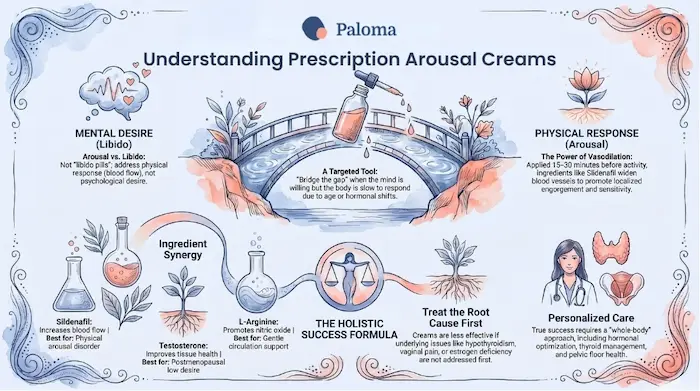
The women most likely to benefit are those with true female sexual arousal disorder, especially if the issue is primarily physical and not driven by pain or major relational problems. Some postmenopausal women with reduced genital sensation may also notice a benefit, particularly if they still desire sex but feel that their body is not “showing up” the way it used to. A cream may also be worth discussing when a woman wants a local, on-demand approach rather than a systemic medication.
These products are less likely to help if the main issue is:
- Vaginal pain or penetration pain.
- Hypothyroidism that is not yet corrected.
- Menopause-related dryness that needs vaginal estrogen or moisturizers first.
- Desire problems driven by relationship, mood, or medication factors.
Effectiveness of arousal cream is largely dependent on timing and dosage. These creams are not "long-term" treatments in the way that hormone replacement therapy is; they are designed for immediate, situational use.
Most practitioners suggest applying a small amount—usually a pea-sized drop—to the clitoris and surrounding tissue approximately 15 to 30 minutes before intended sexual activity. The exact instructions depend on the product and the prescriber’s directions. Because the formula is compounded, the amount and timing are not interchangeable between pharmacies. That is especially important if the cream includes testosterone or multiple vasoactive agents.
A few practical points matter:
- Use the prescribed amount only.
- Start with the smallest possible dose on a nonsexual occasion to test for skin sensitivity.
- Stop and contact the clinician if you develop flushing, headache, burning, rash, or unusual symptoms.
- If sex is painful, treat dryness and tissue fragility first, because arousal will often remain poor if the body expects pain.
Despite being applied topically, these medications are not without risks. The skin in the vulvovaginal area is extremely delicate and highly absorptive. Common side effects include localized skin irritation, itching, or redness. Because some ingredients promote intense blood flow, some users may experience an uncomfortable "tingling" or burning sensation that lasts longer than desired.
Furthermore, there is a risk of disruption to the delicate vaginal microbiome. Frequent use of certain bases or active ingredients can occasionally lead to yeast infections or bacterial vaginosis. If you have a history of heart conditions or blood pressure issues, you should also consult your physician, as some vasoactive ingredients can, in theory, be absorbed systemically and interact with other medications.
It’s also important to note that arousal creams are compounded, meaning they are prepared by a licensed pharmacy to meet a specific prescription written for an individual patient. Because these creams are customized, they do not undergo the same clinical trial process as mass-market branded drugs. This does not imply they are "unsafe," but it does mean they fall into a different category of regulatory oversight.
Social media posts often frame arousal creams as a fast, almost glamorous fix for low libido, especially under the popular nickname “Scream Cream.” That name may be memorable, but it can create false expectations that a cream will solve every sexual problem. In reality, women’s sexual response is influenced by hormones, blood flow, pain, mood, relationships, medications, and health conditions such as thyroid disease.
The online conversation is useful mainly because it shows how many women are looking for help and how often they are not being offered a nuanced medical explanation. But hype should not replace evidence, and the evidence still says these creams are best viewed as targeted tools, not miracle products.

Would you benefit from an arousal cream? Possibly, if your symptoms are the kind that a topical, blood-flow-enhancing product can truly address. If you are in perimenopause or menopause, have low genital response, and do not have major pain or untreated thyroid disease, a trial may be reasonable with clinician guidance.
If you have hypothyroidism, vaginal pain, medication-related sexual side effects, or broader desire problems, the answer may be to treat the root cause first.
Arousal cream is a tool, not a cure. If the underlying cause of sexual dysfunction is a combination of pelvic floor muscle tension, relationship distress, vaginal dryness, or systemic hormonal decline, a topical vasodilator will only mask the symptoms rather than treat the root cause.
True sexual health is holistic. You’ll find the most success arousal cream is integrated into a comprehensive wellness plan that includes pelvic floor physical therapy (to address tension and blood flow issues), hormonal optimization, support for vaginal lubrication, and, where necessary, therapy to navigate the psychological aspects of female arousal and desire. Relying solely on a prescription treatment without addressing these broader factors often leads to disappointment.
In other words, the best use of an arousal cream is as one piece of a bigger sexual-health plan, not the whole plan. That is the message you need most: these products can help, but they are not the first, only, or right answer for everyone.
At Paloma, we understand that sexual health is part of whole-body health, especially during hormonal transition. Perimenopause, menopause, and thyroid imbalance can all affect your libido, arousal, lubrication, comfort, and confidence, so we work with you to look beyond symptoms and identify what is really driving the change.
Paloma recognizes that the landscape of sexual health for women is evolving, moving away from "one-size-fits-all" solutions toward personalized medicine. For some women, that means optimizing thyroid care, addressing menopause symptoms, or discussing hormone therapy and vaginal treatments that support comfort and sexual function. For others, it may mean exploring prescription arousal creams as one possible tool in a personalized plan for better pleasure and less frustration. Our goal is to help you feel heard, understand your options, and find a treatment approach that fits your body and stage of life.
What is a prescription arousal cream?
Prescription arousal creams are compounded topical products applied to the vulva or clitoris to improve blood flow, sensitivity, and sometimes orgasm response. They usually contain sildenafil, testosterone, l-arginine, or a mix of ingredients, and they are meant for selected women rather than as a universal treatment.
Do arousal creams actually work?
Sometimes, yes, but the benefits are inconsistent and seem strongest in a subset of women with true arousal problems. They are less likely to help when low sex drive is driven by pain, menopause-related dryness, thyroid disease, or relationship factors.
Which ingredient has the best evidence?
Topical sildenafil has the strongest direct evidence for female arousal disorder. Testosterone has excellent support for postmenopausal low desire, while l-arginine has a smaller and less definitive evidence base.
Is Scream Cream a brand?
No, “Scream Cream” is a common nickname, not a single trademarked product. Different compounding pharmacies may use that label for different formulas, which is one reason the experience can vary so much.
How do you use arousal cream?
Most are applied externally to the clitoris or vulvar tissue about 20 to 30 minutes before sex, though instructions vary by formula. It is important to follow the exact directions from the prescriber and pharmacy because compounded products are not standardized.
Can menopause make arousal worse?
Yes. Lower estrogen during perimenopause and menopause can cause dryness, thinning tissue, discomfort, and reduced sexual response. That is one reason some women who used to feel aroused easily notice changes later in life.
Can hypothyroidism affect sex drive and arousal?
Yes, hypothyroidism can affect desire, arousal, lubrication, orgasm, and satisfaction. In some women, treating thyroid disease improves sexual symptoms enough that an arousal cream is no longer needed or becomes only a minor part of care.
Are arousal creams FDA-approved?
Most compounded arousal creams are not FDA-approved as standard treatments for female sexual dysfunction. They are typically prescribed off-label and made by specialty pharmacies, so quality, ingredients, and dosing can differ.
What side effects can happen?
Possible side effects depend on the ingredients but may include burning, irritation, flushing, headache, or hormone-related effects such as acne or hair growth if testosterone is included. If a product causes discomfort or unusual symptoms, it should be stopped and discussed with the clinician who prescribed it.
Who should talk to a clinician before trying one?
Any woman with low desire, poor arousal, painful sex, menopause symptoms, or known thyroid disease should get a medical evaluation before trying an arousal cream. That helps determine whether the problem is local, hormonal, thyroid-related, or something else entirely.


.webp)
.webp)


