


.webp)
In this article
For decades, women in midlife have been told that their changing body composition, shifting metabolism, and cognitive brain fog are simply inevitable consequences of the menopausal transition. While estrogen often takes center stage in these discussions – and in some cases, an underactive thyroid is part of the equation – there is a quieter, more systemic conductor orchestrating these changes: insulin-like growth factor-1 (IGF-1).
Often overshadowed by its more famous parent, human growth hormone (HGH), IGF-1 is a potent "hidden hormone" that bridges the gap between our endocrine health and our physical vitality. As we transition through our 40s and 50s, fluctuations in IGF-1 serum levels can dictate how effectively we maintain muscle mass, regulate blood sugar, and preserve our sharpness of mind. Understanding the Pituitary-GH-IGF-1 axis is no longer just a concern for endocrinologists—it is a foundational pillar for any woman looking to optimize her health span and navigate the midlife transition with resilience.
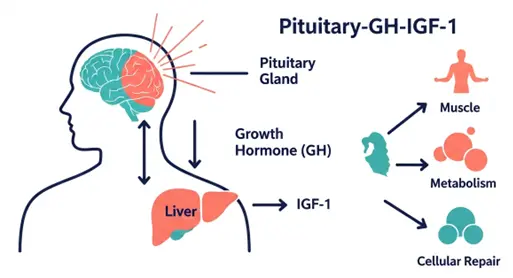
The Pituitary-GH-IGF-1 Axis: How growth hormone signals the liver to produce IGF-1, driving systemic tissue repair and metabolic health.
At the heart of our endocrine system lies the pituitary gland, a pea-sized master controller that releases growth hormone in rhythmic pulses. Once released, GH travels to the liver, stimulating the production and secretion of IGF-1. This process is essential for tissue repair and cellular regeneration throughout the body.
It is critical to distinguish between GH and IGF-1. While GH has a short half-life, circulating total IGF-I levels remain stable throughout the day, providing a more reliable clinical snapshot of our long-term growth hormone status. When levels dip—a phenomenon sometimes termed growth hormone deficiency in clinical contexts—we see systemic impacts.
Insulin-like growth factor 1 (IGF-1) is a peptide hormone produced mainly in the liver in response to stimulation by growth hormone (GH). Once released into the bloodstream, IGF-1 travels to tissues and organs where it helps regulate growth, cellular repair, metabolism, muscle maintenance, and bone remodeling.
IGF-1 was once called somatomedin C, and researchers have long understood that it is one of the body’s major anabolic—or tissue-building—signals. Unlike growth hormone, which fluctuates throughout the day, IGF-1 remains relatively stable in circulation. That stability makes it easier to measure clinically and is why doctors frequently use IGF-1 blood tests when evaluating disorders involving growth hormone function.
IGF-1 testing is commonly used to evaluate growth hormone disorders because circulating total IGF-I levels remain much more stable than GH levels throughout the day.
IGF-1 affects nearly every major organ system in the body. It acts through receptors located on muscle cells, bone cells, neurons, connective tissue, and fat cells. Research published in Frontiers in Endocrinology explains that IGF-1 signaling is involved in cellular proliferation, differentiation, tissue repair, and metabolic regulation.
Although circulating total IGF-1 serum levels peak during puberty—when bones lengthen rapidly and muscles grow—it remains active throughout adulthood. In fact, researchers increasingly believe that healthy IGF-1 signaling may be one of the foundations of healthy aging.
IGF-1 is sometimes called the body’s “master repair hormone,” and that description is not far off. It plays a central role in maintaining strength, resilience, and metabolic health throughout life.
Muscle mass and strength
One of IGF-1’s most important functions is supporting skeletal muscle. IGF-1 stimulates satellite cells, the stem cells involved in muscle repair and regeneration. It also promotes muscle protein synthesis and helps prevent muscle breakdown.
Research has shown that IGF-1 increases muscle mass, improves muscle function, and helps prevent muscle atrophy.
This becomes increasingly important with age. After age 40, adults naturally begin losing muscle mass in a process known as sarcopenia. Women may notice reduced strength, slower metabolism, and increased fatigue during this time. Declining IGF-1 serum levels appear to be one of the biological contributors.
Bone density and skeletal health
IGF-1 also plays a major role in bone remodeling. It stimulates osteoblast activity—the cells responsible for building new bone tissue—and helps regulate collagen production within bone.
Studies published in peer-reviewed journals have linked higher IGF-1 levels with improved bone mineral density in both premenopausal and postmenopausal women.
As women age and estrogen declines, bone loss accelerates. IGF-1 becomes especially important during this transition because it helps maintain the balance between bone breakdown and bone formation.
Brain health and cognition
The impact of IGF-1 extends far beyond our physical frame; it is a vital agent to protect the brain. Modern research using the Cambridge Neuropsychological Test Automated Battery (CANTAB) has shed light on how this hormone supports cognitive function. Studies focusing on spatial working memory and paired associate learning indicate that optimal IGF-1 signaling is correlated with better performance in complex cognitive tasks.
In clinical settings, researchers utilize various tools to screen for neurocognitive impairments. Findings indicate that midlife women with higher, stable levels of IGF-1 tend to show improved cognitive performance and better preservation of brain structure. It is the bridge between systemic hormonal health and the preservation of cognitive functioning, proving that what keeps our muscles strong also keeps our minds sharp.
Researchers now consider IGF-1 a neurotrophic factor, meaning it helps nourish and protect neurons. Studies also suggest IGF-1 supports neurogenesis, synaptic plasticity, memory formation, spatial working memory, and cognitive performance. Some researchers believe low IGF-1 may contribute to brain fog, memory issues, and reduced mental sharpness in aging adults, among other cognitive tasks.
A 2025 review described IGF-1’s role in neuronal survival, brain plasticity, and sleep regulation.
Metabolic regulation
IGF-1 also influences insulin sensitivity and energy metabolism. Low IGF-1 has been associated with insulin resistance and metabolic dysfunction in some studies. These metabolic imbalances increase the risk of type 2 diabetes.
Research published in the Journal of Clinical Endocrinology & Metabolism suggests that both extremely low and extremely high IGF-1 levels may be associated with poorer health outcomes, reinforcing the importance of balance.

The effects of IGF-1 on health are significant—and sometimes surprisingly complex.
When IGF-1 is too low
Low IGF-1 levels can occur in growth hormone deficiency, hypothyroidism, malnutrition, chronic illness, inflammatory conditions, liver disease, or severe stress.
Symptoms associated with low IGF-1 may include:
- Reduced muscle mass
- Fatigue
- Poor exercise recovery
- Increased abdominal fat
- Reduced bone density
- Slower healing
- Difficulties with cognitive functioning
- Poor spatial working memory
- Low energy
- Frailty
Adults with growth hormone deficiency often experience decreased quality of life, reduced physical performance, and metabolic dysfunction.
According to research, adults with growth hormone deficiency may also experience low energy, reduced muscle mass, and impaired physical function.
When IGF-1 is too high
High IGF-1 levels can also create problems. Persistently elevated IGF-1 occurs in conditions such as acromegaly and gigantism, where excessive human growth hormone production drives abnormal tissue growth.
High IGF-1 has also been associated with increased cancer risk in some research.
A major analysis reported by the University of Oxford found that women with the highest IGF-1 levels had a significantly higher risk of breast cancer compared with women with lower levels.
Researchers believe IGF-1 may promote tumor growth because it stimulates cellular proliferation and reduces apoptosis, the process by which damaged cells self-destruct.
This does not mean IGF-1 “causes” cancer on its own. Rather, it appears to be one factor that can support abnormal growth under certain biological conditions.
One of the most fascinating aspects of IGF-1 research involves aging and longevity.
Some animal studies suggest lower IGF-1 signaling may extend lifespan. Certain dwarf mouse models with reduced GH/IGF-1 signaling live unusually long lives.
Research published in Nature Communications found that in animal studies, reducing IGF-1 receptor activity improved lifespan and reduced inflammation in female mice.
At first glance, this seems contradictory. If IGF-1 supports muscle, brain, and bone health, why might lower IGF-1 sometimes be associated with longevity?
The answer appears to involve balance. Moderate IGF-1 supports tissue maintenance and quality of life, but chronically excessive cellular growth may accelerate aging and disease risk.
Most experts now believe optimal health involves maintaining IGF-1 within an appropriate physiological range rather than maximizing it as if it were a fountain of youth.
Women experience unique interactions between IGF-1, estrogen, progesterone, thyroid hormones, and metabolism.
Estrogen and IGF-1
Estrogen significantly influences IGF-1 signaling.
Interestingly, oral estrogen therapy may suppress IGF-1 production because of its effects on the liver, while transdermal estrogen appears to affect IGF-1 differently.
Research published in Fertility and Sterility found that menopause and estrogen therapy can significantly influence circulating total IGF-I levels.
This hormonal interplay may partly explain why women often experience dramatic body composition changes during perimenopause and menopause.
Menopause and body composition
As women enter the menopause transition, the decline in reproductive hormones often triggers a shift in body composition. The loss of muscle mass—sarcopenia—is a leading driver of metabolic slowing. This is where IGF-1 acts as a metabolic master switch.
Research, including the landmark Amsterdam Growth and Health Longitudinal Study, suggests that maintaining healthy IGF-1 levels is linked to metabolic health. When IGF-1 signaling is disrupted, the body’s ability to manage insulin becomes compromised, significantly increasing the risk of type 2 diabetes. By supporting muscle protein synthesis, IGF-1 helps counteract the "middle-age spread," keeping our metabolic engine running efficiently even as estrogen levels wane.
Many women notice:
- Reduced muscle tone
- Increased abdominal fat
- Slower metabolism
- Reduced exercise recovery
- Increased fatigue
- Declining bone density
These changes are often blamed entirely on estrogen decline, but IGF-1 appears to be deeply involved.
As estrogen falls, IGF-1 signaling may decline as well. Lower muscle mass then reduces resting metabolic rate, making weight gain easier and weight loss more difficult.
Menopause-related muscle loss also contributes to slower calorie burning and increased abdominal fat accumulation, increasing the risk of type 2 diabetes.
Bone health after menopause
IGF-1 may be particularly important for preserving bone density after menopause.
Research has shown strong relationships between IGF-1 levels and bone mineral density in women.
Another study found serum IGF-1 levels decline significantly after natural menopause and may contribute to bone loss.
This helps explain why women in midlife often experience a clustering of symptoms involving bone loss, reduced muscle mass, and metabolic slowing.

The relationship between IGF-1 and thyroid function is especially important for women.
Thyroid hormones help regulate the body’s sensitivity to growth hormone and influence the liver’s ability to produce IGF-1.
A 2021 review published in Frontiers in Endocrinology concluded that hypothyroidism is commonly associated with lower basal IGF-1 levels.
Why hypothyroidism may lower IGF-1
When thyroid hormone levels are low, the liver may become less responsive to growth hormone signals. This reduces IGF-1 production.
As a result, women with hypothyroidism may experience symptoms linked to both thyroid dysfunction and impaired IGF-1 signaling, including:
- Fatigue
- Reduced exercise tolerance
- Weight gain
- Brain fog, poor working memory, reduced cognitive function
- Muscle weakness, reduced muscle mass
- Poor exercise capacity and recovery
- Hair thinning
- Reduced metabolic flexibility
For women with Hashimoto’s thyroiditis, the most common cause of hypothyroidism in developed countries, the situation may become even more complicated.
Hashimoto’s and inflammation
Hashimoto’s is an autoimmune condition characterized by chronic inflammation.
Inflammatory cytokines may impair IGF-1 activity at the cellular level, creating what some researchers describe as “IGF resistance.” In this state, the body may produce IGF-1 but fail to utilize it efficiently.
Research and clinical reviews suggest chronic inflammation can impair IGF-1 bioactivity and disrupt normal anabolic signaling.
This may help explain why many women with Hashimoto’s continue experiencing fatigue, muscle loss, weight struggles, and brain fog even after their TSH falls within laboratory reference ranges.
The “normal labs” frustration
Many women with Hashimoto’s are told their thyroid levels are “normal,” yet they still feel exhausted, gain weight easily, and struggle with poor recovery. IGF-1 dysfunction may be one underappreciated contributor.
This does not mean every woman with thyroid symptoms needs IGF-1 therapy. But it does suggest that thyroid health, inflammation, muscle maintenance, sleep, stress, and metabolic health are all interconnected.
One of the most frustrating symptoms women experience in midlife is hormonal weight gain.
Weight may suddenly accumulate around the abdomen despite unchanged eating habits. Exercise may become less effective. Muscle tone and muscle mass may disappear seemingly overnight.
IGF-1 appears to play a meaningful role in this process.
Muscle loss and metabolism
Muscle tissue is metabolically active. It burns calories even at rest.
As IGF-1 declines, women may gradually lose lean muscle mass. Lower muscle mass reduces resting metabolic rate, meaning the body burns fewer calories throughout the day.
At the same time, low IGF-1 may promote visceral fat accumulation.
This combination—less muscle plus more abdominal fat—creates the classic “midlife metabolic slowdown” many women describe.
Why “eat less and move more” often fails
Traditional dieting advice frequently ignores the hormonal and metabolic shifts occurring during perimenopause and menopause.
Women with low thyroid function, poor sleep, elevated cortisol, chronic inflammation, insulin resistance, and declining IGF-1 signaling are not simply dealing with a willpower problem. Their metabolic physiology has changed.
This is one reason resistance training, adequate protein intake, sleep optimization, and hormone evaluation often become more important than extreme calorie restriction.
Interest in IGF-1 therapy has grown in recent years, but the science remains complex and far from settled. The FDA-approved form of recombinant human IGF-1, called Mecasermin, is primarily used for children with severe primary IGF-1 deficiency or growth hormone insensitivity—not as a routine treatment for aging, menopause, fatigue, or weight gain. Despite marketing around hormone optimization and longevity, IGF-1 therapy is not yet considered a mainstream anti-aging treatment, and research in postmenopausal women has shown mixed results. In one study published in the Journal of Clinical Endocrinology & Metabolism, a year of IGF-1 treatment increased circulating total IGF-I levels levels but failed to improve bone density, body composition, memory, or mood, underscoring that higher hormone levels on lab tests do not always translate into meaningful health benefits. Some newer growth hormone therapies can also indirectly raise IGF-1, but these medications are generally reserved for diagnosed endocrine disorders, as experts remain cautious about the potential risks of chronically elevated IGF-1, including a possible increased risk of cancer and other complications.
Scientists continue exploring the role of IGF-1 in:
- Healthy aging
- Cognitive function problems
- Sarcopenia
- Osteoporosis
- Frailty
- Neurodegenerative disease
- Cancer biology
Researchers are also studying whether modifying IGF-1 receptor signaling may improve longevity.
The future of IGF-1 medicine may ultimately focus less on maximizing IGF-1 and more on optimizing how the body uses growth and repair signals.
The encouraging news is that IGF-1 is highly responsive to lifestyle factors.
Prioritize protein intake
Adequate dietary protein is essential for healthy IGF-1 production.
Protein provides the amino acids needed for tissue repair, muscle maintenance, and anabolic signaling.
Research and clinical guidance suggest higher-protein diets may support healthier IGF-1 status, especially in aging adults.
Excellent protein sources include:
- Eggs
- Fish
- Lean meats
- Greek yogurt
- Cottage cheese
- Lentils
- Beans
- Tofu
- Tempeh
Lift weights consistently

Resistance training is one of the most powerful natural stimulators of the growth hormone–IGF-1 axis.
Strength training helps preserve lean muscle, improve insulin sensitivity, and support bone density.
Resistance exercise and high-intensity training are also shown to stimulate IGF-1 production.
For midlife women, lifting weights may be one of the single most effective interventions for improving metabolic health.
Protect your sleep
Most daily growth hormone release occurs during deep sleep.
Poor sleep directly impairs the hormonal cascade that supports IGF-1 production.
Sleep optimization strategies include:
- Maintaining consistent sleep schedules
- Reducing evening screen exposure
- Keeping bedrooms cool and dark
- Limiting alcohol before bed
- Managing stress
Reduce chronic stress
Elevated cortisol works against IGF-1.
Chronic stress promotes tissue breakdown and metabolic dysfunction.
Stress-reduction strategies such as meditation, yoga, walking, breathwork, and mindfulness may indirectly support healthier IGF-1 signaling.
Optimize thyroid function
For women with hypothyroidism or Hashimoto’s, optimal treatment is essential.
Research consistently shows hypothyroidism is associated with lower IGF-1 levels.
Supporting thyroid health may help restore healthier anabolic signaling and improve overall metabolic function.
Reduce inflammation
For women with autoimmune thyroid disease, lowering systemic inflammation may improve IGF-1 bioactivity.
An anti-inflammatory lifestyle may include:
- Whole-food nutrition
- Reducing ultra-processed foods
- Managing blood sugar
- Prioritizing sleep
- Improving gut health
- Regular movement
- Stress reduction
Address nutrient deficiencies
Several nutrients influence IGF-1 pathways, including:
Deficiencies in these nutrients may impair hormonal and metabolic function.
Avoid extreme dieting
Chronically under-eating can suppress IGF-1 production.
The body interprets severe calorie restriction as a signal to conserve energy and downregulate growth-and-repair pathways.
Women pursuing aggressive weight loss plans may inadvertently worsen muscle loss and metabolic slowing.
Simple Guide For A Healthy Sleep
Doctor-approved tips to help you relieve insomnia and get a good night's rest, starting tonight.

IGF-1 is measured with a simple blood test.
Unlike growth hormone, IGF-1 levels remain relatively stable throughout the day, making testing more reliable.
Doctors may order IGF-1 testing when evaluating:
- Growth hormone deficiency
- Acromegaly
- Pituitary disorders
- Unexplained fatigue
- Muscle loss
- Metabolic concerns
Reference ranges vary by age and laboratory.
Because IGF-1 naturally declines with age, a “normal” result must always be interpreted within the context of age, symptoms, thyroid status, medications, body composition, and overall health.
Importantly, IGF-1 should never be interpreted in isolation.
Low IGF-1 may reflect:
- Hypothyroidism
- Undernutrition
- Chronic illness
- Inflammation
- Liver disease
- Growth hormone deficiency
This is why endocrinologists evaluate IGF-1 alongside a broader hormonal and metabolic picture.
IGF-1 may be one of the most important hidden players in women’s midlife health.
This powerful growth-and-repair hormone influences muscle mass, metabolism, bone density, brain health, thyroid function, recovery capacity, and body composition. For women navigating Hashimoto’s thyroiditis, hypothyroidism, perimenopause, menopause, and hormonal weight gain, disruptions in the growth hormone–IGF-1 axis may contribute to many frustrating symptoms often dismissed as “normal aging.”
At the same time, the science around IGF-1 is nuanced. More is not always better. Extremely high IGF-1 may increase the risk of abnormal tissue growth and cancer, while very low levels may contribute to frailty, weakness, and metabolic decline.
The goal is balance.
The most evidence-based strategies for supporting healthy IGF-1 signaling remain remarkably practical: adequate protein intake, resistance training, restorative sleep, optimized thyroid treatment, stress management, anti-inflammatory nutrition, and metabolic health.
For many women, these interventions do far more than improve a lab value. They support the strength, resilience, vitality, and metabolic flexibility that define healthy aging.
As research continues to uncover the complex relationships between hormones, metabolism, inflammation, thyroid function, aging, and body composition, topics like IGF-1 are becoming increasingly important for women seeking answers beyond “this is just aging.” At Paloma Health, the focus is on helping you better understand the interconnected systems that influence energy, metabolism, weight, cognitive health, and overall vitality—especially in the context of hypothyroidism, Hashimoto’s thyroiditis, perimenopause, menopause, and hormonal weight challenges. Through convenient at-home thyroid testing, comprehensive hormone and metabolic evaluations, expert virtual care, nutrition support, and ongoing membership-based treatment and guidance, Paloma Health helps you take a more proactive and personalized approach to long-term wellness, healthy aging, and metabolic resilience.
What does IGF-1 do in the body?
IGF-1 helps regulate muscle growth, tissue repair, bone formation, metabolism, and cellular regeneration. It acts as one of the body’s major anabolic hormones and works closely with human growth hormone.
Can low IGF-1 cause fatigue?
Low IGF-1 levels may contribute to fatigue, poor exercise recovery, weakness, and reduced physical resilience. However, fatigue has many possible causes, so low IGF-1 should always be evaluated alongside thyroid function, sleep, nutrition, and overall health.
Is IGF-1 connected to menopause?
Yes. IGF-1 levels often decline after menopause, partly because of hormonal shifts involving estrogen and growth hormone signaling. This decline may contribute to muscle loss, bone loss, and metabolic slowing.
Does hypothyroidism affect IGF-1?
Hypothyroidism is commonly associated with lower IGF-1 levels because thyroid hormones help regulate the body’s response to growth hormone. Untreated or undertreated thyroid disease may impair healthy IGF-1 production.
Can improving thyroid treatment help IGF-1?
In some cases, yes. Restoring healthy thyroid function may improve the body’s ability to produce and utilize IGF-1 effectively.
Is high IGF-1 dangerous?
Chronically elevated IGF-1 may increase the risk of abnormal tissue growth and has been associated with certain cancers in some studies. This is why experts generally focus on maintaining balanced IGF-1 levels rather than maximizing them.
Can exercise increase IGF-1 naturally?
Yes. Resistance training and high-intensity exercise can stimulate growth hormone release and support healthier IGF-1 signaling.
Does IGF-1 help with weight loss?
Healthy IGF-1 signaling may support muscle maintenance and metabolic health, which indirectly influences body composition. However, IGF-1 is not a magic fat-loss hormone and should not be viewed as a standalone weight-loss solution.
Should women take IGF-1 supplements?
Women should be cautious about supplements marketed as “IGF boosters.” Many products are poorly regulated, and true IGF-1 therapy should only be used under medical supervision.
Who should consider IGF-1 testing?
People with unexplained fatigue, muscle loss, pituitary disorders, suspected growth hormone deficiency, or complicated metabolic symptoms may benefit from discussing IGF-1 testing with their healthcare provider. Testing is most useful when interpreted within a broader hormonal and metabolic evaluation.


%20(1).webp)


