



.webp)
In this article
A little more fatigue. A little more forgetfulness. A little more weight gain than last year. When you’re getting older, it’s easy to assume that these changes are “just aging.” But in some cases, these same changes can be early warning signs of a thyroid problem, especially hypothyroidism, which becomes more common with age and can look surprisingly subtle in older adults.
That matters because hypothyroidism is usually quite treatable with thyroid hormone therapy, and treatment can make a huge difference in your energy, mood, heart health, digestion, and day-to-day functioning. The tricky part is that thyroid symptoms can overlap with what are considered normal signs of aging, depression, medication side effects, and other chronic conditions. Experts caution that symptoms alone are not enough to diagnose a thyroid problem.
Let’s take a look at seven symptoms that may seem normal when you’re older, but are potential signs of a thyroid condition that warrant further investigation by you and your health care provider.
Everyone slows down a bit with age, but persistent exhaustion is not something to shrug off. Thyroid-related fatigue is often more persistent and more frustrating than ordinary tiredness. With hypothyroidism, the body’s processes slow down, and that can leave people feeling drained even after a full night’s sleep. What makes this symptom tricky is that it may build gradually, so it is easy to assume the slowdown is simply part of getting older.
What makes this symptom so easy to miss is that it rarely arrives alone. A person may assume they are just not sleeping well, not exercising enough, or “getting older,” when the real issue is that the thyroid is not making enough hormone.
In real life, this kind of fatigue often shows up as a loss of reserve rather than total exhaustion. A person may still function, but everyday tasks start to feel heavier, longer, or more draining than they used to.
Signs to watch for:
- Feeling fatigued frequently, and tired even after sleeping enough.
- Needing more naps or rest breaks than usual.
- Feeling wiped out by errands, chores, or social plans.
- Slower recovery after activity.
- A general sense of low energy that does not improve with rest.
- Reduced stamina
- Walking more slowly
- Feeling drained by ordinary activities.
Metabolism does tend to slow as we age. But problems with your thyroid gland can also play a role in a slowing metabolism. When the thyroid is underactive and the metabolism drops, weight gain can occur even without major changes in food intake or activity. The gain is often gradual, which you may dismiss as a normal change of middle or older age.
This symptom is especially important when it appears alongside swelling, puffiness, or clothes fitting differently despite no obvious lifestyle shift or major changes in eating or activity. That combination can point to something beyond age-related changes.
Weight gain – including finding weight loss significantly more difficult – is a common symptom of an underactive thyroid, and is one of the more familiar signs that may be mistaken for normal aging. These thyroid-related weight changes are usually modest rather than dramatic, but they can still be frustrating and persistent.
Signs to watch for include:
- Slow, unexplained weight gain.
- Clothes fit tighter without a clear reason.
- Puffiness in the face or hands.
- Having a harder time losing weight than before.
- Weight changes that happen despite stable eating and activity habits.
Feeling chilly now and then is normal, and older adults often hear they are “just less tolerant” of temperature shifts. However, increased cold intolerance can be a sign of hypothyroidism. Thyroid hormone helps regulate your body temperature, so when levels are low, you may feel cold more easily or have trouble warming up. This symptom is often subtle.
You should watch for signs such as:
- Always needing extra layers.
- Regularly turning up the thermostat.
- Cold hands and feet.
- Discomfort in mild indoor temperatures.
- Feeling colder than the people around you.
- Difficulty warming up after being in a cool room or outdoors.
Constipation is common at any age, but it becomes more common in later life. This is exactly why it can hide a thyroid problem so well. A deficiency in thyroid hormone slows your digestion and the movement of bowels, leading to infrequent stools, hard stools, bloating, or a feeling of incomplete emptying. People may assume it is due to diet, hydration, or medications, when thyroid issues are actually contributing.
This symptom matters more when it is persistent rather than occasional. For some older adults, bowel changes are the only clue to underlying thyroid issues. If constipation is new, ongoing, or stubborn despite usual measures, it is worth considering whether thyroid function could be a factor and whether you should test your thyroid.
Signs to watch for include:
- Fewer bowel movements than usual.
- Hard, dry, or difficult-to-pass stools.
- Bloating or abdominal discomfort.
- Straining during bowel movements.
- A feeling that the bowels are not fully emptying.
- Feeling like digestion has become sluggish.

Forgetting names, misplacing items, or losing your train of thought can seem like a normal part of aging. But hypothyroidism can also affect mental sharpness, making it harder to concentrate, process information, or remember details. In older adults, these changes may be mistaken for mild cognitive decline or stress-related forgetfulness.
The key clue is often that the mental changes are new, gradual, and occur alongside other physical symptoms. When brain fog arrives with fatigue or constipation, it is more likely to have a medical explanation worth checking.
That can make thyroid disease look like mild cognitive decline, depression, or even dementia. Harvard Health notes that older people with an underactive thyroid can be misdiagnosed, which is why thyroid testing is commonly included when new cognitive symptoms appear.
Some signs to pay attention to include:
- Trouble concentrating.
- Slower thinking or processing.
- New or worsening memory lapses.
- Mental fogginess or “not feeling sharp.”
- Difficulty following conversations or staying organized.

Low mood is often written off as a normal response to aging, retirement, grief, or life changes, but regularly feeling down is not a standard part of aging. Depression can be a symptom of problems with your thyroid function. In older adults, it may show up as withdrawal, lack of motivation, flat mood, or loss of interest in usual activities, rather than obvious sadness. Because these changes are subtle, they are easy to overlook or attribute to life circumstances.
Because mood and depressive symptoms are so nonspecific, they are often attributed to grief, loneliness, poor sleep, or chronic illness. But if low mood is paired with fatigue, constipation, weight gain, or cold intolerance, the thyroid moves higher on the list of things to check.
Signs to watch for:
- Feeling down or emotionally flat.
- Loss of interest in hobbies or social activities.
- Lower motivation than usual.
- Feeling withdrawn or less engaged.
- Mood changes that come with physical symptoms.
Aches, stiffness, and weakness are easy to blame on aging joints, arthritis, age-related wear and tear, or lack of exercise, but thyroid problems can contribute too. A lack of thyroid hormone can cause joint and muscle pain, weakness, tenderness, and stiffness. Muscles can feel heavy, sore, or weak, which can make movement feel slower or more effortful.
This symptom is often frustrating because it can quietly reduce independence and activity. When movement starts feeling harder without a clear orthopedic reason, it may reflect an underactive thyroid rather than just “getting older.”
Some signs to watch for:
- Generalized muscle aches.
- Muscle weakness or heaviness.
- Joint stiffness.
- Slower movement or reduced physical stamina.
- Difficulty with stairs, carrying items, or getting up from a seated position.
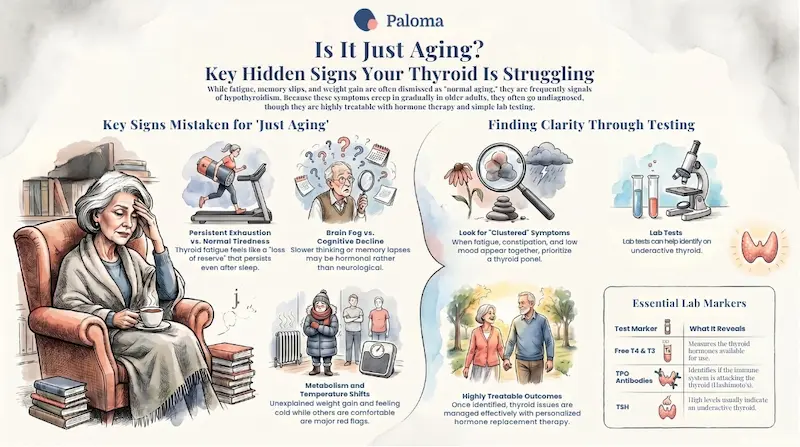
The biggest reason thyroid problems get missed in older adults is that they often do not look textbook. Hypothyroidism symptoms may be milder, fewer, or less specific than in younger people.
That overlap matters because both underactive and overactive thyroid disease become more common with age. Hypothyroidism is more common in people older than 60, but it may be overlooked because the signs can be easy to mistake for other conditions.
A blood test panel to measure thyroid hormones is usually the fastest way to sort out whether thyroid function is part of the problem.
It is reasonable to ask about thyroid testing if symptoms are new, persistent, or clustered, especially when they involve fatigue, constipation, weight changes, temperature sensitivity, low mood, or mental fog. Thyroid testing is also worth discussing if high cholesterol, unexplained heart rhythm changes, or cognitive decline are part of the picture.
Key thyroid tests
If your symptoms raise the question of a thyroid problem, the most useful next step is usually lab testing. These core thyroid tests help show whether your thyroid is underactive or possibly affected by autoimmune disease, and they can provide much clearer answers than symptoms alone.
- TSH: TSH stands for thyroid-stimulating hormone, and it is one of the tests clinicians order when they suspect a thyroid issue. The pituitary gland makes TSH and tells your thyroid how hard to work. A higher-than-normal TSH level often points to hypothyroidism.
- Free T4: Free T4 is free thyroxine, and measures the amount of unbound thyroxine circulating in the blood. This is one of the main hormones the thyroid produces, and it helps show how much hormone is actually available for the body to use. Free T4 is especially helpful when TSH is abnormal or when symptoms and TSH levels do not line up neatly.
- Free T3: Free T3 measures the available and active form of the thyroid hormone triiodothyronine in the blood. You can have symptoms even when your TSH level and free T4 do not fully explain the picture, so free T3 can add useful context. It may be especially relevant when a more complete thyroid picture is needed.
- TPO antibodies: Thyroid peroxidase antibodies help show whether your immune system is attacking your thyroid. Elevated TPO antibodies are commonly associated with Hashimoto’s thyroiditis, the most common cause of hypothyroidism. This test can be especially useful when symptoms are present, but the underlying cause remains unclear.
These tests can be performed at a lab or using Paloma Health’s convenient home thyroid test kit. Paloma’s kit makes it easier to check these key markers without visiting a doctor’s office or lab. That convenience can matter if you’re busy, live far from a clinic, or want a more comfortable way to take the first step toward answers.
A home kit can also be appealing if you’ve been told your symptoms are “just aging” but still want a clearer look at what is going on. By checking TSH, free T4, free T3, and TPO antibodies, you’ll get important information that will help you move more confidently toward the right next step in care.
.webp)
Limited offer
20% off your first Thyroid Test
Aging can absolutely bring real physical and emotional changes. Energy levels may shift, metabolism may slow, sleep patterns may change, and recovery from stress or activity may take longer than it once did. But when multiple “small” symptoms begin piling up at the same time, it is important not to automatically assume they are simply part of getting older. An underactive thyroid is one of the most overlooked hidden causes behind many of these changes, especially because hypothyroidism becomes more common with age and often develops gradually. The good news is that thyroid issues can be straightforward to identify with lab testing and, in most cases, treatable with thyroid hormone replacement therapy once properly diagnosed.
One reason thyroid issues are so easy to miss is that their symptoms can appear subtle on their own. Fatigue may seem like normal aging. Brain fog may feel like stress or being overly busy. Weight gain may seem inevitable in midlife and beyond. Constipation, low mood, muscle aches, cold intolerance, or reduced stamina can all be brushed off as ordinary wear and tear. But when several of these symptoms appear together, persist over time, or begin interfering with daily life, they may be signaling that something deeper is going on hormonally. The thyroid gland influences nearly every major system in the body, so even mild dysfunction can create a ripple effect that impacts how you think, feel, and function every day.
The practical takeaway is simple but important: do not assume every new symptom is inevitable, unavoidable, or “just aging.” If exhaustion is becoming your baseline, if you constantly feel cold when others are comfortable, if brain fog is affecting your focus, or if unexplained weight gain, constipation, aches, pains, or low mood are becoming your new normal, your body deserves a closer look. Thyroid function tests are a smart and proactive next step that can provide clarity and, potentially, real relief. Sometimes, the difference between feeling older and feeling healthier again starts with recognizing that your symptoms may not be aging at all, but rather a thyroid dysfunction that has been hiding in plain sight.

When you are older, thyroid symptoms can be easy to dismiss as part of “normal aging.” But fatigue, weight changes, constipation, brain fog, low mood, and muscle aches are not things you should have to live with, and they deserve a closer look.
At Paloma, you are the focus. We’re here to help you sort out what is really going on by combining careful symptom review, key thyroid testing, and personalized medical guidance that takes your age, health history, and treatment goals into account.
That matters because older adults often need a more nuanced approach to thyroid care. Thyroid symptoms can overlap with other conditions, and treatment decisions may need to be made more carefully to avoid under-treatment, over-treatment, or medication problems.
With Paloma, you can start from home with convenient thyroid testing that checks the markers that matter most, including TSH, free T4, free T3, and TPO antibodies. That gives you and your clinician a clearer picture of whether your symptoms may be linked to hypothyroidism or an autoimmune thyroid condition.
Because your care is personal, your plan should be too. Instead of a one-size-fits-all approach, Paloma helps you connect your results to how you actually feel, so you can get guidance tailored to your needs rather than being brushed off as “just getting older.”
The goal is simple: help you get properly diagnosed, understood, and treated so you can feel more like yourself again!
Can thyroid problems really look like normal aging?
Absolutely. Many thyroid symptoms overlap with common age-related complaints, including fatigue, memory lapses, weight gain, constipation, and muscle aches. Because the changes often develop slowly, you may assume you are simply getting older rather than recognizing a possible hormonal issue.
Why is hypothyroidism more common as you age?
The risk of hypothyroidism increases with age, especially in women. Autoimmune thyroid disease, long-term medication use, and age-related changes in thyroid function can all contribute to a higher likelihood of developing an underactive thyroid later in life.
What does thyroid-related fatigue feel like?
Thyroid fatigue is often deeper and more persistent than ordinary tiredness. Many people describe feeling drained even after a full night’s sleep, struggling with everyday tasks, or losing stamina for activities they used to handle easily.
Can hypothyroidism cause weight gain even if my habits haven’t changed?
Yes. An underactive thyroid slows your metabolism, which can lead to gradual weight gain despite eating and activity patterns staying relatively stable. Some people also notice puffiness or swelling, especially in the face and hands.
Why do thyroid problems make you feel cold all the time?
Your thyroid hormone helps regulate body temperature and heat production. When thyroid levels are low, your body may struggle to maintain warmth, leaving you unusually sensitive to cold.
Could my constipation actually be related to my thyroid?
It could. Hypothyroidism slows digestion and bowel movement activity, which can result in persistent constipation, bloating, and sluggish digestion. If constipation becomes chronic or resistant to usual remedies, thyroid testing may be worth discussing.
Can hypothyroidism affect memory and concentration?
Yes. Brain fog and cognitive impairment are common but overlooked thyroid symptoms. People may notice slower thinking, forgetfulness, difficulty concentrating, or trouble staying mentally organized, especially when these symptoms appear alongside fatigue or other physical changes.
Is depression connected to thyroid disease?
Low thyroid hormone levels can contribute to depression-like symptoms, including low motivation, emotional flatness, withdrawal, and loss of interest in activities. In some cases, treating the thyroid imbalance can significantly improve mood and emotional well-being.
What thyroid tests should I ask for?
The most commonly ordered tests include TSH and Free T4, which help evaluate thyroid function. Many clinicians also check Free T3 and TPO antibodies to get a fuller picture and determine whether autoimmune thyroid disease may be involved.
When should I consider getting my thyroid checked?
It’s smart to consider testing when multiple symptoms appear together or persist despite lifestyle changes. Fatigue, unexplained weight changes, constipation, cold intolerance, brain fog, low mood, and muscle weakness are especially important clues that thyroid function may deserve a closer look.
%20copy%202.webp)

%20(1).webp)


