



.webp)
In this article
Meet the experts
Claire Norton, Lic.ac MBAcC, is a Licensed Acupuncturist with 14 years of specialist experience in fertility and women’s hormonal health. She is the founder of Claire Norton Acupuncture.
Jamie Bacharach, Dipl. Ac is a Licensed Acupuncturist and Chinese Medicine Practitioner, and the Head of Practice at the Acupuncture Jerusalem Clinic.
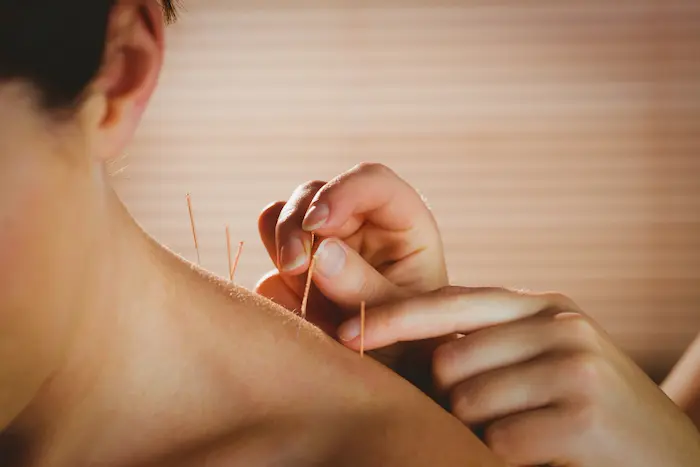
For thousands of years, acupuncture has been a cornerstone of Traditional Chinese Medicine (TCM), used to treat everything from chronic pain to digestive disorders. Today, it’s attracting growing attention in the realm of hormonal health — and for good reason. From underactive thyroid and autoimmune thyroid disease to the hot flashes of menopause and the stubborn weight gain that often accompanies hormonal imbalance, a growing body of clinical research is exploring whether ancient needles can offer modern hormonal relief.
Let’s take a look at the evidence.
Acupuncture is a therapeutic practice that involves inserting very fine, sterile needles into specific anatomical points on the body — known as acupuncture points — to stimulate physiological responses. It has been practiced for over 2,500 years, rooted in the TCM concept that vital energy (called qi, pronounced “chee”) flows through pathways in the body called meridians. According to this framework, illness arises when that flow is blocked or disrupted, and acupuncture restores balance by stimulating precise points along those channels.
Modern science has offered a more mechanistic explanation. Research shows that acupuncture stimulates the release of endorphins and neurotransmitters, including serotonin and dopamine, and that it influences the autonomic nervous system, hormonal release, and neuroplastic changes in the brain. When a needle is inserted, sensory signals travel from nerve endings near the acupuncture point up the spinal cord to the brainstem, triggering a cascade of biochemical effects throughout the body. Studies confirm that acupuncture activates the body’s own opioid-like chemicals, including endorphins, which bind to pain-regulating receptors, and that these effects are mediated through real neurological pathways — not simply a placebo.
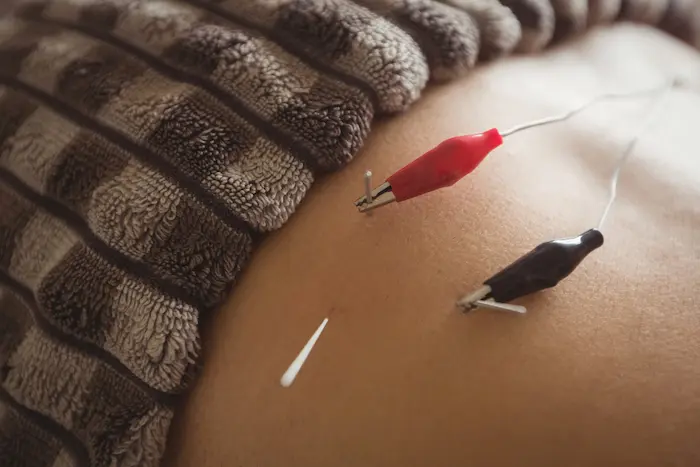
There are several forms of acupuncture used in clinical practice today:
- Traditional manual acupuncture — needles are inserted and gently manipulated by hand
- Electroacupuncture (EA) — a mild electrical current is passed through the needles to enhance stimulation
- Auricular acupuncture — needles or small seeds are applied to points on the outer ear
- Moxibustion — dried herb (mugwort) is burned near acupuncture points to add warming stimulation
- Laser acupuncture — non-invasive light stimulation of acupuncture points
Acupuncture sessions typically last 30 to 60 minutes, and a course of treatment usually spans 6 to 12 sessions, often spaced 1 to 2 weeks apart depending on the condition being treated. The needles themselves are extremely thin — far finer than a hypodermic needle — and most people describe the sensation as minimal, often a gentle ache or tingling at the needle site.
When performed by a trained and licensed practitioner using sterile, single-use needles, acupuncture carries a very low risk of adverse effects. The most commonly reported side effects are minor bruising, temporary soreness, and occasional lightheadedness during or shortly after treatment.
Hypothyroidism — the condition in which the thyroid gland does not produce sufficient thyroid hormone — affects millions of people worldwide, with women being disproportionately impacted. The most common underlying cause is Hashimoto’s thyroiditis, an autoimmune disease in which the immune system attacks thyroid tissue. Conventional treatment centers on thyroid hormone replacement therapy. While this is effective at normalizing thyroid hormone, including thyroid-stimulating hormone (TSH levels), it does not address the autoimmune inflammation that drives Hashimoto’s thyroiditis, and many patients continue to experience symptoms such as fatigue, brain fog, weight gain, and mood disruption even with optimized thyroid hormone medication.
This gap has driven significant research into whether acupuncture can provide an add-on benefit.
A landmark 2024 systematic review and meta-analysis analyzed randomized controlled clinical trials examining acupuncture’s effects on the thyroid gland and Hashimoto’s thyroiditis. The review’s findings were notable:
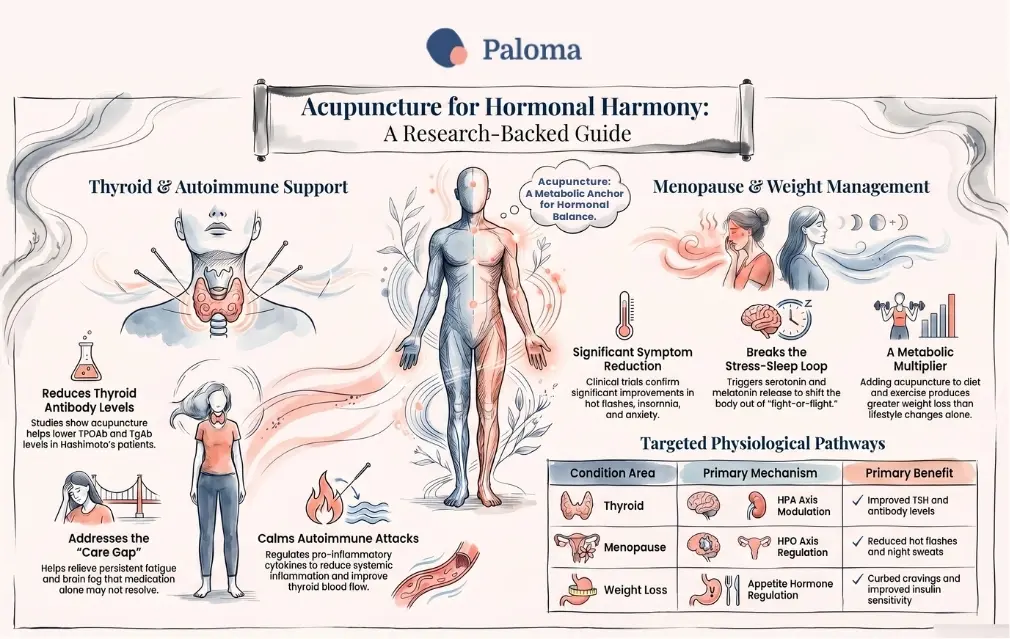
Acupuncture, when used alongside standard care, showed a meaningful ability to reduce thyroid antibody levels (specifically TPOAb and TgAb) and improve thyroid function markers, areas where thyroid medication alone typically falls short.
A separate exploratory randomized controlled trial published in Integrative Medicine Research in 2024 investigated a specific form of treatment — Hand Yangming Meridian Penetrating Acupuncture — in patients with autoimmune thyroiditis who were already taking thyroid hormone. The trial found that participants who received acupuncture alongside their existing medication showed greater reductions in thyroglobulin antibody (TgAb) levels compared with those who received medication alone. Researchers noted that patients experiencing neck discomfort, fatigue, or elevated antibody levels may particularly benefit from this approach.
A 2023 meta-analysis included nine randomized controlled trials with a total of 704 patients and evaluated the efficacy and safety of acupuncture in treating Hashimoto’s thyroiditis. The analysis found that the combination of acupuncture and standard medical treatment outperformed medication alone across multiple outcome measures.
Mechanistically, acupuncture is thought to influence autoimmune thyroid conditions through several pathways:
- by modulating the HPA axis -- the hypothalamic-pituitary-adrenal axis -- which plays a role in immune regulation
- by reducing systemic inflammation
- by improving blood flow to the thyroid gland itself.
Some researchers propose that the stimulation of specific acupuncture points around the neck and forearm may exert a localized regulatory effect on thyroid tissue.
Practitioner experience
Jamie Bacharach, a licensed acupuncturist and Chinese medicine practitioner, has found that acupuncture is an excellent complementary treatment alongside conventional thyroid medications. Says Bacharach: “It should never be a total substitute for what the doctor prescribes. Many patients on synthetic hormone dosages still feel unwell. Acupuncture helps by bridging the care gap. While the prescription can stabilize hormone levels, acupuncture helps enhance blood flow, lower inflammation, and improve organ function to maximize comfort.”
Claire Norton, whose acupuncture practice focuses on women’s hormonal health, agrees. Says Norton: “Acupuncture can be supportive alongside thyroid medication, not instead of it. Combined with dietary and lifestyle support, I’ve seen it reduce TPO antibodies and bring TSH closer to optimal, while also improving how women feel on a daily basis.”
Important caveats
Most studies in this area are relatively small, many originate from China, where acupuncture is integrated into standard care, and the methodological quality is variable. The current evidence is promising, but acupuncture is not a replacement for thyroid hormone replacement medication. What the research does increasingly support is its role as a complementary intervention — one that may help reduce antibody levels, relieve persistent symptoms, and improve quality of life in Hashimoto’s patients whose needs aren’t fully met by medication alone.
If you have hypothyroidism or Hashimoto’s thyroiditis, discuss any complementary therapies — including acupuncture — with your healthcare provider before beginning treatment. Thyroid function should continue to be monitored through regular blood testing.
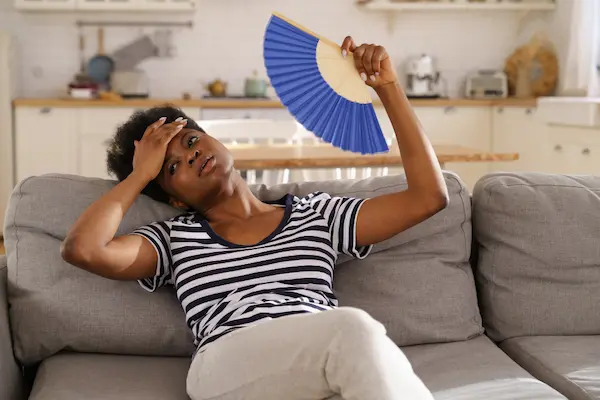
The hormonal upheaval of perimenopause and menopause is one of the most common reasons women seek out acupuncture. As estrogen and progesterone fluctuate and ultimately decline, the resulting symptoms can be wide-ranging and deeply disruptive: hot flashes, night sweats, insomnia, mood changes, anxiety, joint pain, vaginal dryness, and cognitive changes, among others. While hormone replacement therapy (HRT) remains the most effective conventional treatment for vasomotor symptoms, it’s not suitable for all women, and many seek non-hormonal alternatives.
The evidence for acupuncture here is arguably among the strongest in the hormonal health space.
A 2025 systematic review and network meta-analysis published in Frontiers in Neurology comprehensively evaluated the comparative effectiveness of different forms of acupuncture for perimenopausal syndrome. Analyzing data from multiple trials, the researchers found that acupuncture significantly improved the full spectrum of perimenopausal symptoms — including hot flashes, insomnia, and mood disturbance — compared with control groups. Different types of acupuncture showed advantages for different symptom clusters, with some modalities performing better for sleep and others showing stronger effects on vasomotor symptoms.
Hot flashes
For hot flashes specifically, a review analyzed by the Evidence Based Acupuncture project examined 12 studies involving 869 participants and found that acupuncture significantly reduced hot flash frequency and severity, and also improved menopause-related psychological, somatic, and urogenital symptoms as well as overall quality of life.
Sleep disruption
Sleep disruption is one of the most common and debilitating symptoms of the menopausal transition, with insomnia rates running as high as 39 to 47% in perimenopausal women. A 2025 systematic review and meta-analysis published in PLOS ONE examined 28 randomized controlled trials on acupuncture for menopausal insomnia. Six of these were high-quality sham-controlled trials — the gold standard in acupuncture research — and they collectively showed that acupuncture significantly improved sleep quality scores, increased total sleep time, improved sleep efficiency, and reduced wakefulness after sleep onset. Importantly, the improvements were maintained at a four-week follow-up, suggesting the durability of the effect.
Depression and anxiety
For depression and anxiety during perimenopause, a 2023 trial published in Frontiers in Public Health investigated acupuncture specifically for depression and insomnia during perimenopause. The sham-controlled trial found encouraging results across depression, anxiety, sleep quality, and menopause-specific quality-of-life measures, supporting a larger confirmatory trial.
Cognitive health
There is also emerging evidence on acupuncture’s potential role in protecting cognitive health during and after menopause, a period when the risk of cognitive decline rises. A review that included 13 studies comparing acupuncture with medication alone for cognitive symptoms found positive effects on mental state scores and activities of daily living.
Practitioner experience
According to Claire Norton, acupuncture can be really supportive for women going through perimenopause and menopause. Says Norton: “The symptoms I see improve most consistently are sleep, anxiety, hot flushes, headaches, palpitations, and migraines. But beyond the individual symptoms, what women often say is that they just feel more balanced and regulated. They also wish they started acupuncture sooner!”
Jamie Bacharach has found that acupuncture helps address stress and sleep disturbances that may worsen peri/menopausal or thyroid-related symptoms. Say Bacharach: “High stress spikes cortisol, which inhibits thyroid function and worsens symptoms. It’s a vicious cycle because poor sleep fuels stress, and vice versa. Acupuncture breaks this loop by shifting your body out of ‘fight-or-flight’ and into a relaxed state. It triggers the release of serotonin and melatonin, calming nerves and regulating your circadian rhythm so that hormonal symptoms are more manageable.”
How acupuncture works for menopausal symptoms
Acupuncture is thought to help menopausal symptoms through several pathways:
- by modulating the hypothalamic-pituitary-ovarian axis, which governs the hormonal changes of menopause;
- by increasing beta-endorphin levels (which naturally decline during this transition and contribute to hot flashes);
- by calming the sympathetic nervous system, which plays a role in triggering vasomotor episodes.
The overall picture is one of consistent, moderate-to-strong benefit across multiple symptom domains — with an excellent safety profile and no contraindications for the vast majority of women, including those for whom HRT is not appropriate.
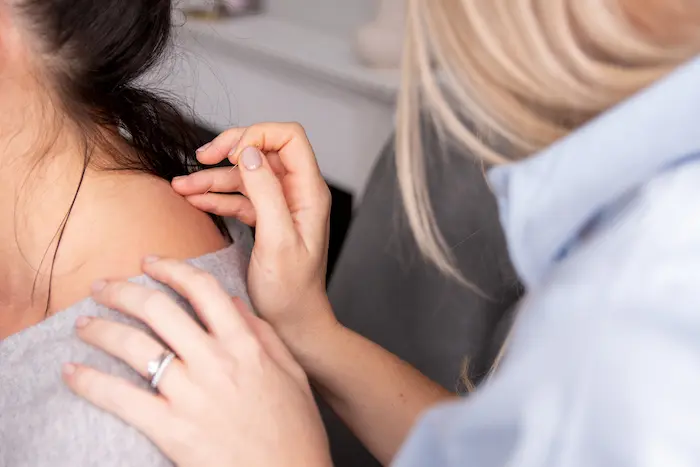
Hormonal imbalances are associated with many conditions, including hypothyroidism, perimenopause, and polycystic ovary syndrome (PCOS), now called polyendocrine metabolic ovarian syndrome (PMOS). These imbalances can all slow the metabolic rate and make weight management significantly more difficult. Acupuncture is increasingly studied as a support for weight-related outcomes, and while it is not a standalone weight-loss solution, the research suggests a clinically meaningful adjunctive role.
A 2024 systematic review and meta-analysis published in Diabetes, Metabolic Syndrome and Obesity evaluated 25 randomized controlled clinical trials involving 2,018 patients, assessing acupuncture as an adjunct to lifestyle interventions (diet and exercise) in people with simple obesity. The findings showed that adding acupuncture to lifestyle modifications produced significantly greater reductions in body weight, body mass index (BMI), and waist circumference than lifestyle changes alone. The analysis also showed improvements in markers of glucose and lipid metabolism, suggesting benefits that extend beyond the scale.
A 2024 meta-analysis published in Frontiers in Medicine evaluated the effectiveness and safety of various acupuncture techniques for overweight and obesity. The analysis found that electroacupuncture added to usual care produced a statistically significant reduction in body weight compared with usual care alone. Different acupuncture modalities — electroacupuncture, auricular acupuncture, laser acupuncture, and manual acupuncture — demonstrated distinct strengths, with electroacupuncture showing particular effectiveness for body weight outcomes.
Earlier foundational research published in Evidence-Based Complementary and Alternative Medicine also provided insight: acupuncture is thought to influence weight by affecting appetite-regulating hormones such as ghrelin and leptin, the hypothalamus (which governs hunger and satiety signals), and by improving insulin sensitivity. These effects make acupuncture a particularly interesting option for individuals whose weight challenges are hormonally driven.
Practitioner experience
Acupuncturist Claire Norton’s experience in her practice fits with the research. Says Norton: “Weight can be part of the bigger picture, but acupuncture isn’t a magic fix. For women with thyroid dysfunction or hormonal imbalance, weight gain is often a symptom of the underlying issue rather than a separate problem. As hormones become better regulated – TSH normalizes, energy improves, sleep stabilizes – weight can begin to shift. Acupuncture supports that process, but it isn’t a quick fix.”
Acupuncturist Jamie Bacharach agrees. “For weight management, acupuncture isn’t a magic quick fix, but it serves as a true metabolic anchor that curbs cravings and boosts energy so that lifestyle changes undertaken to lose weight actually work.”
Choosing a qualified practitioner is essential for both safety and outcomes. In the United States, acupuncture is a regulated healthcare profession in most states, and there are clear credentials to look for.
Licensure and national board certification
Licensure and national board certification are your primary indicators of training and competency. The National Certification Commission for Acupuncture and Oriental Medicine (NCCAOM) is the main credentialing body in the U.S. NCCAOM certification — or a passing score on the NCCAOM examinations — is a prerequisite for licensure in 46 states plus the District of Columbia, representing 98% of states that regulate acupuncture. Practitioners who hold NCCAOM certification have completed a rigorous master’s-level program (typically three to four years), passed national board examinations, and fulfilled continuing education requirements.
When looking for a practitioner, you can use the NCCAOM’s “Find a Practitioner” directory to locate certified acupuncturists in your area — this is a reliable and vetted source. The National Commission for Certifying Agencies (NCBAHM) also maintains a directory of diplomates nationwide.
What credentials to look for on a practitioner’s profile or clinic website:
- L.Ac. — Licensed Acupuncturist (state licensure)
- Dipl. Ac. or Dipl. O.M. — Diplomate of Acupuncture or Oriental Medicine (NCCAOM national board certification)
- Graduation from an institution accredited by the Accreditation Commission for Acupuncture and Herbal Medicine (ACAHM)
- Membership in a state or national professional association

Questions to ask a prospective acupuncturist
Some questions you may want to ask a prospective acupuncturist include:
- Do you have experience treating hormonal health conditions, including thyroid disorders or menopausal symptoms?
- How many sessions would you recommend for my specific concerns, and what outcomes should I realistically expect?
- Do you use sterile, single-use needles? (The answer should always be yes.)
- Will you coordinate care with my physician?
Insurance coverage
Acupuncture coverage is expanding. Many major health insurance plans now cover acupuncture for at least some indications (most commonly chronic pain). It is worth checking with your insurer to understand what is covered under your specific plan, as coverage for conditions like menopausal symptoms or thyroid disease varies.
Acupuncture is not a replacement for medication or evidence-based hormonal care. What the growing body of research does suggest, however, is that it can be a meaningful complement to these approaches — helping to reduce your thyroid antibody levels, ease symptoms of perimenopause and menopause, improve your sleep and mood, and support weight management efforts when combined with lifestyle changes.
Overall, acupuncture can be a genuinely valuable addition to a well-managed treatment plan. The key word is managed. Complementary therapies work best when your conventional care is already optimized: your thyroid levels are regularly monitored, your perimenopause and menopause are being treated, your weight loss is being managed, your medication is properly dosed, and you have a provider and support team who truly understand the complexity of hormonal health conditions. That’s where Paloma Health comes in. By combining specialist-level expertise with convenient telehealth access, convenient and comprehensive lab testing, and a care team that treats the whole person — not just lab values — Paloma gives you the strong foundation you need to explore every avenue toward feeling your best.
What is acupuncture?
Acupuncture is a complementary medicine treatment that involves inserting very thin needles into specific points on the body. It originated in Traditional Chinese Medicine and is now studied for its effects on the nervous system, hormones, immune function, and pain regulation.
How does acupuncture affect hormones?
Research suggests acupuncture may influence hormone regulation by affecting the nervous system, the hypothalamic-pituitary axis, and inflammatory pathways. These effects may help the body better adapt to hormonal fluctuations and imbalances.
Can acupuncture help with Hashimoto’s thyroiditis?
Several recent studies suggest acupuncture may help lower thyroid antibody levels and improve some thyroid-related symptoms when used alongside conventional treatment. However, it should not replace thyroid hormone medication.
Can acupuncture improve hypothyroidism symptoms?
Many patients report improvements in fatigue, brain fog, mood, and overall well-being when acupuncture is added to their treatment plan. Research indicates these benefits to your thyroid gland may be related to reduced inflammation and improved physiological regulation.
Does acupuncture help with menopause symptoms?
Evidence shows acupuncture may reduce hot flashes, night sweats, sleep disturbances, anxiety, and other common menopausal symptoms. Many women also report improved quality of life and emotional well-being.
Can acupuncture help with insomnia during menopause?
Yes. Multiple clinical trials have found that acupuncture can improve sleep quality, increase total sleep time, and reduce nighttime awakenings in women experiencing menopausal insomnia.
Is acupuncture effective for weight loss?
Acupuncture is not a standalone weight-loss treatment, but studies suggest it may support weight management when combined with diet and exercise. It may help by influencing appetite regulation, insulin sensitivity, and energy balance.
How many acupuncture sessions are usually needed?
Treatment plans vary depending on the condition being addressed, but many practitioners recommend a series of six to twelve sessions. Some people notice improvements sooner, while others benefit from ongoing maintenance treatments.
Is acupuncture safe?
When performed by a licensed practitioner using sterile, single-use needles, acupuncture is generally very safe. The most common side effects are minor bruising, temporary soreness, or mild lightheadedness.
How do I find a qualified acupuncturist?
Look for practitioners who are state-licensed and hold credentials such as L.Ac. or NCCAOM certification. It’s also a good idea to ask about their experience treating thyroid disorders, menopause symptoms, or other hormonal health concerns relevant to your situation.


