



.webp)
In this article
- What is POTS?
- Beyond POTS: Other types of autonomic dysfunction
- Signs, symptoms, and how it's diagnosed
- The thyroid connection: Hashimoto's, hypothyroidism, and your nervous system
- Perimenopause, menopause, and autonomic changes
- Where it all intersects: Research on POTS, thyroid disease, and menopause
- Managing symptoms: what can help
- A note from Paloma
- Frequently asked questions
Your body runs an enormous amount of machinery you never consciously think about: your heartbeat, blood pressure, digestion, sweating, breathing rate, and even how quickly your pupils adjust to light. All of that background operation is run by your autonomic nervous system (ANS) — the branch of your nervous system that regulates involuntary body functions.
The ANS has two main divisions that work like a gas pedal and a brake. The sympathetic nervous system is your "fight or flight" branch. It speeds up your heart rate, raises blood pressure, and diverts blood to your muscles when you need to react quickly. The parasympathetic nervous system is your "rest and digest" branch. It slows your heart rate, supports digestion, and helps your body recover. The vagus nerve, the longest cranial nerve in the body, is the primary highway for parasympathetic signaling and plays an outsized role in keeping your heart rate steady.
When these two systems are balanced, you don't notice them at all. You stand up from a chair, and your blood vessels automatically constrict while your heart rate ticks up slightly to keep blood flowing to your brain. You eat a meal, and digestion ramps up without a second thought. But when the ANS falls out of balance — a condition broadly known as dysautonomia — these automatic adjustments misfire. Blood pressure and heart rate swing unpredictably. Digestion slows or speeds erratically. Temperature regulation goes haywire.
Your thyroid gland has a direct line into this system. Thyroid hormone affects how sensitive your heart and blood vessels are to nervous system signals, and it works alongside your body's other major stress-response network, the hypothalamic-pituitary-adrenal (HPA) axis. If you want the fuller picture of how that stress-response system interacts with thyroid health, Paloma's guide to your HPA axis, Hashimoto's, and hypothyroidism is a useful companion piece. That relationship — plus the hormonal shifts of perimenopause and menopause — is central to understanding conditions like postural orthostatic tachycardia syndrome, or POTS.
What is POTS?
Postural orthostatic tachycardia syndrome, or POTS, is one of the most common — and most commonly missed — forms of dysautonomia. It's defined by a sustained heart rate increase of at least 30 beats per minute (or a rate exceeding 120 bpm) within 10 minutes of standing up, without the drop in blood pressure that defines orthostatic hypotension. In plain terms: your heart races when you stand, even though your blood pressure doesn't necessarily fall.
POTS affects an estimated 1% of the population in developed countries, translating to more than 3 million people in the United States alone, and it disproportionately affects women, particularly younger women — though, as we'll cover, midlife hormonal transitions matter too. Despite how common it is, only a minority of primary care providers report being familiar with the condition, and the average patient waits years and sees multiple specialists before getting a diagnosis.
Common triggers for POTS onset include viral illness, pregnancy, surgery, concussion, or another significant physical stressor — though for many patients, there's no single identifiable trigger. If your heart has ever felt like it was "trying to escape your chest" on standing, or you've been told your palpitations are "just anxiety," it's worth reading Paloma's article on thyroid problems and heart palpitations, since thyroid dysfunction and POTS can produce nearly identical sensations — and can also occur together.
Beyond POTS: Other types of autonomic dysfunction
POTS is only one form of dysautonomia. Others you may encounter include:
● Neurocardiogenic (vasovagal) syncope — a sudden drop in heart rate and blood pressure that causes fainting, often triggered by standing for long periods, heat, or stress.
● Orthostatic hypotension — a drop in blood pressure upon standing, distinct from POTS because heart rate doesn't necessarily spike to compensate.
● Inappropriate sinus tachycardia — a persistently elevated resting heart rate not explained by activity, fever, or another obvious cause.
● Small fiber neuropathy — nerve damage that can disrupt the autonomic signals controlling sweating, temperature regulation, and blood vessel tone.
These conditions frequently overlap with one another and with other syndromes, including Ehlers-Danlos syndrome (a connective tissue disorder), mast cell activation syndrome, chronic fatigue syndrome, and autoimmune disease. They also share a great deal of symptom overlap with hypothyroidism and Hashimoto's — fatigue, brain fog, temperature intolerance, and lightheadedness show up on nearly every list. If any of that sounds familiar, Paloma's rundown of hypothyroidism signs and symptoms is worth comparing against what you're experiencing, since distinguishing between an underactive thyroid and a nervous system problem — or recognizing that you may have both — is often the first real step toward relief.
Signs, symptoms, and how it's diagnosed
The symptom list for autonomic dysfunction is long, which is part of why it's so often missed or misattributed to anxiety, deconditioning, or "just getting older." The most frequently reported symptoms include:
● Lightheadedness or dizziness, especially when standing
● Heart palpitations or a racing heart on standing
● Fatigue that doesn't improve with rest
● Brain fog, trouble concentrating, or word-finding difficulty
● Exercise intolerance or post-exertional fatigue and energy crashes
● Nausea, bloating, or other digestive changes
● Temperature intolerance or unusual sweating patterns
● Headaches, tremors, or a visible bluish discoloration of the legs when standing
Diagnosis typically starts with a detailed history and a simple in-office test: an active stand test, where heart rate and blood pressure are measured lying down and then at intervals after standing, or a tilt table test, where you're secured to a table that's slowly raised to a near-vertical position while your vitals are continuously monitored. If POTS is confirmed or suspected, your provider may also order additional autonomic testing, bloodwork to rule out anemia or electrolyte problems, and — critically — a full thyroid panel, since untreated hypothyroidism and Hashimoto's can produce a nearly identical clinical picture.
This diagnostic gap isn't unique to POTS. Hashimoto's thyroiditis is itself frequently misdiagnosed or missed entirely, in part because its symptoms are so nonspecific and overlap so heavily with normal aging, stress, and — as we'll get to — perimenopause. When two conditions with overlapping symptoms are each independently under-recognized, patients can spend years bouncing between specialists before anyone connects the dots.
The thyroid connection: Hashimoto's, hypothyroidism, and your nervous system
Thyroid hormone doesn't just control your metabolism — it directly shapes how your autonomic nervous system regulates your heart. A 2022 systematic review and meta-analysis pooling data from 17 studies and more than 11,000 participants found that people with untreated hypothyroidism had measurably lower heart rate variability (HRV) — a marker of how well the sympathetic and parasympathetic systems are balancing each other — compared with healthy controls, with the imbalance growing more pronounced as hypothyroidism became more severe. The pattern pointed toward reduced parasympathetic (vagal) activity alongside heightened sympathetic drive: essentially, an underactive thyroid nudges your nervous system toward a chronic low-grade "fight or flight" state. Interestingly, hyperthyroidism produces its own distinct HRV disturbances, underscoring that both too little and too much thyroid hormone can destabilize autonomic regulation.
The connection runs deeper than shared symptoms. Hashimoto's thyroiditis is an autoimmune condition, and autoimmunity itself is increasingly recognized as a contributor to some cases of POTS. Researchers presenting at the Endocrine Society's 2025 meeting specifically examined the correlation between POTS and Hashimoto's thyroiditis, noting that thyroid hormone fluctuations from autoimmune attack can affect autonomic regulation, cardiovascular function, and inflammation simultaneously — and that pro-inflammatory cytokines common to both conditions may help explain why they cluster together in the same patients. Separately, a review in the Cleveland Clinic Journal of Medicine highlighted that autoimmune markers, including thyroid antibodies, are disproportionately common among POTS patients, reinforcing the idea that autoimmunity may be one of several underlying pathways driving autonomic symptoms in a meaningful subset of people.
This is one reason thyroid testing deserves a prominent place in any autonomic symptom workup — and why hypothyroidism and Hashimoto's deserve a prominent place in any autonomic symptom conversation. Because these conditions are also far more likely to emerge or worsen during the hormonal transition of perimenopause, many women experience the thyroid-autonomic connection and the menopause-autonomic connection at the same time, making it especially difficult to sort out which system is driving which symptom. Hormonal symptoms can also extend beyond estrogen; some women notice changes tied to declining testosterone levels alongside hypothyroidism, adding yet another layer to an already complex picture.
Perimenopause, menopause, and autonomic changes
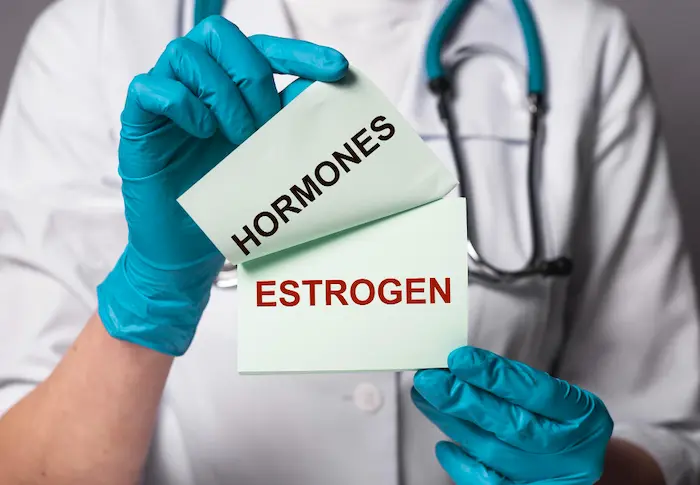
Estrogen isn't just a reproductive hormone — it's a major regulator of the autonomic nervous system. Estrogen receptors are distributed throughout the cardiovascular system and brainstem regions that govern heart rate and blood pressure control, and research going back decades has shown that removing estrogen abruptly can measurably shift that balance. In a frequently cited study, women who underwent surgical removal of their ovaries showed a decline in cardiac vagal (parasympathetic) modulation and a shift toward sympathetic hyperactivity within weeks — a shift that reversed after three months of estrogen replacement therapy, offering direct evidence that estrogen itself, not just aging, shapes autonomic balance and affects menopausal symptoms.
Natural menopause unfolds more gradually, but the underlying physiology is similar. A comprehensive 2025 review in Autonomic Neuroscience concluded that the menopausal loss of estradiol contributes to measurable changes in autonomic and vascular physiology, with sympathetic activity rising more steeply in postmenopausal women than in aging men — a pattern the authors linked to the sharp rise in cardiovascular disease risk that follows menopause. Hallmark menopause symptoms like hot flashes and night sweats aren't just uncomfortable; they're thought to reflect this same underlying sympathetic overdrive and impaired vagal tone.
For many women, this means the perimenopausal and menopausal years bring a new or worsening constellation of dysautonomia-like symptoms: heart palpitations, lightheadedness on standing, disrupted sleep, temperature dysregulation, mood swings, and anxiety that can feel disproportionate to the situation. It's a pattern that's easy to misread as "just menopause symptoms" or "just stress," but the hormonal shifts of this transition can also intersect with the immune system in ways that raise the risk of new or worsening autoimmune conditions — including Hashimoto's — at exactly the same life stage.
Where it all intersects: Research on POTS, thyroid disease, and menopause
Put the three pieces together and a pattern emerges. Thyroid hormone shapes autonomic tone. Estrogen shapes autonomic tone. Autoimmunity — more common in both Hashimoto's and, in a meaningful subset of cases, POTS — tends to flare during hormonal transitions. A 2019 review in Frontiers in Endocrinology describes menopause as one of two major "endocrinological transitions" in a woman's life (alongside puberty) capable of meaningfully altering immune function and autoimmune disease risk — precisely the window during which thyroid autoimmunity and autonomic symptoms both tend to intensify.
For a woman in her 40s or 50s who develops new heart palpitations, dizziness on standing, unrelenting fatigue, and brain fog, there are at minimum three plausible — and not mutually exclusive — explanations:
- emerging or worsening hypothyroidism
- autonomic dysfunction such as POTS, and
- the direct autonomic effects of the menopausal transition itself.
In practice, many patients have some combination of all three, which is exactly why symptoms can feel so confusing and why standard blood tests alone sometimes miss what's going on. It's also why comprehensive symptom tracking and thorough thyroid testing matter so much during this stage of life; Paloma's guide to perimenopause, menopause, and hypothyroidism walks through how these overlapping symptom sets can be teased apart with your care team.
None of this means every palpitation, dizzy spell, or vasomotor symptom during midlife is POTS, or that every case of POTS is secretly a thyroid problem. But given how much these systems overlap — physiologically and symptomatically — it's reasonable, and often necessary, to investigate thyroid function, autonomic function, and hormonal status together rather than in isolation, particularly when standard reassurances ("your labs are normal," "it's probably just stress") haven't resolved how you feel.
.webp)
Managing symptoms: what can help
Because POTS, thyroid dysfunction, and menopause-related autonomic changes can overlap and compound one another, management usually works best as a layered approach rather than a single fix.
Lifestyle strategies
- Increase fluid and sodium intake (under medical guidance) to help support blood volume
- Wear waist-high compression garments to reduce blood pooling in the legs
- Rise slowly from sitting or lying positions, and avoid prolonged standing
- Favor recumbent or seated exercise (rowing, swimming, recumbent cycling) when reconditioning, since upright exercise can initially worsen symptoms
- Prioritize consistent sleep and stress-reduction practices, since both influence autonomic tone

Medical strategies
Getting thyroid hormone levels into an optimal range — not just "within the reference range" — is a foundational step for anyone with Hashimoto's or hypothyroidism who's also dealing with autonomic symptoms. For some patients, the type or delivery method of thyroid medication matters too; if you've struggled with absorption or fluctuating levels, it's worth discussing options like the ones covered in Paloma's comparison of liquid levothyroxine versus tablets with your prescriber.
For perimenopausal and menopausal symptoms, a conversation about hormone replacement therapy (HRT) is worth having with a knowledgeable provider, since restoring estrogen has been shown in research to help rebalance autonomic tone for some women.
And for POTS specifically, women's health providers may consider medications such as beta blockers, fludrocortisone, or midodrine, always individualized to your symptom pattern and other health conditions.
If you're navigating thyroid and menopause symptoms at the same time and want care that treats them as connected rather than separate problems, it's worth exploring integrated menopause and thyroid care rather than seeing separate providers who never compare notes.
A note from Paloma
If you've read this far because so much of it sounds like your own life, you're not alone — and you're not imagining it. At Paloma Health, we built our practice around the reality that hypothyroidism and Hashimoto's rarely show up in isolation, especially for women navigating the hormonal changes of perimenopause and menopause. Our doctors look at your full thyroid panel, not just TSH, and take symptoms like palpitations, dizziness, fatigue, and brain fog seriously rather than dismissing them as unrelated or "just stress."
Through at-home lab testing, video visits with hormone-focused physicians, nutritionist support, and a members' community of people navigating the same overlapping conditions, Paloma is built for women's health at many stages, helping help you connect the dots between your thyroid, your hormones, and how your whole nervous system feels day to day — rather than leaving you to piece it together alone across a string of six-month specialist waitlists.

Frequently asked questions
Can hypothyroidism cause POTS?
Hypothyroidism doesn't directly cause POTS, but it can produce nearly identical symptoms and measurably alters heart rate variability and autonomic balance. Because Hashimoto's and POTS both involve autoimmunity and overlapping symptoms, the two conditions are also seen together more often than would be expected by chance.
Is POTS the same thing as anxiety?
No. POTS involves an objective, measurable heart rate increase upon standing that shows up on testing, not just a subjective feeling of nervousness. Anxiety can worsen POTS symptoms and vice versa, but treating POTS as "just anxiety" often delays proper diagnosis for years.
Does menopause cause dysautonomia?
Menopause doesn't cause dysautonomia in the clinical sense, but the drop in estrogen that defines this transition measurably shifts the nervous system toward more sympathetic ("fight or flight") activity and less parasympathetic tone. That shift can produce palpitations, dizziness, and temperature swings that closely resemble autonomic dysfunction.
What tests diagnose POTS?
The core diagnostic tools are an active stand test or a tilt table test, both of which track heart rate and blood pressure changes as you move from lying or sitting to standing. Additional autonomic testing, bloodwork, and a full thyroid panel are often used to rule out or identify contributing conditions.
Can Hashimoto's thyroiditis affect your heart rate?
Yes. Both hypothyroidism and the autoimmune inflammation of Hashimoto's have been linked in research to reduced heart rate variability, a marker of autonomic imbalance, along with palpitations and an abnormally slow or occasionally erratic heart rate.
Why are dysautonomia symptoms worse in perimenopause?
Perimenopause involves large, sometimes rapid fluctuations in estrogen and progesterone, and estrogen plays a direct role in regulating vagal (parasympathetic) tone. Those hormonal swings can temporarily amplify heart rate variability, palpitations, and orthostatic symptoms even before menopause is complete.
Can thyroid medication help autonomic symptoms?
For people whose autonomic symptoms are driven by underlying hypothyroidism, optimizing thyroid hormone levels can meaningfully improve palpitations, fatigue, and temperature intolerance. It won't resolve autonomic symptoms that stem from other causes, which is why a broader workup matters if symptoms persist despite normal thyroid levels.
Is POTS more common in women?
Yes, POTS disproportionately affects women, particularly those of reproductive age, with studies reporting that roughly 85 to 90 percent of patients are female. Hormonal factors, including estrogen's role in autonomic regulation, are thought to help explain this striking sex difference.
Should I ask my doctor for a full thyroid panel if I have POTS symptoms?
It's a reasonable and often overlooked request, since a standard TSH-only test can miss meaningful thyroid dysfunction or antibody-positive Hashimoto's. A full panel, including TSH, free T4, free T3, and thyroid antibodies, gives a much clearer picture of whether your thyroid is contributing to your symptoms.
Can hormonal therapy help autonomic symptoms during menopause?
For some women, restoring estrogen through menopausal hormone therapy has been shown in research to help shift autonomic balance back toward healthier parasympathetic function. Whether it's appropriate for you depends on your individual health history, so it's a conversation to have directly with a knowledgeable menopause or thyroid provider.

.webp)

%20copy%202.webp)

%20(1).webp)


