



In this article
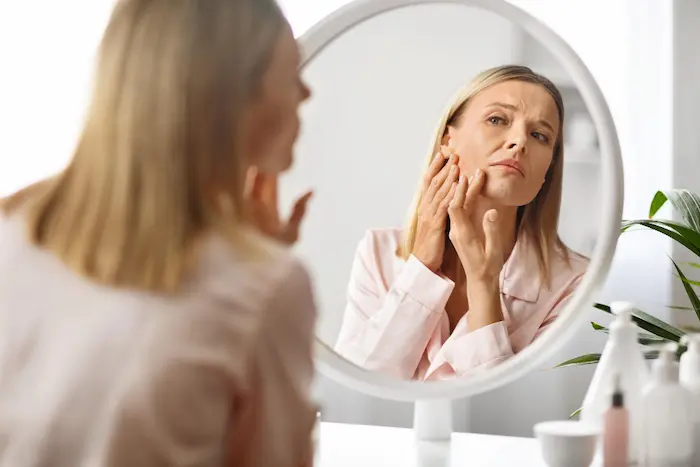
You may notice it first in the mirror or photos: a flush across your cheeks that never quite fades, a few stubborn bumps you thought you'd left behind in your teens, a sting when you splash water on your face. If you're in your 40s or 50s, it's tempting to chalk it up to hot flashes or "sensitive skin." But persistent facial redness may be telling a bigger story, one that involves your thyroid gland, your immune system, and the hormonal rollercoaster of perimenopause and menopause.
Rosacea doesn't appear to exist in isolation. Research now links it to hypothyroidism, to the thyroid autoimmunity seen in Hashimoto's thyroiditis, and to the estrogen shifts of midlife. Here's what the science shows, why it matters, and what you can do about it.
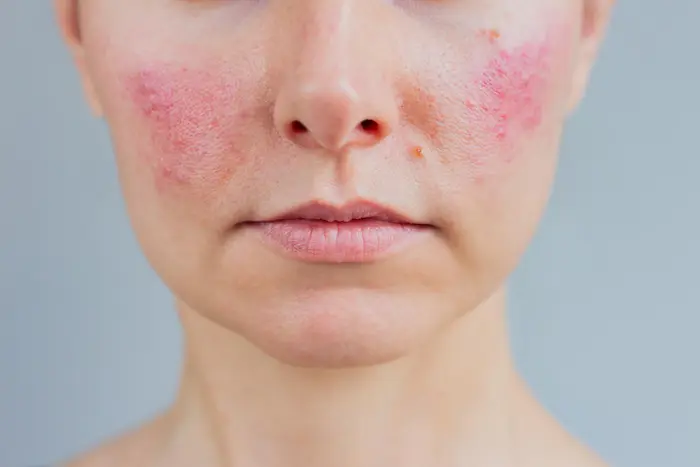
Rosacea is a chronic inflammatory skin condition that mainly affects the center of the face: the cheeks, nose, chin, and forehead. A global systematic review and meta-analysis estimated that roughly 5.5% of adults have it. It's more often diagnosed in women, usually starts between the ages of 30 and 50, and is easier to spot on fair skin, which means it's frequently missed in people with darker skin tones.
Dermatologists used to sort rosacea into four rigid subtypes. The National Rosacea Society's updated classification now focuses on each person's individual features, because most people have a mix of signs that can shift over time.
Signs and symptoms
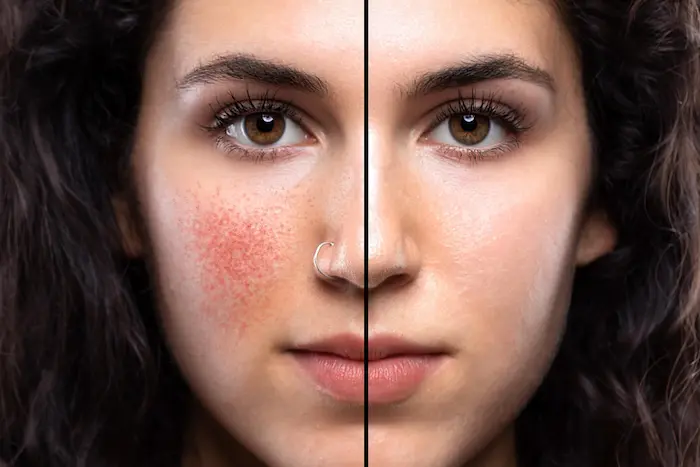
• Persistent redness across the cheeks and nose that doesn't go away
• Frequent flushing or blushing, often with a feeling of heat
• Small, visible blood vessels (telangiectasias)
• Red bumps and pus-filled pimples, but without the blackheads of acne
• Burning, stinging, or itching, and skin that reacts to many products
• Dryness, roughness or swelling of facial skin
• Gritty, dry, irritated eyes or red eyelids (ocular rosacea)
• Thickened, bumpy skin, especially on the nose (rhinophyma) in advanced cases
Common triggers
Rosacea tends to come and go in flares. Classic triggers include sun exposure, heat, hot drinks, alcohol, spicy foods, intense exercise, emotional stress, harsh skin care, and sudden temperature changes. For midlife women, there's another powerful trigger on the list: hot flashes.
Timing is the first clue. Rosacea commonly peaks in the 40s and 50s, the same decades when perimenopause begins and when thyroid problems surge in women. In one large study discussed below, hypothyroidism was most common in rosacea patients between ages 40 and 49.
That overlap creates real confusion. Flushing, fatigue, anxiety, poor sleep, and dry skin can all come from perimenopause, an underactive thyroid, or both. It's one reason so many women struggle to tell the difference between thyroid and menopause symptoms, and why facial redness is easy to dismiss as "just hormones."
There's a deeper biological reason, too. Estrogen helps keep the immune system in balance, and as levels swing and fall, some women find that autoimmune conditions appear or flare for the first time. Researchers are still sorting out exactly how menopause can trigger autoimmune conditions. Still, midlife is clearly a time when the skin, the thyroid, and the immune system are all under new pressure. For many women, rosacea is simply the most visible sign of those changes, because it shows up on the face every time you look in the mirror.
Hypothyroidism is more common in rosacea
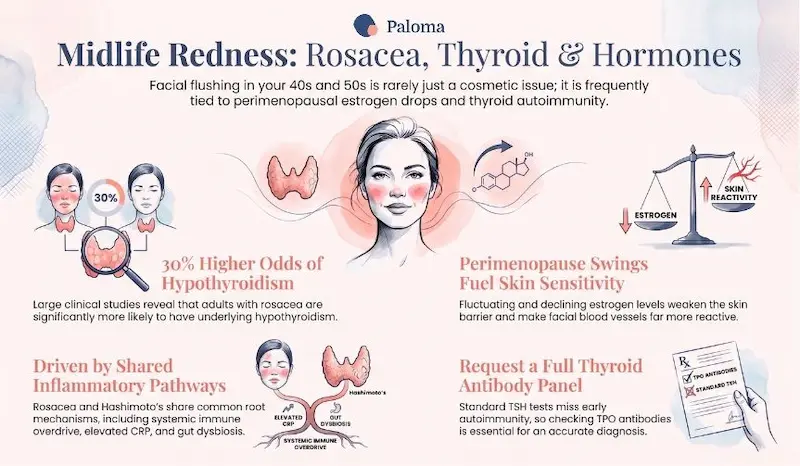
The strongest evidence comes from a large case-control study in Anais Brasileiros de Dermatologia. Researchers compared 2,091 rosacea patients with 9,572 people of the same age and sex. Hypothyroidism showed up in 14.3% of the rosacea group versus 11.3% of controls, which translates to about 30% higher odds. The link held in both women and men, while there was no meaningful connection with hyperthyroidism.
The authors concluded that hypothyroidism may be a companion condition of rosacea and that checking for it during a rosacea evaluation may be appropriate. One limitation: they didn't measure thyroid antibodies, so they couldn't say how many cases were autoimmune. An earlier large population study in Dermatology Online Journal also found hypothyroidism in nearly 20% of rosacea patients, compared with about 14% of patients with other skin conditions.
Thyroid antibodies point to Hashimoto's
Because Hashimoto's thyroiditis -- an autoimmune thyroid disease -- is the most common cause of hypothyroidism, the next question is whether rosacea is tied to thyroid autoimmunity itself. A case-control study in Acta Endocrinologica tested 72 people with rosacea and 62 without. The rosacea group was significantly more likely to have elevated antimicrosomal antibodies (the older name for thyroid peroxidase, or TPO, antibodies), along with higher prolactin and higher C-reactive protein, a marker of inflammation.
Interestingly, the two groups didn't differ in diagnosed thyroid disease. That suggests the immune system may be targeting the thyroid before hormone levels change, which is how Hashimoto's often develops. It's also why a "normal TSH" (thyroid-stimulating hormone) doesn't rule out an early autoimmune process.
Rosacea and Hashimoto's may be two expressions of the same restless immune system, showing up on your face and in your neck.
Rosacea keeps company with other autoimmune conditions
A nationwide Danish study in the Journal of the American Academy of Dermatology found that rosacea clustered with several autoimmune diseases, including type 1 diabetes, celiac disease, multiple sclerosis and rheumatoid arthritis, particularly in women. That pattern echoes what we know about Hashimoto's and polyautoimmunity: once one autoimmune condition is present, others become more likely.
The science doesn't show that rosacea causes thyroid disease. A 2024 Mendelian randomization study, which uses genetics to probe cause and effect, identified several skin conditions that may raise hypothyroidism risk, but rosacea wasn't among them. The more likely explanation is shared roots rather than one condition directly causing the other.
Perimenopausal rosacea is more severe and more distressing
A 2024 study in Skin Research and Technology looked closely at 59 women aged 45 to 55 with rosacea. Most had the persistent-redness form, and 71.2% had moderate-to-severe disease. Women with lower estradiol levels had more severe redness, supporting the idea that estrogen helps protect the skin. The emotional toll was striking: 45.8% of participants had anxiety, and 40% had depression, which is a reminder that menopause and anxiety can compound the distress of a visible skin condition.
After menopause, rosacea often calms down
A 2026 systematic review in the American Journal of Clinical Dermatology analyzed 40 studies on menopause and common skin conditions. Acne and rosacea generally improved after menopause, suggesting the turbulent transition years, not the postmenopausal state itself, are the riskiest window. The review also noted that menopausal hormone therapy was linked to a higher risk of rosacea, while cautioning that the data are limited and inconsistent.
Estrogen therapy: helpful or harmful?
Here's where the science gets genuinely complicated. A 2026 cohort study in Archives of Dermatological Research used health records to compare more than a million women who took estrogen, through birth control pills or hormone replacement therapy, with closely matched women who didn't. Across every life stage, estrogen use was associated with fewer new rosacea diagnoses: 25% lower risk before menopause, 23% lower in perimenopause and 33% lower after menopause. Estrogen users also had fewer cases of perioral dermatitis and rhinophyma.
Yet other evidence points the opposite way. In the Nurses' Health Study II, longer use of postmenopausal hormones was tied to a higher risk of developing rosacea. A 2025 laboratory study also found that estradiol amplified rosacea-like inflammation driven by LL-37, an immune peptide that is overactive in rosacea skin.
The 2026 authors themselves caution that their findings don't prove estrogen protects the skin, since differences in diagnosis and health care use may play a role. The bottom line: hormone replacement therapy isn't a rosacea treatment, but it isn't automatically off limits either. Your response is individual.
Inflammation and immune overdrive
Rosacea involves an overactive innate immune system, with excess LL-37, activated mast cells, and inflammatory enzymes. Hashimoto's involves the adaptive immune system attacking the thyroid. Researchers have found overlapping inflammatory markers in both, including elevated MMP-9 enzymes and C-reactive protein. If you have Hashimoto's, it's worth understanding what high CRP levels may signal.
The gut-skin-thyroid axis
Your gut may be a meeting point. A population-based Danish cohort study found that people with rosacea had higher rates of celiac disease, inflammatory bowel disease, small intestinal bacterial overgrowth (SIBO), and H. pylori infection. In an Italian study, SIBO was more common in rosacea patients, and skin lesions cleared or improved substantially in many patients after the SIBO was treated. Separately, a study in the Journal of Clinical Endocrinology & Metabolism found SIBO in roughly half of people with hypothyroidism. Learn more about the link between SIBO and your thyroid and H. pylori and hormonal health.
Blood vessels, flushing and a weakened skin barrier
Estrogen helps regulate how blood vessels in the skin expand and contract. As it fluctuates, vessels can overreact, which is exactly what happens during a hot flash and a rosacea flush. Low thyroid hormone, meanwhile, slows skin cell turnover and leads to dry skin. A compromised barrier lets irritants in, leaving already-reactive skin even more sensitive.
None of these studies proves that one condition causes another. Most are observational, and some findings conflict. Still, the pattern is consistent enough to matter in real life.
• If your rosacea started or worsened in midlife or during the menopausal transition, an undiagnosed thyroid problem is worth ruling out.
• If you have Hashimoto's or hypothyroidism, new facial redness deserves a proper diagnosis rather than being written off as sensitivity or Hashimoto's-related skin issues.
• Rosacea is not a cosmetic problem. Its links to anxiety, depression, and other autoimmune conditions make it a whole-body health signal.
• Decisions about hormone therapy should include your skin history and your thyroid treatment.
Your skin is often the first place your hormones and immune system show up. Rosacea in midlife is a reason to look deeper, not just to cover up.
Get a complete thyroid panel
Ask for TSH, free T4, free T3, and TPO antibodies, and consider thyroglobulin antibodies too. TSH alone can miss early Hashimoto's. A full thyroid panel gives the clearest picture.

Limited offer
20% off your first Thyroid Test
Get an accurate skin diagnosis
See a board-certified dermatologist. Several conditions mimic rosacea, including the butterfly rash of lupus, seborrheic dermatitis, perioral dermatitis, and contact allergies. Effective treatments include topical metronidazole, azelaic acid and ivermectin, redness-reducing creams, low-dose oral antibiotics, and laser or intense pulsed light therapy.
Keep a flare and symptom diary
Track flares alongside hot flashes, your cycle, sleep, stress, foods and drinks, and any changes to thyroid or hormone medications. Patterns help you and your clinicians pinpoint triggers.
Weigh hormone therapy carefully
If you start or change hormone therapy, watch your skin for the first few months and report any changes. Oral estrogen can also raise thyroid medication needs, so ask for thyroid labs 6 to 12 weeks after starting. Read more about HRT and thyroid medication.
Optimize your thyroid treatment
Undertreated hypothyroidism can worsen dryness, barrier problems, and inflammation. Work with a clinician who treats symptoms as well as numbers.
Baby your skin barrier
Use a gentle, fragrance-free cleanser and moisturizer, skip scrubs and alcohol-based toners, and wear a mineral sunscreen with SPF 30 or higher every day.
Support your gut
If you have bloating, reflux, or irregular bowel habits, ask about testing for SIBO, H. pylori, and celiac disease.
Cool down your stress response
Stress is a top rosacea trigger and also affects thyroid function. Breathing practices, regular movement, and good sleep help both. Explore how stress affects your thyroid.
At Paloma Health, we know that symptoms rarely arrive one at a time. That's why our clinicians look at the full picture, including your thyroid, your hormones, and how they interact, rather than treating each symptom in isolation. Rosacea that appears or worsens in midlife can signal something deeper, and you deserve care that connects those dots.
Our at-home thyroid blood test kit measures TSH, free T4, free T3, and TPO (thyroid peroxidase antibodies) -- with an option to add reverse T3 and vitamin D -- giving you a clear view of thyroid function and autoimmunity from home. Paloma's online care for menopause and hypothyroidism includes personalized thyroid medication, hormone therapy when appropriate, careful dose adjustments when your hormones change, and nutrition support for gut health, inflammation, and weight gain. We're happy to coordinate with your dermatologist so your care works as a team.
Can hypothyroidism cause rosacea?
Research shows the two occur together more often than expected, but no study has proven that hypothyroidism causes rosacea. Shared inflammation and immune problems are the most likely link.
Is rosacea an autoimmune disease?
Rosacea isn't classified as autoimmune, but it involves an overactive immune system and clusters with autoimmune conditions. Some studies also find higher thyroid antibodies in people with rosacea.
Should I get my thyroid tested if I have rosacea?
Researchers suggest that screening for hypothyroidism is reasonable in people with rosacea. Ask for a full panel that includes TPO antibodies, not just TSH.
Why did my rosacea start or get worse in perimenopause?
Fluctuating and falling estrogen levels make blood vessels more reactive and weaken the skin barrier. Hot flashes, stress, and poor sleep add more triggers during this stage.
Do hot flashes make rosacea worse?
Yes, the heat and facial flushing of a hot flash can set off a rosacea flare. Treating hot flashes and staying cool can help calm your skin.
Will my rosacea go away after menopause?
Research suggests rosacea often improves after menopause, but it rarely disappears entirely. Ongoing skin care and trigger management still matter.
Does hormone replacement therapy help or worsen rosacea?
Studies conflict, with one large 2026 study linking hormone replacement therapy with estrogen to fewer rosacea diagnoses and others linking it to higher risk. Monitor your skin closely and talk with your clinician if it changes.
Can treating my thyroid improve my rosacea?
Optimal thyroid hormone treatment can improve dry skin and barrier function, which may make rosacea easier to manage. However, rosacea usually needs its own targeted treatment as well.
Is it rosacea, a hot flash, or a lupus rash?
Hot flashes come and go within minutes, while rosacea redness lingers and may include bumps or visible vessels. A lupus rash can look similar, so a dermatologist should confirm the diagnosis.
What skin care is best for rosacea during menopause?
Choose gentle, fragrance-free products, a rich moisturizer, and daily mineral sunscreen. Avoid scrubs, alcohol-based toners, and very hot water.


