


.webp)
.webp)
In this article
After a long day in the sun, skin red, sore, and radiating heat, most of us instinctively reach for aloe vera. That cool, soothing gel feels like instant relief—a simple plant delivering almost magical comfort.
But aloe vera’s story doesn’t end at the surface of your skin.
Beyond the familiar gels, sprays, and creams sits another form you may not have considered: aloe vera juice. For centuries, aloe has been used internally and externally, and today it’s gaining renewed attention and social media clout for its potential whole-body benefits — including digestive support, immune system balance, and even possible support for thyroid health in people with Hashimoto’s and hypothyroidism.
Yes, the same plant you smooth onto a sunburn may also have intriguing internal benefits.
So what does the research actually say? And could aloe vera juice play a supportive role in thyroid wellness?
Keep reading to explore the science, the history, and the potential health benefits of this surprisingly versatile plant.
Aloe vera, commonly called aloe, is a cactus-like succulent plant that grows best in hot, dry climates. Aloe leaves have a clear inner gel that is 99% water. The remaining 1% contains many nutrients, including polysaccharides, enzymes, amino acids, vitamins, minerals, and phytochemicals with anti‑inflammatory and antioxidant activity. These nutrients are what give aloe its medicinal properties.
Long before aloe vera became a staple in beach bags and bathroom cabinets, it was revered as a powerful healing plant. The ancient Egyptians are often credited with first documenting aloe’s therapeutic properties, referring to it as the “plant of immortality.” It was used in skin treatments, wound care, and even in burial rituals, reflecting its high cultural and medicinal value.
From there, aloe’s reputation spread across civilizations. It was used in traditional Greek, Roman, Indian, and Chinese medicine for a wide range of ailments — from digestive complaints to skin disorders. By the 17th century, aloe had firmly established itself in European herbal medicine as a recognized therapeutic botanical, commonly prescribed to manage digestive issues, support wound healing, and address inflammatory conditions.
Fast forward to today, and aloe vera remains one of the most widely used medicinal plants in the world. Modern science has identified many of its active compounds — including polysaccharides, enzymes, vitamins, minerals, and antioxidants — that help explain its long-standing popularity. Aloe is now found in an expansive range of products, from topical sprays and gels for sunburn and skin irritation to face creams, serums, and cosmetic formulations designed to hydrate and calm the skin. It is also available in oral forms such as juices, capsules, powders, and tablets marketed for digestive, immune, and overall wellness support.
Thousands of years after the ancient Egyptians first recognized its potential, aloe vera continues to bridge traditional wisdom and modern health trends — evolving from an ancient remedy to a globally recognized botanical powerhouse.

Aloe vera juice is a drinkable liquid made from the inner leaf gel of the aloe vera plant. To produce the juice, the leaves are typically crushed or ground to extract the gel-rich liquid, which is then purified and filtered to remove bitter or irritating compounds like aloin—a laxative—before diluting it into a drinkable form. The result is a clear to lightly tinted, water-based juice with a mild taste that can be consumed on its own or mixed into smoothies and other beverages.
Unlike the gel you might slather on sunburned skin, aloe vera juice is specifically processed for oral consumption, with most commercial products ensuring low levels of laxative-acting compounds so they’re safer to drink.
People drink aloe vera juice not just for hydration but also for its nutrients and plant compounds.
Most of aloe’s science is not thyroid‑specific; it comes from studies on skin, digestion, and metabolic health. Key benefits of aloe vera with at least some human clinical evidence are:
Skin and wound healing
- Topical aloe gels and creams have been used as adjuncts for burns, wound healing, psoriasis, and chronic skin ulcers, with several trials suggesting faster healing or reduced ulcer size when aloe is combined with standard care. Topical aloe can also improve your skin’s moisture and reduce the appearance of wrinkles. It may also help prevent acne.
- A 2017 clinical review reported that topical aloe often improved quality of life and symptom scores (such as pain and itching) in dermatologic conditions.
- In head and neck cancer patients undergoing radiation, drinking 15 ml aloe vera solution three times daily for eight weeks reduced the incidence and severity of radiation‑induced oral inflammation compared with placebo, without specific aloe‑related side effects reported.
Blood sugar and metabolic parameters
- In animal and early human studies, oral aloe gel has been associated with reduced fasting blood glucose, lower triglycerides, and improved lipid profiles in patients with diabetes or metabolic syndrome, suggesting a modest metabolic benefit.
- In a controlled trial in patients with type 2 diabetes, aloe juice consumption led to significantly lower blood sugar levels compared with controls. However, larger, higher‑quality trials are still needed to define dosing and long‑term safety.
Digestive health and constipation
- Historically, preparations containing aloe latex were used as strong stimulant laxatives, due to aloe components that increase intestinal motility and fluid secretion.
- Because of safety concerns, many aloe vera juices minimize or remove the latex content to reduce laxative potency, but some products still exert a mild laxative effect.
Immune and antioxidant effects
- In vitro and animal studies suggest that polysaccharides in aloe can modulate immune activity and scavenge free radicals, which is one reason it is marketed for “immune support.”
At this point, aloe vera is best viewed as a plant with mild, broad‑spectrum anti‑inflammatory, antioxidant, and metabolic effects, with the strongest clinical support for topical skin uses and laxative action, and weaker but interesting data for blood sugar and mucosal support.
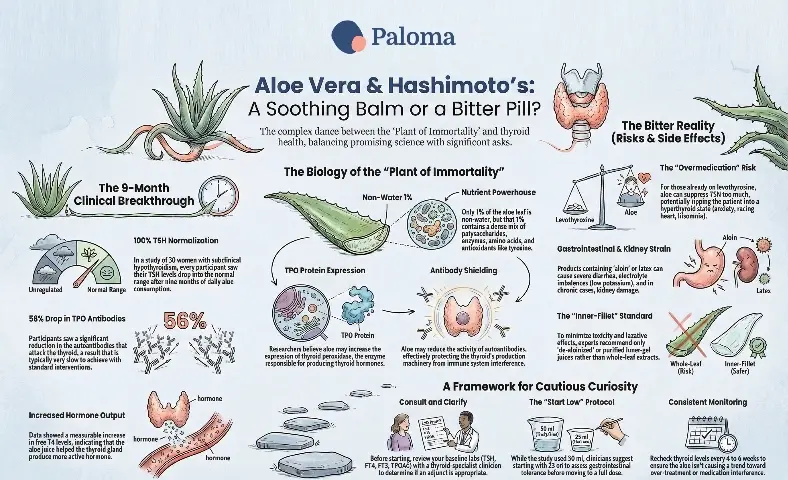
A recent 2022 study suggests that aloe vera has TSH-like activity and could regulate thyroxine release and maintain a steady level of thyroid hormones. One thought is that it does so by increasing thyroid peroxidase (TPO), an enzyme that produces thyroid hormone. This increase in TPO improves thyroid hormone production by lowering the amount of TPO antibodies in the body. TPO antibodies bind to TPO and are common in patients with Hashimoto’s thyroiditis, an autoimmune disease. This study further supports aloe’s benefits in those with hypothyroidism.
So far, one small but much‑discussed human study specifically examined aloe vera juice in women with untreated subclinical hypothyroidism due to Hashimoto’s thyroiditis.
Interestingly, the study was conducted after one of the co-authors discovered a reduction in her antibody levels after 6 months of drinking aloe vera juice. She then recruited 30 women with subclinical hypothyroidism and positive thyroid peroxidase antibodies (TPOAb), consistent with Hashimoto’s. Participants drank 50 ml of standardized aloe vera juice per day for 9 months. A control group did not receive aloe or thyroid medication. Thyroid‑stimulating hormone (TSH), free thyroxine (free T4), and TPO antibodies were measured at baseline, 3 months, and 9 months.
At baseline, all the women had TSH levels above 4.0 mU/L and TPO antibodies greater than 400 U/ml. After nine months of daily aloe juice:
- TSH dropped markedly, and all 30 women had TSH values within the laboratory “normal” range.
- Free T4 increased, indicating improved thyroid hormone output.
- TPOAb levels fell by about 56%; only about 37% of participants still had very high antibody levels at month 9.
- No serious adverse events related to aloe were reported in this group during the study period.
The authors hypothesized that aloe vera may:
- Increase thyroid peroxidase protein expression to improve thyroid hormone synthesis.
- Reduce TPO autoantibody activity to protect TPO and support hormone production.
- Provide tyrosine (a component of thyroid hormones) and antioxidant compounds that reduce oxidative damage in thyroid tissue.
Despite the promising results, this study has important limitations that should temper enthusiasm:
- It was a small, single‑center study of only 30 women, with only a short 9 months of followup.
- The participants had subclinical hypothyroidism and were not on thyroid drugs, so we don’t know if the results would be the same for people with overt hypothyroidism taking thyroid medication.
- The participants were all women so we don’t know if this is relevant for men.
- It is unclear whether improvements persist after stopping aloe, or whether antibodies and TSH rebound.
It’s also important to note that subclinical hypothyroidism is a very mild form of hypothyroidism with only a slight elevation in thyroid stimulating hormone (TSH). People with subclinical hypothyroidism don’t always have hypothyroid symptoms or need treatment with thyroid hormone medications. This differs from overt hypothyroidism, where TSH levels and thyroid hormones are out of balance. Those with overt hypothyroidism generally have symptoms such as weight gain, constipation, and fatigue. Overt hypothyroidism requires a thyroid hormone replacement drug to resolve the hormone deficiency.
The takeaway? For some women with mild, untreated Hashimoto’s‑related hypothyroidism, 50 ml daily aloe vera juice appeared to normalize TSH and improve free T4 within months.[3][1] The reduction in TPO antibodies was also relatively rapid compared with many other interventions, which is why aloe has generated interest as a potential antibody‑lowering adjunct.
Bottom line: This is a small, positive pilot study, and experts currently advise considering aloe vera juice as a potential adjunct in Hashimoto’s thyroiditis, not as a replacement for evidence‑based therapy, such as medication, when it is clearly indicated.
This is a critical question for anyone with Hashimoto’s who is already being treated with thyroid hormone replacement therapy.
There are no formal interactions between aloe and levothyroxine outlined in standard drug–interaction databases. However, lack of a flagged interaction does not mean that aloe cannot functionally alter thyroid hormone requirements by improving gland output.
In the aloe–Hashimoto’s study, oral aloe significantly lowered TSH and raised free T4 on its own. This suggests a potential additive effect with levothyroxine. In patients already taking levothyroxine, adding aloe could theoretically over‑correct thyroid gland function, resulting in suppressed TSH and overmedication.
Bottom line: If you take thyroid hormone replacement, aloe vera juice is not benign “just a plant” in this context—it may change your dose needs and must be treated like an active therapy.
Aloe is natural, but “natural” does not equal risk‑free. Side effects depend heavily on the product type (inner gel vs whole leaf), the presence of latex, dose, and duration.
Gastrointestinal effects
- Oral aloe preparations, especially those containing latex/antraquinones (aloin), are associated with diarrhea, abdominal cramps, and loose stools. Note: Even “de‑aloinized” juices can cause mild laxative effects in sensitive individuals.
- Chronic or heavy use of laxative‑type aloe products can cause electrolyte disturbances, which can lead to hypokalemia (low potassium). This may lead to muscle weakness, an irregular heartbeat, and increased sensitivity to certain medications, such as diuretics or cardiac drugs.
Kidney and systemic effects
- Case reports and animal studies associate prolonged ingestion of anthraquinone‑rich aloe extracts with kidney damage and even kidney failure, likely related to dehydration and direct nephrotoxicity.
- Regulatory reviews have classified some aloe whole‑leaf extracts (with latex) as “possibly carcinogenic to humans” based largely on animal data.
- These concerns are mainly directed at whole‑leaf or unpurified products; purified inner‑gel juices with low anthraquinone content may carry less risk, but definitive human safety data are limited.
Allergic and skin reactions
- Aloe can trigger allergic reactions, particularly in individuals allergic to plants in the Liliaceae family (such as garlic, onions, or tulips).
- Reactions may include rashes, burning, redness, or swelling with topical use, and, rarely, systemic reactions with oral ingestion.
Special cautions
- Due to its potential laxative and uterine‑stimulating effects, aloe historically been discouraged in pregnancy.
- For breastfeeding mothers, be aware that aloe does enter the breast milk, and it’s recommended that nursing mothers avoid ingesting aloe.
- Oral aloe use in children may lead to abdominal pain, diarrhea, and electrolyte imbalances; many sources advise against routine internal use in kids.
In general, for people with Hashimoto’s, these risks do not automatically rule out aloe, but they highlight why dosing, product choice, and medical monitoring matter.

Experts generally recommend that people with any thyroid disorder avoid starting oral aloe vera without physician supervision because its thyroid‑modulating effect is still unpredictable.
This section is not personal medical advice, but a framework you can discuss with your thyroid‑knowledgeable clinician. The most important step before adding aloe vera is to clarify your thyroid status (labs and symptoms) and medication plan.
1. Talk to your clinician first
- Review your latest labs (TSH, free T4, free T3, TPOAb antibodies) and current medications, including levothyroxine dose and timing.
- Ask specifically whether experimenting with aloe vera juice is appropriate in your situation; it may be more reasonable if you have subclinical hypothyroidism and are not yet on medication; or you have stable labs on a steady dose and are willing to test carefully with frequent monitoring.
2. Choose the safest possible product
When selecting an aloe juice:
- Look for inner‑fillet or decolorized inner leaf gel and note removal or reduction of aloin and anthraquinones to minimize laxative and potential carcinogenic risks.
- Avoid whole‑leaf, unpurified, strong laxative or high aloin formulations, because they are more likely to cause diarrhea and electrolyte shifts.
- Look for third‑party certifications (such as IASC aloe certification, where applicable), clear labeling of aloe species (i.e., Aloe vera barbadensis Miller), and absence of unnecessary additives or high sugar.
3. Consider a prudent dose and schedule
The Hashimoto’s study used 50 ml (about 2 ounces) of aloe juice once daily. A cautious, consumer‑friendly approach might include:
- Start low and go slow: Discuss with your clinician whether to begin at a half dose (for example, 25 ml per day) for the first 1–2 weeks to assess GI tolerance. Take it once daily, ideally at the same time each day to keep variables consistent.
- Take it separately from thyroid medication: If you take thyroid hormone in the morning on an empty stomach, consider taking aloe juice at a different time (for example, midday or evening with food) to avoid absorption issues and help you identify which substance is causing any side effects.
4. Monitor your thyroid and your body’s responses
If your healthcare provider agrees to an aloe trial, monitoring is essential:
- Lab monitoring: Recheck your thyroid levels every 4 to 6 weeks after starting aloe so that any trend toward over- or undertreatment can be addressed promptly.
- Periodic antibody measurements: Evaluating your antibody levels, for example, at 3 and 9 months, can help you and your clinician see whether aloe correlates with antibody changes.
- Symptom tracking: Watch for signs of hyperthyroidism that might suggest over‑treatment: anxiety, racing heart, palpitations, heat intolerance, insomnia, and unexplained weight loss. Also monitor for GI side effects, such as diarrhea, cramps, or signs of dehydration (dizziness, excessive thirst, and dark urine).
If you develop persistent diarrhea, abdominal pain, or any allergic reaction, discontinue aloe and seek medical advice. If your lab tests show TSH suppression or rapidly rising thyroid hormone levels, your clinician will likely recommend adjusting your thyroid medication dose.
5. Position aloe as an adjunct, not a stand‑alone cure
For most people, managing Hashimoto’s involves multiple layers:
- Evidence‑based thyroid hormone replacement when indicated
- Addressing iodine, selenium, vitamin D, and iron status if deficient
- Supporting gut health, sleep, stress, and gentle movement
- Considering targeted nutraceuticals the evidence supports (for example, selenium for antibody reduction in some patients)
Within that framework, aloe vera juice—at conservative doses, with the right product, and under supervision—may become one experimental adjunct among many, particularly for people aiming to nudge down TPOAb antibodies or optimize thyroid output in the subclinical range.
Aloe vera juice offers a fascinating, but still early‑stage, option for people with Hashimoto’s thyroiditis. A small trial in women with subclinical disease found that 50 ml daily normalized TSH, raised free T4, and reduced TPO antibodies by roughly half over 9 months. At the same time, broader research reminds us that oral aloe is not risk‑free: chronic or high‑dose use can cause diarrhea, hypokalemia, and kidney stress, and products containing latex anthraquinones may carry carcinogenic potential.
For someone living with autoimmune thyroiditis, the safest stances is cautious curiosity: consider aloe only with the guidance of a thyroid‑savvy clinician, choose a purified inner‑gel product, start low, monitor labs and symptoms closely, and be prepared to stop if your thyroid numbers or your body’s signals head in the wrong direction.
At Paloma Health, we understand that managing Hashimoto’s and hypothyroidism isn’t one-size-fits-all. Our board-certified thyroid specialists take a personalized, root-cause approach—looking beyond just TSH to evaluate free thyroxine (FT4), free triiodothyronine (FT3), thyroid antibodies, nutrient status, symptoms, and your overall metabolic health. If you’re curious about adjuncts like aloe vera, we help you evaluate the evidence, weigh the risks, and monitor your labs safely.
As a Paloma patient, you receive comprehensive thyroid testing, expert medication management, and nutrition and lifestyle guidance tailored to thyroid autoimmunity. Whether you’re newly diagnosed, struggling with persistent symptoms, or exploring integrative strategies to improve thyroid function, our team partners with you to optimize your thyroid health—safely and sustainably.
Can aloe vera juice cure Hashimoto’s?
No. There is no specific or singular cure for Hashimoto’s thyroiditis. Aloe vera may potentially improve certain lab markers in mild cases, but it should be considered a possible adjunct—not a replacement—for appropriate thyroid treatment when medication is needed.
What did the research study actually show?
In one small study of women with subclinical hypothyroidism, daily aloe vera juice normalized TSH, increased free T4, and reduced TPO antibodies over nine months. However, the study was small and did not include people taking thyroid medication.
Is aloe vera safe to take with levothyroxine?
It may not be automatically unsafe, but it requires caution. Aloe could potentially improve thyroid hormone output, which might lower TSH too much if you’re already taking levothyroxine. Close lab monitoring every 4–6 weeks is essential.
What type of aloe product is safest?
Inner-leaf or “inner fillet” aloe vera juice that has been processed to remove anthraquinones (like aloin) is generally considered safer than whole-leaf or laxative formulations. Products high in aloe latex carry greater risks of diarrhea and electrolyte imbalance.
Can aloe vera lower thyroid antibodies?
In the small clinical study, TPO antibodies decreased by about 56%. While promising, we need larger and longer-term studies to confirm whether this effect is reliable and sustained.
What side effects should I watch for with aloe vera juice?
Common side effects include diarrhea, abdominal cramping, and dehydration. More serious concerns—especially with long-term or high-dose use—include electrolyte imbalances and potential kidney stress.
Who should avoid aloe vera juice or oral supplements?
Pregnant and breastfeeding individuals should avoid it. Children and people with kidney disease or significant gastrointestinal sensitivity should also use caution. Always consult a healthcare provider before starting.
If I have subclinical hypothyroidism, should I try aloe before medication?
That depends on your labs, symptoms, and risk factors. Some cases of subclinical hypothyroidism don’t require immediate medication. Still, decisions should always be made with a thyroid specialist who can carefully monitor your levels and help you weigh the risks and benefits.


.webp)
.png)


