


.webp)
In this article
- What are microplastics, and how do they get into your body?
- The new thyroid study: what researchers found
- Signs and symptoms: what to watch for
- Microplastics and autoimmunity: connecting the dots
- Hormones, weight, and the gut: the bigger picture
- Your next steps: Lowering your exposure
- A note from Paloma
- Frequently asked questions
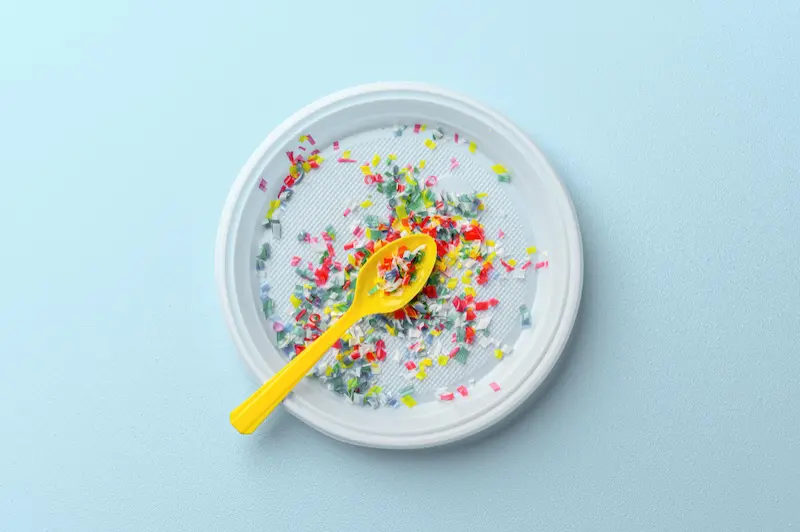
Microplastics are in the water we drink, the dust we sweep up, and, researchers keep finding, the tissues of the human body. Now they've turned up somewhere that matters enormously if you live with a thyroid condition: the thyroid gland itself.
A new study in the journal Thyroid found more microplastics in thyroid tissue from people with autoimmune thyroid disease—better known as Hashimoto's thyroiditis, and the leading cause of hypothyroidism—than in people without it. It's early, preliminary research, and it doesn't prove that plastic causes thyroid disease. But it adds a striking new piece to a growing puzzle about how everyday exposures may interact with our hormones and immune systems.
Here's what the research actually says, what else we know about microplastics and health, and, most importantly, the practical steps you can take starting today!
What are microplastics, and how do they get into your body?
Microplastics are tiny fragments of plastic, generally smaller than 5 millimeters—about the size of a sesame seed or less. Nanoplastics are smaller still, small enough to cross biological barriers. They form when bigger plastic items break down, and some are manufactured tiny on purpose. A major 2024 review in the journal Science describes how thoroughly plastic particles have spread through air, water, soil, and the food chain.
How we're exposed
We take them in mainly by swallowing and breathing, with some skin contact. One widely cited analysis of the American diet estimated that people consume roughly 39,000 to 52,000 microplastic particles a year—and 74,000 to 121,000 once you include inhalation. Those figures are likely underestimates. Sources of microplastics include packaged foods and drinks, plastic food containers, tap water, plastic water bottles, household dust, synthetic fabrics, and some personal care products.
Where the particles end up
These particles don't simply pass through your body. Researchers have detected microplastics in human artery plaque, in brain tissue, and in testis tissue. In the artery study, patients whose plaque contained plastics were more likely to have a heart attack, a stroke, or to die during follow-up—although that kind of study can't prove the plastics were the cause. Given how widely these particles travel, it was only a matter of time before someone looked in the thyroid.
The new thyroid study: what researchers found
Until now, no one had examined whether microplastics were present in the thyroid gland. The study, published in the June 2026 issue of Thyroid, set out to change that.
How the study worked
Researchers in China analyzed thyroid tissue removed during surgery from 58 people: 29 with confirmed autoimmune thyroiditis and 29 age- and sex-matched people without it, who had surgery for thyroid nodules. They measured plastic in two ways—by total mass, using gas chromatography–mass spectrometry, and by counting and identifying individual particles, using spectroscopy.
What they found
Microplastics turned up in the thyroid tissue of both groups. But the autoimmune group carried significantly more microplastics. Total plastic concentration was more than ten times higher, and the particle count was more than three times higher. The difference was driven mainly by polyvinyl chloride, or PVC. Particles ranged from about 34 to nearly 1,500 micrometers, and their size, shape, and color didn't differ between the two groups.
Microplastics were found in the thyroid glands of both groups, but people with autoimmune thyroiditis carried far more, especially PVC.
PVC is a plastic found in pipes, vinyl flooring, shower curtains, and some packaging, and it often contains plasticizers such as phthalates—chemicals already being studied for their effects on thyroid hormones. The study didn't test whether that explains the PVC finding, so consider it a clue, not a conclusion.
What the study can't tell us
This was a small, preliminary study, and the authors make that clear. It shows an association, not cause and effect. We don't know whether plastic exposure helps trigger thyroid autoimmunity, or whether an inflamed, damaged thyroid is trapping more particles. Because the tissue came from surgery, the study also can't pinpoint when the particles arrived or where they came from. The researchers have called for more studies to answer these important questions.
Signs and symptoms: what to watch for
Here's the honest answer: no specific symptoms signal microplastic exposure. Nearly everyone carries some plastics, and no standard clinical test—blood or otherwise—tells you how much is in your body. Watch for thyroid dysfunction, especially the autoimmune kind.
Classic thyroid symptoms
Common signs include fatigue that sleep doesn't fix, weight gain or stubborn weight, feeling cold, dry skin, thinning hair, constipation, brain fog, low mood, muscle aches, heavier periods, and swelling at the front of the neck (a goiter). Hashimoto's can also smolder for years before thyroid hormone levels drift out of range, and some people feel unwell. At the same time, TSH still looks normal—a pattern Paloma explores in its article on euthyroid Hashimoto's.

When to get tested
If those symptoms sound familiar, ask for a full panel, not just TSH. Paloma's at-home thyroid test measures TSH, free T3, free T4, and TPO antibodies—the marker that reveals autoimmune activity. To learn more, read about TPO antibodies and Hashimoto's and how antibodies relate to symptoms.
Microplastics and autoimmunity: connecting the dots
Why might plastic particles matter to the immune system? A 2026 review in Environmental Geochemistry and Health argues that microplastics are emerging environmental triggers for autoimmune disease. In lab studies, the particles alter immune-related gene expression, generate oxidative stress in immune cells, and trigger the release of inflammatory cytokines—conditions that could promote autoantibody production. Chemical additives in plastics, including plasticizers, may also interact with immune cells. A systematic review of nanoplastics and immune disruption reached a similar conclusion, while cautioning that we need long-term, standardized research.
Animal studies add to the picture. In mice, microplastic exposure induced and worsened lupus. In rats, exposure to dibutyl phthalate, a plasticizer, plus high iodine intake aggravated autoimmune thyroid disease by raising levels of inflammatory signals. Human evidence is less consistent, however. A pregnancy cohort study linked certain phthalate metabolites to changes in thyroid hormone levels but found no association with thyroid antibodies. That's a reminder that this science is young, still developing, and nuanced.
What does this mean for you? Autoimmune thyroid disease is thought to arise from a mix of genetics, immune triggers, and environment. Researchers are still hunting for the triggers behind why Hashimoto's has become so common, and hormonal shifts like menopause may also influence autoimmune risk. But microplastics are increasingly seen as one environmental piece of the puzzle.
Hormones, weight, and the gut: the bigger picture
Endocrine disruptors along for the ride
Microplastics rarely travel alone. Plastics contain additives such as phthalates and bisphenols, and particles can pick up other pollutants along the way. Many of these are endocrine-disrupting chemicals that can interfere with hormone signaling. Animal research links micro- and nanoplastic exposure to thyroid and parathyroid dysfunction in mice, and a 2026 study reported that in adolescent mice, plastics disrupted gut bacteria and their metabolites in ways that interfered with the thyroid axis.
Reproductive hormones are part of the conversation, too. One team reported microplastics in human and dog testicular tissue and explored a potential link with sperm count. For women in perimenopause and menopause, when estrogen shifts already alter immune and metabolic signaling, Paloma's guides to the exposome and the estrobolome explain why everyday exposures deserve attention.
The gut connection
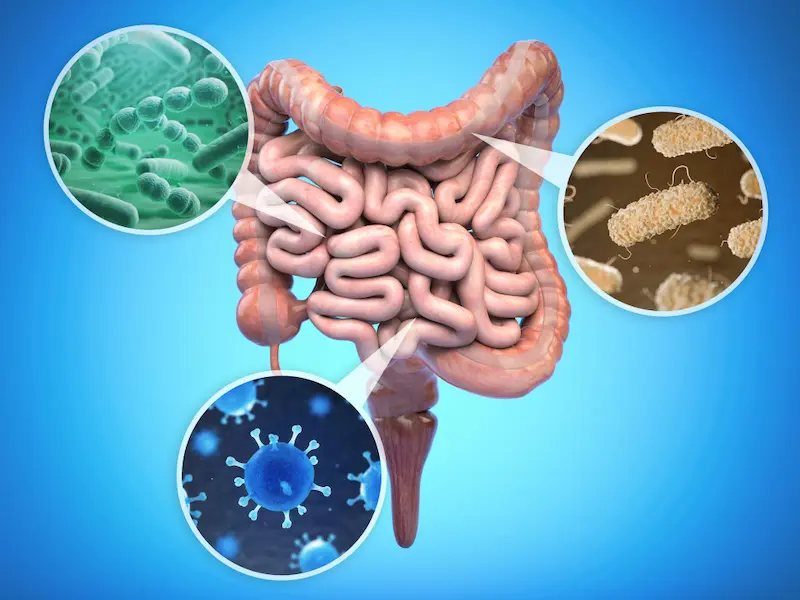
Gut health is central to autoimmune thyroid disease, and microplastics may affect it. A 2025 systematic review examined how microplastics relate to the makeup and diversity of the human gut microbiome, and mouse studies point in the same direction. Because gut bacteria help train the immune system, the gut is a plausible bridge between plastic exposure and autoimmunity. Learn more in Paloma's articles on gut microbiota, Hashimoto's, hypothyroidism, and gut dysbiosis.
Microplastics and weight
Weight gain is one of the most frustrating parts of thyroid disease, and low thyroid hormone itself often contributes to it (see hypothyroidism and weight gain). Separately, researchers have proposed that microplastics may act as obesogens—substances that promote fat accumulation—based mostly on laboratory and animal data. In one mouse study, animals on a high-fat diet that also received polystyrene microspheres had more body weight and fat than animals on the same diet alone, apparently via changes in gut bacteria. Mice aren't people, and no human trial shows that microplastics cause weight gain. Still, if you're doing everything right and the scale won't budge, remember that hormonal weight gain isn't a willpower problem and that midlife weight loss comes with hormonal obstacles.
Your next steps: Lowering your exposure
Here's the reassuring part: you can't eliminate microplastics, and you don't need to. The goal is to lower exposure and minimize endocrine disruption where it's easy to do, and skip the perfectionism—anxiety isn't good for anyone's health. Pick two or three changes that fit your life, then build from there.
Don't heat food in plastic
Heat is a major accelerator. In laboratory tests, microwaving food in plastic containers released far more particles than refrigeration or room-temperature storage—some containers shed millions of microplastics and billions of nanoplastics per square centimeter in just three minutes! Other scientists have questioned the exact numbers, but not the basic pattern: heat makes plastic shed more. Instead of using plastic products, reheat food on a ceramic plate or in a glass container, don't microwave takeout containers or plastic wrap touching your food, and retire scratched, cloudy, or warped containers. Be especially careful with baby bottles and toddler meals—infants and toddlers had the highest estimated exposure in that study.
Rethink bottled water
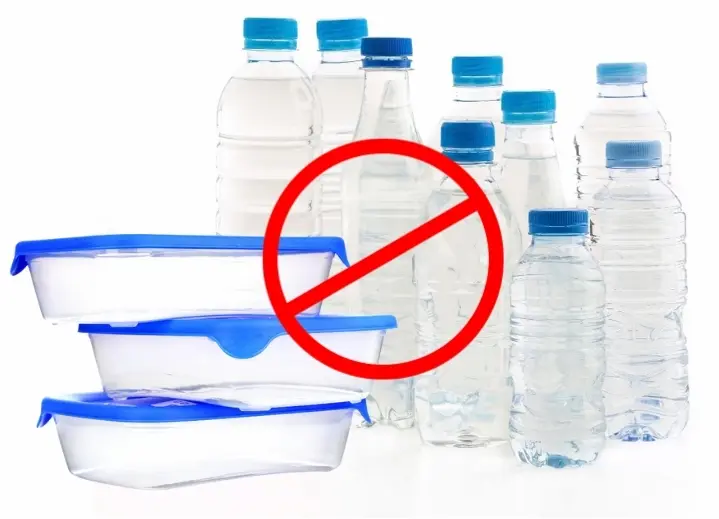
If your tap water is safe, use it. One analysis estimated that people who get all their drinking water from plastic bottles may ingest about 90,000 more microplastic particles a year than tap-water drinkers, who take in roughly 4,000. Another study measured around 240,000 particles per liter in bottled water, most of them nanoplastics. Carry a stainless steel or glass bottle instead. If your tap water is hard, boiling it and then filtering it, even through a coffee filter, removed at least 80% of certain micro- and nanoplastics in laboratory tests; it works less well in soft water. Another option is a filter independently certified for plastic particle and PFA reduction. (But if bottled water is your only safe choice, drink it: staying hydrated matters more!)
You can't eliminate microplastics—and you don't need to. Small, steady swaps add up.
Store and prep food smartly
Move leftovers and pantry staples into glass or stainless steel, especially anything hot, oily, or acidic, like tomato sauce. Let hot food cool before putting it in plastic, and use a plate, lid, or parchment instead of plastic wrap. Plastic cutting boards shed microplastics as you chop; one study found polypropylene boards release more than polyethylene, so replace deeply scored boards and consider wood for everyday chopping. Choose loose-leaf tea or paper tea bags—some bags are made of plastic—and pick fresh or frozen foods over heavily packaged ones when it's practical.
Choose cookware wisely
Stainless steel, cast iron, carbon steel, and enameled cookware are simple swaps for old nonstick pans. If you keep nonstick, retire pans once the coating is scratched or flaking, avoid overheating them, and use wooden or stainless utensils. Skip plastic spatulas and spoons in hot pans, and replace worn plastic kitchen tools.
Tame the dust
Household dust is a surprisingly big route. Researchers who sampled indoor air found microplastics in the air people breathe at home, and synthetic carpets, upholstery, curtains, and clothing are common sources. Damp-mop and wipe surfaces instead of dry dusting, vacuum regularly with a HEPA-filter vacuum, take shoes off at the door, ventilate when outdoor air is good, and consider a HEPA air purifier in the bedroom. When practical, choose natural fibers like cotton, linen, and wool, and wash synthetic clothes on gentle cycles.
Simplify your personal care
Some scrubs, cosmetics, and craft products contain plastic—even regular glitter is a source of plastic. Skim ingredient lists for polyethylene, polypropylene, nylon, and acrylates. Fragrance blends can contain phthalates, too, so Paloma's guide to perfume for Hashimoto's and hypothyroidism is worth a read, along with tips for keeping your thyroid safe in summer, including sunscreen. For a curated shortcut, browse Thyroid Finds, Paloma's vetted product picks.
Other easy wins
Eat a colorful, fiber-rich diet—Paloma's thyroid nutritionists note that nutrient-dense, plant-based foods support your body's ability to detoxify substances like BPA. Ask your Paloma clinician before starting any supplement; selenium and myo-inositol show promise for Hashimoto's, while some supplements should be avoided. Skip disposable plastic cutlery and cups, bring your own bag and bottle, and remember that small, steady changes beat a dramatic overhaul.
A note from Paloma
At Paloma Health, we focus on hypothyroidism and Hashimoto's, and we know the environmental piece of the puzzle can feel overwhelming. While there’s no testing or treatment for microplastics, Paloma can help you understand what your thyroid and immune system are doing and stay ahead of problems.
Our at-home thyroid test checks TSH, free T3, free T4, and TPO antibodies. A Paloma expert provider can review your results, adjust your treatment, and address lingering symptoms. Our thyroid nutritionists can help you build a nourishing, low-packaging eating plan, and our team also supports menopause and perimenopause and weight loss concerns that often travel with thyroid disease. You don't have to avoid plastic entirely to protect your health—and you don't have to figure it out alone!
Dealing with Hormone Imbalances? Video chat with a knowledgeable doctor
Get answers and treatments in minutes without leaving home - anytime. Consult with a U.S. board certified provider via high-quality video. Insurance accepted.
Schedule
Frequently asked questions
What exactly are microplastics?
Microplastics are plastic particles smaller than 5 millimeters, and nanoplastics are smaller still. They come from breaking down plastic items and from products made with tiny plastic particles.
Do microplastics cause autoimmune thyroid disease?
Nobody knows yet—the new study found an association, not proof of cause. Autoimmune thyroid disease likely involves genes, immune triggers, and environment, with microplastics as one possible piece.
Can I be tested for microplastics?
There's no standard clinical test for microplastics; researchers find them in tissue samples using specialized lab equipment. You can test your thyroid function and antibodies, which guide treatment.
Do I need to give up plastic completely?
No, and that isn't realistic anyway. Focus on the biggest wins: don't heat food in plastic, choose tap over bottled water when you can, and cut down on dust.
Is tap water or bottled water better?
If your tap water is safe, it's generally the better choice, since one analysis estimated bottled-only drinkers take in far more particles. If bottled water is your only safe option, keep drinking it, because hydration comes first.
Does boiling or filtering water help?
In laboratory tests, boiling hard tap water and then filtering it removed at least 80% of certain micro- and nanoplastics, though it works less well in soft water. Another option is a filter independently certified for particle reduction.
Is it really that bad to microwave food in plastic?
Laboratory studies show that heating makes plastic shed far more particles than cold storage. Using glass or ceramic instead is an easy, inexpensive swap, especially for baby bottles and toddler meals.
Do microplastics make you gain weight?
Animal studies suggest microplastics might promote fat gain, particularly alongside a high-fat diet, but no human trial has shown that. Thyroid hormone levels, other hormones, and gut health are better-established contributors to weight changes.
Will cutting back on plastic improve my thyroid labs?
No study has tested that, so we can't promise it. Lowering exposure is low-risk, but keep taking your thyroid medication and keep up with regular testing.
How can Paloma Health help if I have an underactive thyroid?
Paloma offers at-home testing for TSH, free T3, free T4, and TPO antibodies, plus thyroid doctors and nutritionists who build personalized plans. We also support related concerns such as menopause and weight.


%20(1).webp)
%20(1).webp)


