



.webp)
In this article
Your brain runs on hormones. Thyroid hormone fuels nearly every brain cell. Estrogen shapes memory and mood. Leptin tells your brain when you have eaten enough. When any of these signals go off track, your brain feels it first.
This is neurowellness: the idea that brain health and hormonal health are one system, not two. For women with Hashimoto's, hypothyroidism, perimenopause, menopause, or stubborn weight gain, neurowellness is not a trend. It is the missing piece that explains the brain fog, the mood swings, and the fatigue that no blood test seems to fully capture.
Let's look at what the science says, and what you can do about it.
Neurowellness is the state of a well-supported brain. It includes clear thinking, stable mood, restful sleep, and steady energy. It depends on more than diet and exercise. It depends on hormones.
Thyroid hormone controls how fast your brain cells use energy. Estrogen and progesterone shape the brain's chemical messengers. Leptin and insulin guide the brain's hunger and fullness signals. When these hormones shift, whether from autoimmune thyroid disease, the menopause transition, or metabolic changes, the brain shifts too.
This matters because so many women are told their symptoms are “just stress” or “just aging.” Neurowellness gives these symptoms a name and a cause. It also points toward real solutions.
When you have Hashimoto's or hypothyroidism, you likely know brain fog well. It shows up as trouble focusing, forgetfulness, and a sense of mental haze that will not lift.
A 2022 study in Endocrine Practice asked more than 5,000 people with hypothyroidism to describe their brain fog. Most described a mix of fatigue, poor concentration, and low mood, even while on thyroid medication. The researchers concluded that brain fog is a real and burdensome symptom cluster, not a vague complaint. A companion review in the journal Thyroid found that brain fog often persists in patients treated with levothyroxine, and it called for better tools to measure and treat it.
Paloma has covered this extensively. If brain fog affects your workday, our guide on How to Manage Thyroid Brain Fog at Work offers practical strategies. For a broader look at causes and fixes, read 5 Ways to Conquer Thyroid Brain Fog. And our overview of hypothyroidism signs and symptoms explains where brain fog fits among the many signals of an underactive thyroid.
When autoimmunity crosses into the brain
For a small number of people with Hashimoto's, the connection between thyroid and brain goes further. Hashimoto's encephalopathy, also called steroid-responsive encephalopathy associated with autoimmune thyroiditis, is a rare condition in which confusion, seizures, or psychiatric symptoms appear alongside high thyroid antibody levels. Researchers still debate the exact cause, but many believe it involves widespread immune activation rather than a direct antibody attack on the brain. The condition is rare and usually responds well to steroid treatment.
Most people with Hashimoto's will never experience Hashimoto’s encephalopathy. But the existence of this rare condition tells us something important: thyroid autoimmunity and brain function are closely linked. This connection helps explain milder, more common symptoms too. Paloma's article on mental health, cognition, mood issues, and hypothyroidism explores how low thyroid hormone can change brain structure, including the hippocampus, the brain region tied to memory. For a deeper dive into the science, see Hypothyroidism and the Central Nervous System.
Estrogen is not just a reproductive hormone. It supports memory, mood, and the brain's energy use. As estrogen declines during perimenopause and menopause, the brain responds.
A 2024 brain imaging study from Weill Cornell Medicine scanned the brains of women aged 40 to 65 using a tracer that binds to estrogen receptors. The researchers found that estrogen receptor density rises steadily through the menopause transition, likely as brain cells try to capture what little estrogen remains. Women with higher receptor density in memory-related brain regions scored lower on some cognitive tests, and receptor patterns predicted menopausal mood and cognitive symptoms. This is some of the clearest evidence yet that the “brain fog” of menopause has a biological basis.

Why memory lapses spike during the transition
A widely cited review in Obstetrics and Gynecology Clinics of North America found that verbal memory dips are common during the menopause transition, especially in the year following the final period. The review noted that estrogen receptors are abundant in the hippocampus and prefrontal cortex, the brain areas most tied to memory and planning, which helps explain why memory complaints cluster around this hormonal shift.
If you are also managing a thyroid condition, this transition can feel even harder to navigate. Paloma's Guide to the Connection Between Menopause and Hypothyroidism explains how declining estrogen and progesterone can influence the immune system, trigger autoimmune activity, and worsen thyroid symptoms. If you are earlier in the transition, preparing for perimenopause when you're hypothyroid offers a roadmap. And for everyday strategies, see Lifestyle Changes For Easier Menopause With Hypothyroidism.
Leptin, the hypothalamus, and stubborn weight
Weight regulation is a brain function. The hormone leptin, made by fat tissue, travels to the hypothalamus and signals that you have enough energy stored. When the brain stops responding to this signal, a condition called leptin resistance, hunger increases and weight loss becomes far harder, no matter how carefully you eat.
A 2025 review in Current Cardiology Reviews described how leptin resistance disrupts the brain's hunger circuits, weakens satiety signals, and lowers energy expenditure, creating a cycle that is difficult to break through diet alone. For women with hypothyroidism, this cycle can compound an already slower metabolism. Paloma's article on Leptin Resistance, Weight Loss, And Hypothyroidism breaks down how leptin and thyroid hormone interact, and what may help restore leptin sensitivity.
When thyroid and metabolic hormones collide
Weight gain in midlife rarely has one cause. Thyroid hormone, estrogen, insulin, and leptin all shift at once during perimenopause and menopause, and each affects the brain's appetite and metabolism controls. Paloma's Guide To Weight Loss After 40: Hormonal Obstacles No One Talks About walks through why standard diet advice often falls short during this stage of life. For those exploring newer options, HRT And Tirzepatide: The Key To Weight Loss After Menopause? looks at how hormone therapy and GLP-1 medications may work together with thyroid treatment.
Understanding this overlap matters for your brain, too. Chronic insulin resistance and leptin resistance are linked to low-grade inflammation, and inflammation is increasingly tied to brain fog and mood symptoms across all these hormonal conditions.
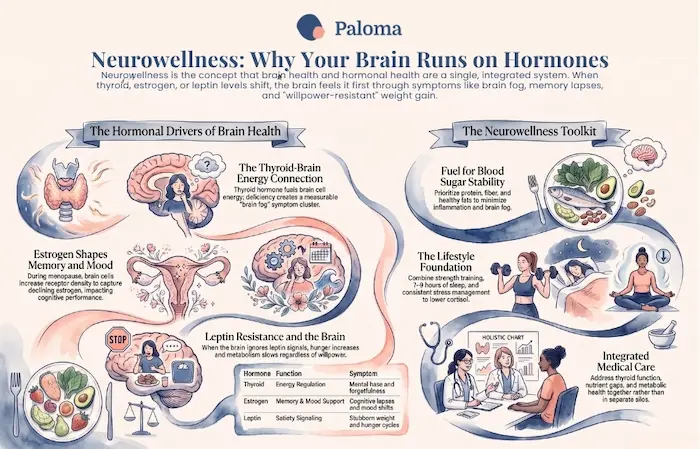
Supporting your brain through Hashimoto's, hypothyroidism, perimenopause, menopause, or hormonal weight change starts with a properly treated thyroid as a foundation for a healthy weight and mind. From there, a few daily habits can help.
Feed your brain
Choose steady, whole-food meals with protein, fiber, and healthy fats. Stable blood sugar supports stable mood and focus. Limit ultra-processed foods, which can worsen inflammation and, in turn, brain fog. If you are unsure where to start, a session with a thyroid-informed nutritionist can help you build a plan suited to your body.
Move, sleep, and manage stress
Regular physical activity improves blood flow to the brain and supports leptin and insulin sensitivity. Aim for a mix of strength training and aerobic activity most days of the week. Prioritize seven to nine hours of sleep, since poor sleep worsens both brain fog and hormonal balance. And build in small, consistent stress relief, such as short walks, breathing exercises, or time outdoors. Chronic stress raises cortisol, which can further disrupt thyroid function, blood sugar, and mood.
Simple Guide For A Healthy Sleep
Doctor-approved tips to help you relieve insomnia and get a good night's rest, starting tonight.

At Paloma Health, we see neurowellness as central to thyroid and hormone care, not separate from it. Brain fog, memory lapses, and mood changes are not side issues. They are core symptoms that deserve real attention.
That is why Paloma pairs comprehensive thyroid testing with access to physicians who understand the full picture: thyroid function, perimenopause and menopause, and metabolic health. Our care team can help you find the right thyroid medication and dose, address nutrient gaps that affect brain function, and coordinate with hormone treatment and weight control when it makes sense for you. Our thyroid nutritionists can help you build an eating pattern that supports steady energy and clearer thinking. And our growing library of patient-centered content is built to help you understand your own brain and body, so you can advocate for the care you deserve.
You do not have to accept brain fog, memory lapses, or low mood as the price of a hormonal condition. Support is available, and it starts with understanding the connection.

Frequently asked questions
What is neurowellness?
Neurowellness is the health of your brain and nervous system, including memory, mood, and mental clarity. It is closely tied to hormone levels, including thyroid hormone, estrogen, and leptin.
Can hypothyroidism really cause brain fog?
Yes. Research shows that brain fog is a common, measurable symptom of hypothyroidism, even in people treated with thyroid medication. It often improves with proper thyroid management and supportive lifestyle habits.
Is Hashimoto's encephalopathy common?
No, it is rare. Most people with Hashimoto's thyroiditis never develop this condition, but its existence highlights how closely thyroid autoimmunity and brain function are connected.
Why does memory get worse during perimenopause?
Estrogen supports brain regions tied to memory, including the hippocampus. As estrogen levels drop and fluctuate during perimenopause, many women notice short-term memory lapses and trouble concentrating.
Does menopause brain fog ever improve?
For most women, cognitive symptoms are mildest and most noticeable during the transition itself and tend to stabilize afterward. Treating any coexisting thyroid condition can also help symptoms improve.
What is leptin resistance?
Leptin resistance happens when your brain stops responding properly to leptin, the hormone that signals fullness. It can make hunger harder to control and weight loss more difficult, even with a healthy diet.
Can thyroid problems make menopause symptoms worse?
Yes. Thyroid and reproductive hormones interact closely, so hypothyroidism can intensify menopausal symptoms like fatigue, brain fog, weight gain, and mood changes, and the two are often confused for one another.
What lifestyle changes support neurowellness?
Steady, whole-food meals, regular movement, consistent sleep, and stress management all support brain health. These habits work best alongside properly managed thyroid and hormone levels, not in place of treatment.
Should I ask my doctor about brain fog?
Yes. Brain fog is a legitimate medical symptom worth discussing, especially if it is new, worsening, or affecting daily life. It may signal that your thyroid dose, hormone levels, or another factor needs attention.
How can Paloma Health help with brain fog and hormonal symptoms?
Paloma connects you with thyroid-focused physicians and nutritionists who look at the whole picture, including thyroid function, perimenopause and menopause, and metabolic health. This integrated approach can help identify and treat the root causes of brain fog and related symptoms.



%20(1).webp)


