

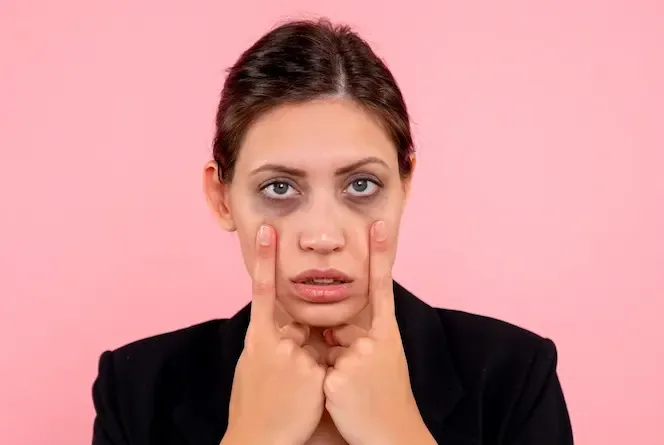
You slept eight hours. You drank the water. You bought the eye cream. And the face in the mirror still looks washed out, shadowed, and tired. According to TikTok, the problem may not be your skincare at all. It may be your iron.
Welcome to “ferritin face,” the viral shorthand for the dark circles, pallor, and dull skin that creators are blaming on low iron stores. Like most health trends, it’s part truth and part oversimplification. But if you’re living with Hashimoto’s, hypothyroidism, or the hormonal shifts of perimenopause and menopause, it’s a conversation worth having. Low ferritin is common, frequently missed, and tangled up with your thyroid in ways most videos never mention.
How “ferritin face” took over your feed
The term began bubbling up on social media in mid-2026 and has since exploded. Recent coverage of the trend reports that the hashtag has drawn more than 16 million TikTok views and that UK Google searches for the phrase have jumped 5,000 percent since October. Even the British Medical Journal has weighed in with a “sixty seconds on” explainer.
The videos tend to fall into a few camps:
- The “nobody listened” story. Creator @madelineaford describes having her symptoms and iron deficiency dismissed as stress and fatigue, even when blood tests showed slightly low iron.
- The before and after. Creators such as @notcaradeberryy and @sydkpri post side-by-side images showing how their faces changed after their low iron was treated.
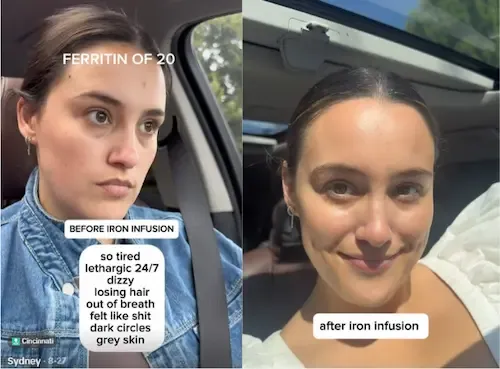
- The clinician take. Health professionals, including @dr.victoriavmd and naturopathic doctor @breannekallonen, have posted videos validating that low iron is widespread and usually treatable.
- The long road to a diagnosis. Lucy M., who posts as @marvluceskin, told the BBC the phrase captured changes she saw in herself when her ferritin was just 12, after she had first been told her blood work was normal.
What the videos get right: iron deficiency is common and under-recognized, especially in women. What they get wrong: you can’t diagnose it with a selfie.
What ferritin is and what it does
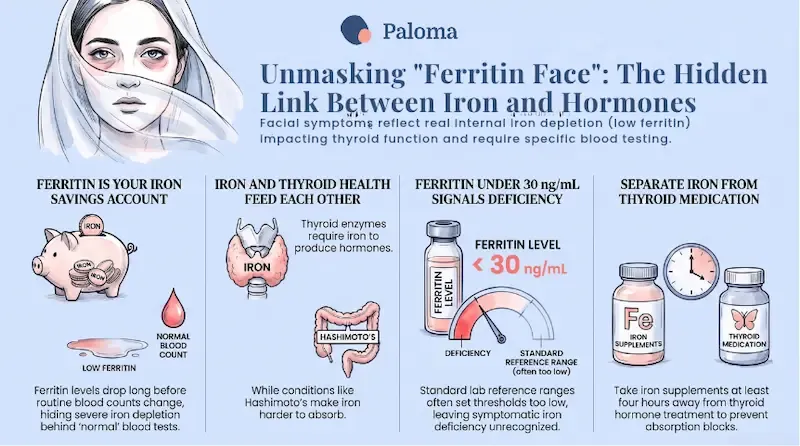
Ferritin is the protein that stores iron inside your cells. Think of hemoglobin as your checking account, the iron you’re spending right now to carry oxygen, and ferritin as your savings. A small amount of ferritin circulates in your blood, and that level reflects how much iron you have in reserve.
Iron does far more than build red blood cells. Your body needs it to produce energy, make brain chemicals that regulate mood and focus, fuel fast-growing cells like hair follicles, and, importantly for anyone with a thyroid condition, manufacture thyroid hormone.
Low ferritin is not the same as anemia
Here’s the detail that makes low ferritin so easy to miss. Your body drains its savings before it touches the checking account, so ferritin can fall for months – or even years – while your hemoglobin and standard blood count stay normal. This stage is called iron deficiency without anemia. A 2025 review in JAMA reports that in high-income countries, about 38% of nonpregnant women of reproductive age have it, and another 13% have iron-deficiency anemia.
So if you’ve been told “your blood count is fine,” the iron question is still open. Only a ferritin test answers it.
Your body drains its iron savings before it touches the checking account. That’s why a normal blood count doesn’t rule out low ferritin.
What counts as low?
The JAMA review defines iron deficiency as ferritin below 30 ng/mL in people without inflammatory conditions. By that measure, a national analysis in JAMA Network Open found that about 14% of US adults are iron deficient, rising to 34% of women under 50. Among girls and young women aged 12 to 21, the figure is nearly 4 in 10.
Two complications are worth knowing:
- Lab ranges often start too low. As one clinical report points out, many labs set the bottom of the reference range at 10 to 20, so a ferritin of 18 may be labeled normal even though it meets the definition of deficiency.
- Inflammation can hide a deficiency. Ferritin rises with inflammation and infection, so a result can look adequate when your stores are depleted. In that case, clinicians also check transferrin saturation, where a level under 20% points to deficiency.
What is “ferritin face”?
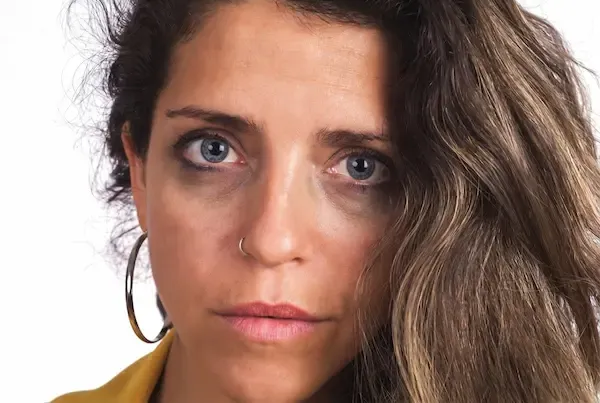
“Ferritin face” is not a medical diagnosis. It’s a social media label for a cluster of facial changes that people attribute to low iron stores: dark under-eye circles, pale or grayish skin, a dull or dry complexion, pale or cracked lips, and thinning hair and brows.
There is some biology behind it. With less hemoglobin, skin can lose its rosy tone, and paler skin makes the blood vessels under the eyes more visible. In a study of 200 people with under-eye darkening, half had anemia, the link was statistically significant, and many said their dark circles improved once the anemia was corrected. That’s an association, not proof, but it fits what the before-and-after videos show.
Signs and symptoms of low ferritin
Your face is not the first or most important clue. According to the JAMA review, people with low iron, with or without anemia, commonly report the following symptoms:
- Fatigue and reduced exercise tolerance
- Difficulty concentrating, irritability, or low mood
- Restless legs, especially at night
- Pica, a craving for ice or non-food items
- Shortness of breath or lightheadedness
Other frequently described signs include hair shedding, brittle nails, pale inner eyelids, cracks at the corners of the mouth, headaches, heart palpitations, and feeling cold.
If that list sounds familiar, it should. It overlaps almost entirely with the signs and symptoms of hypothyroidism and with the common symptoms of perimenopause and menopause.
What the mirror can and can’t tell you
Dark circles also come from genetics, allergies, poor sleep, aging, and sun exposure. Pale, dry skin and thinning hair are classic thyroid signs, too. And one popular claim, that low ferritin shows up on your face before it shows up in blood work, gets things backward: ferritin is the blood test, and it’s the earliest marker to drop. What is true is that ferritin falls long before a routine blood count changes, which is why you have to ask for it by name.
The ferritin connections: a deep dive
Hashimoto’s and hypothyroidism
The relationship between iron and your thyroid runs in both directions.
Your thyroid needs iron to work. Thyroid peroxidase (TPO), the enzyme that builds thyroid hormone, depends on iron. As a review in the journal Thyroid explains, TPO becomes active only after binding heme, the iron-containing compound, and iron deficiency impairs thyroid metabolism. (Yes, that’s the same TPO targeted by Hashimoto’s antibodies.)
Hashimoto’s makes you it more likely that your iron will run low. The same review notes that people with Hashimoto’s are often iron deficient, largely because autoimmune gastritis, a frequent companion condition, impairs iron absorption. Celiac disease, another autoimmune condition, does the same. And hypothyroidism itself can cause heavy or prolonged periods that drain iron month after month.
Low iron is linked to thyroid autoimmunity. A meta-analysis in Frontiers in Endocrinology found that iron-deficient women of reproductive age had nearly twice the odds of testing positive for TPO antibodies, and that iron-deficient pregnant women had higher TSH and lower free T4.
What this means for you:
- Persistent symptoms deserve an iron check. If you’re still exhausted, foggy, or shedding hair despite a “normal” TSH, low ferritin is one of the first things to rule out. In a randomized trial of fatigued women who weren’t anemic but had ferritin under 50, twelve weeks of iron cut fatigue scores by nearly half, significantly more than placebo.
- Treating both works better. The Thyroid review reports that in anemic women with impaired thyroid function, iron improved thyroid hormone levels, and thyroid medication combined with iron did more for iron status.
- Timing matters. Iron binds to levothyroxine in the gut. In a classic study, patients who took iron along with their thyroid pill saw their average TSH climb from 1.6 to 5.4. Keep iron at least four hours away from your thyroid medication.
Learn more in Paloma’s guides to iron deficiency, anemia, and Hashimoto’s and iron deficiency and thyroid disease.
Perimenopause and menopause
Perimenopause can be a perfect storm for iron loss. As ovulation becomes erratic, periods often get heavier, longer, or closer together, and each heavy cycle takes iron with it. Meanwhile, the resulting fatigue, brain fog, and thinning hair get written off as “just hormones.”
Early research suggests iron deserves a closer look at this stage. In a small 2025 study in Nutrients of non-anemic perimenopausal women, those with better iron status performed better on cognitive tasks, with the strongest associations seen for ferritin. The researchers called their findings preliminary but suggested that correcting low iron may be one way to ease midlife brain fog.
After menopause, the picture flips. Once periods stop, iron stores typically climb, so low ferritin after menopause is not normal and should never be shrugged off or simply supplemented away. The JAMA review lists gastrointestinal bleeding among the most common causes of iron deficiency, which is why postmenopausal women (and men) with low ferritin need a medical evaluation to find the source.
Because thyroid problems and the menopause transition so often look alike and overlap, it makes sense to check thyroid function, hormones, and iron together.
Weight loss and GLP-1 medications
Any time you eat substantially less, you take in less iron. That’s true of restrictive diets, and it’s true of GLP-1 and GLP-1/GIP medications like semaglutide and tirzepatide, which shrink appetite and often reduce your intake of iron-rich foods.
There may also be an absorption effect. In a pilot study of 51 adults with type 2 diabetes, the rise in blood iron after a test dose fell from 19% before semaglutide to 8% after ten weeks on the drug. The study was small and had no control group, but the authors recommend monitoring iron status in people taking semaglutide. Bariatric surgery is an even better-established cause of poor iron absorption.
Low iron can also quietly work against your goals. Fatigue and poor exercise tolerance make it harder to stay active and hold on to muscle. And because rapid weight loss can trigger hair shedding on its own, low ferritin on top of it is a double hit. If you have a thyroid condition and are considering a GLP-1, read Paloma’s guide on starting a GLP-1 with hypothyroidism, and ask for a baseline ferritin.
Hair loss
Hair is the symptom that sends many people searching for answers, and it’s where the science is most mixed.
Hair follicles are among the fastest-dividing cells in your body, and they’re sensitive to iron supply. A study of more than 5,000 women identified low iron stores as a risk factor for excessive hair loss before menopause. Cleveland Clinic dermatologists, in an influential review, said they screen hair loss patients for iron deficiency and believe treatment works better when low iron is corrected, while acknowledging the evidence isn’t conclusive.
On the other side, a Duke University study found that iron deficiency was no more common in women with female pattern hair loss or chronic shedding than in women with healthy hair. It was simply common in everyone.
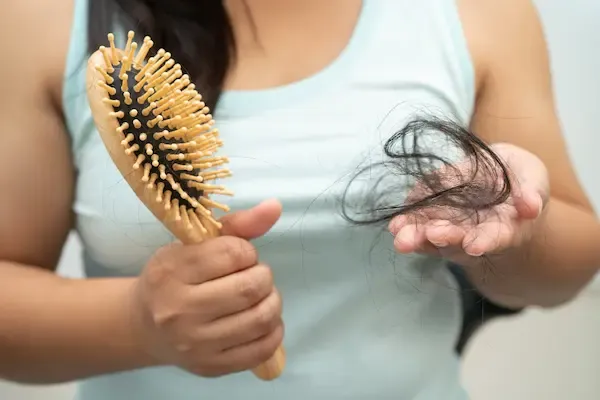
Low ferritin is worth finding and fixing, but it’s rarely the whole story.
The practical takeaway: low ferritin is worth finding and fixing, but it’s rarely the whole story. Thyroid-related hair loss, hair loss in perimenopause and menopause, and even thinning eyebrows can all occur alongside low iron. Correcting your ferritin removes one obstacle, and regrowth typically lags months behind your lab results. You can also read more about how hypothyroidism affects your hair, skin, and nails.
Your next steps
Interested in learning whether ferritin is playing a role in your symptoms? Here are some steps you can take.
- Ask for the right tests. Request a ferritin level by name, along with a complete blood count. If you have an autoimmune or inflammatory condition, ask about a full iron panel with transferrin saturation, since inflammation can make ferritin look falsely reassuring.
- Get your number. Don’t settle for “normal.” Ferritin under 30 ng/mL meets the definition of iron deficiency. Some clinicians treat symptomatic patients at higher levels, though there’s no universal agreement on an ideal target.
- Find the why. Low iron always has a cause: heavy periods, low intake, poor absorption (celiac disease, autoimmune gastritis, acid-reducing medications), or blood loss. Men and postmenopausal women with low ferritin need a medical workup.
- Don’t supplement blindly. Iron is not a “more is better” nutrient. Excess iron is harmful, some people are genetically prone to iron overload, and self-treating can mask a serious underlying problem.
- If you’re prescribed iron, take it strategically. Research shows that taking iron every other day improves absorption compared with daily dosing, and it may be gentler on your stomach. Take it with vitamin C and away from coffee, tea, and calcium.
- Protect your thyroid medication. Separate iron, including multivitamins that contain it, from thyroid hormone replacement medication by at least four hours. Paloma’s guide to when to take your supplements can help you build a schedule.
- Eat for iron. Include red meat, poultry, and seafood if you eat them, plus lentils, beans, tofu, and dark leafy greens paired with vitamin C-rich foods.
- Retest. Recheck ferritin after six to eight weeks of treatment, and recheck your TSH as well, since better iron status can change how well your thyroid treatment is working. If oral iron isn’t working or isn’t tolerated, ask about intravenous iron.
- Check your thyroid, too. Because the symptoms overlap so heavily, fatigue, hair loss, and pallor warrant a full thyroid panel alongside iron testing.
A note from Paloma
If the ferritin face trend has you studying your reflection, take it as a prompt to get real answers and information. Tired skin, shedding hair, and bone-deep fatigue are your body’s way of asking for a closer look, and for many women the answer involves more than one thing: thyroid, hormones, and nutrients together.
That’s the kind of whole-picture care Paloma Health was built for. Paloma’s hormone-savvy providers treat hypothyroidism and Hashimoto’s, perimenopause and menopause, and weight concerns under one virtual roof, so you’re not left connecting the dots between specialists. They take persistent symptoms seriously even when your labs are called “normal,” and they can help you decide which tests, including iron studies, belong in your workup and how to fit iron treatment around your thyroid medication.
A good first step is knowing your thyroid numbers. The Paloma Complete Thyroid Blood Test Kit measures TSH, free T4, free T3, and TPO antibodies from home. From there, a Paloma provider can help you build a plan that addresses root causes. And if you’ve ever felt like an invisible patient, you deserve a team that truly listens.

Limited offer
20% off your first Thyroid Test
Frequently asked questions
Is ferritin face a real medical condition?
No. It’s a social media term for facial changes some people notice with low iron. Low ferritin or iron deficiency can’t be diagnosed by appearance alone.
What is a normal ferritin level?
Lab ranges vary widely, but ferritin below 30 ng/mL is generally considered iron deficiency. Ask for your actual number, because a result labeled “normal” can still be low.
Can I have low ferritin if my blood count is normal?
Yes. Iron stores run down well before hemoglobin drops, a stage called iron deficiency without anemia.
Does low ferritin cause dark undereye circles?
It can contribute, because paler skin makes the blood vessels under your eyes more visible. Genetics, allergies, sleep, and aging are also common causes.
Can low iron affect my thyroid?
Yes. The enzyme that makes thyroid hormone depends on iron, and iron deficiency is linked to poorer thyroid function and a higher rate of thyroid antibodies.
Why are people with Hashimoto’s prone to low ferritin?
Related autoimmune conditions such as autoimmune gastritis and celiac disease reduce iron absorption. Heavy periods caused by hypothyroidism can add to the loss.
Can I take iron with thyroid hormone replacement drugs?
Not at the same time. Iron blocks the absorption of thyroid medication, so separate them by at least four hours.
Will raising my ferritin regrow my hair?
It may help if low iron is contributing, but the research is mixed and hair loss usually has several causes. Regrowth takes months, so give it time.
Do GLP-1 and GLP-1/GIP medications lower iron?
They may, because you eat less and may absorb less. Ask your provider to check your ferritin before and during treatment.
Should I take iron just in case?
No. Test first, because too much iron is harmful and unexplained low iron needs a medical evaluation.