




In this article
You zip your jeans in the morning, and by mid-afternoon they're digging into your waist. Your belly feels tight, gassy, and swollen, and you can't figure out what you ate to deserve it. If you're in your 40s or 50s, there's a good chance the culprit isn't your lunch. It's your hormones.
Bloating and gas rarely make the official list of menopause symptoms, which tends to focus on hot flashes, night sweats, and mood swings. But new research presented at the 2026 Annual Meeting of The Menopause Society confirms what millions of women already suspect: excessive bloating and gas are the most common digestive complaints across the entire menopause transition, and they often travel with anxiety.
Here's what the new findings show, why your gut changes in midlife, how your thyroid fits into the picture, and the practical steps that can bring real relief.
Your gut doesn't operate in isolation. It's lined with receptors for estrogen and progesterone, and it's in constant two-way conversation with your brain. So when your reproductive hormones begin to fluctuate in perimenopause, your digestive system feels it.
According to The Menopause Society's announcement of the new study, fluctuating hormone levels can slow digestion and alter how the gut functions. When food moves more slowly, it has more time to ferment, and fermentation produces gas. At the same time, hormonal shifts can make the nerves in your gut more sensitive, so normal amounts of gas feel uncomfortable or even painful.
Researchers have long known that ovarian hormones shape gut behavior. A detailed review in the World Journal of Gastroenterology explains that sex hormones influence gut sensitivity, motility, the permeability of the intestinal lining, and immune activity in the gut wall. That helps explain why many women notice bloating before their periods, and why the hormonal roller coaster of perimenopause can make gut symptoms feel so unpredictable.
Bloating, distension, or weight gain?
These terms get used interchangeably, but they're different. Bloating is the feeling of fullness, pressure, or trapped gas. Distension is a visible, measurable increase in the size of your belly. As Mayo Clinic gastroenterologists explain in a review of chronic bloating and distension, the two often occur together but can also happen separately.
Bloating typically comes and goes, often worsening as the day goes on or after meals, then improving overnight. Midlife weight gain, on the other hand, tends to be steady and doesn't vanish by morning. If your waistline stays bigger day after day, it may be worth exploring whether your weight gain is hormonal.
Menopause-related digestive symptoms can show up in many ways. Common signs include:
- A tight, swollen, or "balloon-like" belly, especially later in the day
- Excess gas, burping, or flatulence
- Feeling full quickly, or uncomfortably full after normal-sized meals
- Abdominal cramping or discomfort
- Constipation, diarrhea, or alternating between the two
- Heartburn or acid reflux
- Nausea
- Clothes that fit in the morning but feel tight by evening
Many women also notice that digestive system symptoms flare alongside other changes, such as poorer sleep, more anxiety, or irregular periods. Digestive problems are among the surprising symptoms of perimenopause and menopause that often get overlooked.
The new study comes from the MOMENTUM Canadian menopause cohort, led by Sanjana Solomon of the University of Calgary. The results were released by The Menopause Society and are being presented at its 2026 Annual Meeting in San Diego, October 20 to 24.
Researchers studied more than 1,800 women ages 40 to 60, grouped by stage: premenopause, perimenopause, and postmenopause. They measured the severity of several digestive symptoms, along with anxiety, to see whether the two were connected.
Bloating and gas top the list at every stage
The headline finding: excessive bloating and gas were the most common gastrointestinal symptoms, with 65.6% of women scoring above the normal severity range. That's roughly two out of every three women.
Notably, GI symptom severity didn't differ meaningfully by menopause stage. Bloating and gas were just as much of a problem before, during, and after the transition. And no other digestive symptom, including constipation, diarrhea, pain, or nausea, rose above the normal range on average.
Two out of three midlife women in the study had bloating and gas severe enough to fall outside the normal range.
Anxiety peaks in perimenopause and stays elevated
The anxiety picture looked different. Anxiety scores were highest in perimenopause. Overall, 17.5% of women reported moderate to severe anxiety. The rate was lowest in premenopause at 14.6%, then climbed to 19.2% in perimenopause and stayed high, at 19.0%, after menopause.
In other words, once anxiety rises during the transition, it doesn't necessarily settle back down.
Why the gut-anxiety link matters
The researchers set out to learn whether gut symptoms and anxiety are connected, and their presentation reports that the two are associated across the menopause journey. Dr. Stephanie Faubion, medical director of The Menopause Society, described it as a two-way street: changing hormones set up a cycle in which gut distress worsens anxiety, and anxiety in turn triggers more gut symptoms.
That idea is well supported. A 12-year population study published in Gut found that higher anxiety predicted the later development of functional gut disorders. In comparison, people who started out with gut disorders went on to develop more anxiety and depression. The authors concluded that the brain and gut influence each other in both directions.
Once anxiety rises in perimenopause, it tends to stay elevated after menopause, and your gut may be feeling it.
The next phase of the MOMENTUM study will analyze gut bacteria and track changes over time. For now, the researchers' message to clinicians is clear: screen women for both GI symptoms and anxiety, regardless of menopause stage.
What this means for you
These findings carry several important takeaways:
- Your symptoms are common and real. Bloating and gas aren't a personal failing or "just aging."
- They may not fade after menopause. Because symptom severity held steady across stages, simply waiting it out isn't a reliable strategy.
- Your gut and your mood are linked. If you're anxious and bloated, easing one may help the other. Learn more about the relationship between menopause and anxiety.
- Ask to be screened. Bring up digestive symptoms and anxiety with your practitioner, even if they don't ask.
Keep in mind that these are preliminary findings presented at a medical meeting and have not yet been published in a peer-reviewed journal.

Estrogen, progesterone, and gut motility
Progesterone relaxes smooth muscle, including the muscles of your intestines, which can slow the movement of food and gas. Estrogen influences gut sensitivity and interacts with serotonin and stress-hormone signaling, according to the World Journal of Gastroenterology review. When both hormone levels swing unpredictably in perimenopause, digestion can swing too. For some women, supplemental progesterone can itself contribute to bloating, which is worth discussing if you're considering progesterone therapy.
Your microbiome changes, too
Your gut bacteria also respond to menopause. In a study of 2,300 adults, researchers publishing in mSystems found that postmenopausal women trended toward lower gut microbiome diversity, with a microbiome more similar to men's. A review in the International Journal of Women's Health reached a similar conclusion, while noting that more research is needed.
Part of your microbiome, called the estrobolome, helps process and recycle estrogen. Paloma explores this in depth in how the estrobolome and gut influence menopause and thyroid health, and in our article on gut dysbiosis, hormones, and weight.
The new study builds on a growing body of evidence:
- Most midlife women have gut symptoms. In a UK study of nearly 600 women ages 44 to 73, presented at The Menopause Society's 2025 meeting, 94% reported digestive symptoms. Bloating led the list at 77%, followed by constipation, stomach pain, and acid reflux. Most said symptoms began or worsened during perimenopause or menopause, and many who sought help felt their care was inadequate.
- Race, ethnicity, and stage matter. A study of 1,051 women published in Menopause found that premenopausal women had the fewest and least severe GI symptoms, and that Asian women reported fewer and milder symptoms than other groups.
The 2026 study found bloating severity held steady across stages, while earlier research suggested symptoms climb after the hormonal changes of menopause. Those differences may reflect who was studied and how symptoms were measured. Either way, the common thread is clear: bloating is a real and persistent midlife problem.
At Paloma, we always ask one more essential question: could your thyroid be involved? Thyroid disease is common in midlife women, and its symptoms overlap heavily with menopause.
Thyroid hormone helps set the pace of your entire digestive tract. When levels are low, as in hypothyroidism, gut motility slows, which can lead to constipation and bloating. Sluggish motility also lets bacteria overgrow in the small intestine. In a study of 50 patients with a history of hypothyroidism from autoimmune thyroiditis, researchers writing in the Journal of Clinical Endocrinology & Metabolism linked hypothyroidism to small intestinal bacterial overgrowth (SIBO). They found that bloating, flatulence, and abdominal discomfort were significantly more common in those with SIBO. A later review concluded that SIBO is common in hypothyroidism and that patients with chronic GI symptoms should be evaluated for it. Learn more about the link between SIBO and thyroid disease.
Hashimoto's thyroiditis also travels with other conditions that cause bloating, including celiac disease and irritable bowel syndrome. If you have Hashimoto's and persistent bloating, it's worth ruling these out.
Most menopausal bloating is benign, but persistent bloating can occasionally signal something more serious, including ovarian cancer. In a study of women seen in primary care clinics, researchers writing in JAMA found that women with ovarian cancer more often reported bloating, increased abdominal size, and urinary symptoms, and experienced them more frequently and severely than women without cancer.
See your practitioner promptly if you have:
- New bloating that occurs almost every day for more than two or three weeks
- Bloating along with pelvic or abdominal pain, feeling full quickly, or urinary urgency
- Unintended weight loss, blood in your stool, or black stools
- Any vaginal bleeding after menopause
- Persistent vomiting, severe pain, or difficulty swallowing
- A family history of ovarian, colon, or breast cancer
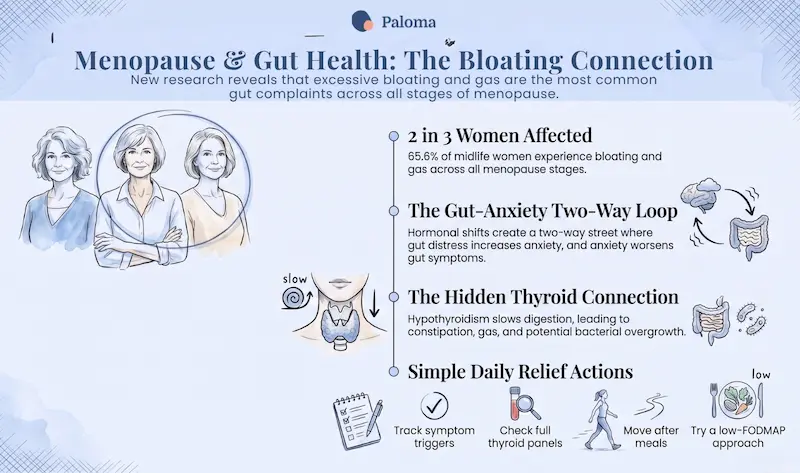
The good news is that you can do a lot. Here's a practical, evidence-informed plan.
Track your symptoms
For two to three weeks, note when bloating strikes, what you ate, your stress level, your sleep, and where you are in your cycle if you still have periods. Patterns help you and your practitioner pinpoint triggers.
Get your thyroid checked
Ask for a full thyroid panel, including TSH, free T4, free T3, and thyroid antibodies, not just TSH. If you're already treated for hypothyroidism, persistent bloating may be a sign that your dose needs a second look.
Experiment with your diet, carefully
FODMAPs are fermentable carbohydrates found in foods like onions, garlic, beans, wheat, apples, and some sweeteners. In a randomized trial in Gastroenterology, a low-FODMAP diet cut overall IBS symptoms roughly in half and reduced bloating and gas compared with a typical diet. A low-FODMAP plan is meant to be temporary and works best with a dietitian's guidance. Read more about FODMAPs and hypothyroidism. Also:
- Eat smaller meals and slow down, since swallowed air adds to gas
- Limit carbonated drinks, chewing gum, and sugar alcohols such as sorbitol
- Increase fiber gradually, because sudden jumps can worsen gas (see the pros and cons of "fibermaxxing")
- Ask whether a targeted probiotic makes sense for you
Move after meals
Gentle activity helps move gas through your gut. A 10- to 15-minute walk after eating is an easy start, and interval walking may offer extra hormonal benefits.
Calm the gut-brain loop
Because anxiety and gut symptoms feed each other, caring for your stress supports your gut. Diaphragmatic breathing, meditation, gut-directed hypnotherapy, and cognitive behavioral therapy can all help. These breathwork techniques are a good place to begin.
If your belly visibly balloons after meals, a specialized breathing approach may help. In a placebo-controlled trial, biofeedback that retrains how the diaphragm and abdominal wall muscles respond after eating effectively reduced abdominal distension. Ask a gastroenterologist or pelvic floor therapist about this unique approach.
Talk about hormone therapy
Hormone therapy is the most effective treatment for many symptoms of hormonal fluctuation during menopause, and by easing hot flashes, night sweats, and sleep disruption, it may lighten the stress load on your gut. Its direct effect on bloating isn't well studied, though, and some forms and doses can contribute to bloating. Work with a menopause-informed practitioner to find the right fit. Learn more about hormone therapy for perimenopause.
Don't settle for "it's just menopause"
If self-care isn't working after a few weeks, ask about testing for SIBO, celiac disease, food intolerances, or other conditions, and request a referral to a gastroenterologist if needed.

At Paloma Health, we know how frustrating it is to be told your symptoms are "normal" without getting real help. Bloating, gas, and anxiety can drain your energy and your confidence, and they deserve attention.
Paloma offers virtual care for menopause and hypothyroidism with practitioners who understand how your thyroid, sex hormones, and gut interact. Your Paloma practitioner can review your symptoms, order comprehensive testing, including our convenient at-home thyroid test kit, and create a personalized plan that may include optimizing your thyroid medication and menopausal hormone therapy when appropriate. Our nutritionists can help you identify food triggers and build a gut-friendly eating plan that fits your life.
You don't have to accept bloating and discomfort as your new normal. Schedule a visit with Paloma today and get care that looks at the whole picture.
How To Maintain A Healthy Gut
Digestive issues like bloating, constipation, or gas can be resolved or improved with simple lifestyle changes

Is bloating a symptom of menopause?
Yes, bloating and gas are common during perimenopause and menopause. New research shows they're the most common digestive symptoms at every stage of the transition.
Why am I so bloated during perimenopause?
Fluctuating estrogen and progesterone can slow digestion and make your gut more sensitive. Slower digestion gives food more time to ferment and produce gas.
Does menopause bloating go away after menopause?
Not always. The 2026 MOMENTUM study found that bloating and gas severity stayed about the same before, during, and after menopause.
Can anxiety cause bloating?
Yes, your gut and brain communicate in both directions. Anxiety can worsen gut symptoms, and gut distress can heighten anxiety.
How can I tell bloating from weight gain?
Bloating usually comes and goes during the day and often improves overnight. Weight gain is steady and doesn't change much from morning to evening.
Can hypothyroidism cause bloating and gas?
Yes, low thyroid hormone slows gut motility, which can cause constipation, bloating, and gas. It's also linked to small intestinal bacterial overgrowth, a common cause of bloating.
Does hormone therapy help menopause bloating?
Hormone therapy may help indirectly by easing hot flashes and improving sleep. However, its direct effect on bloating isn't well studied, and some forms can cause bloating.
What foods make menopause bloating worse?
Common triggers include carbonated drinks, sugar alcohols, beans, onions, garlic, wheat, and certain fruits. Triggers vary from person to person, so a food-and-symptom diary can help you find yours.
Do probiotics help with menopause bloating?
Some people find that certain probiotics ease bloating, but results vary by strain and by person. Talk with your practitioner before starting one.
When should I see a doctor about bloating?
See a doctor if bloating is new, persistent, and nearly daily for more than a few weeks. Get prompt care if it comes with pain, early fullness, weight loss, bleeding, or urinary changes.


