


.webp)
In this article
Gout and hypothyroidism may seem like unrelated health conditions, but they actually have a close relationship. Gout is a form of arthritis caused by the buildup of uric acid crystals in the joints.
On the other hand, hypothyroidism is a condition characterized by an underactive thyroid gland. The thyroid gland does not produce enough thyroid hormones. The thyroid hormones are crucial in regulating various bodily functions, including metabolism. When levels of these hormones are low, it can slow down the body’s processes, leading to fatigue, weight gain, and muscle and joint pain, including gout.
Understanding the connection between these two conditions can lead to better management and treatment options for individuals experiencing symptoms related to both. Ahead, a look at gout and the link to an underactive thyroid.
What is gout?
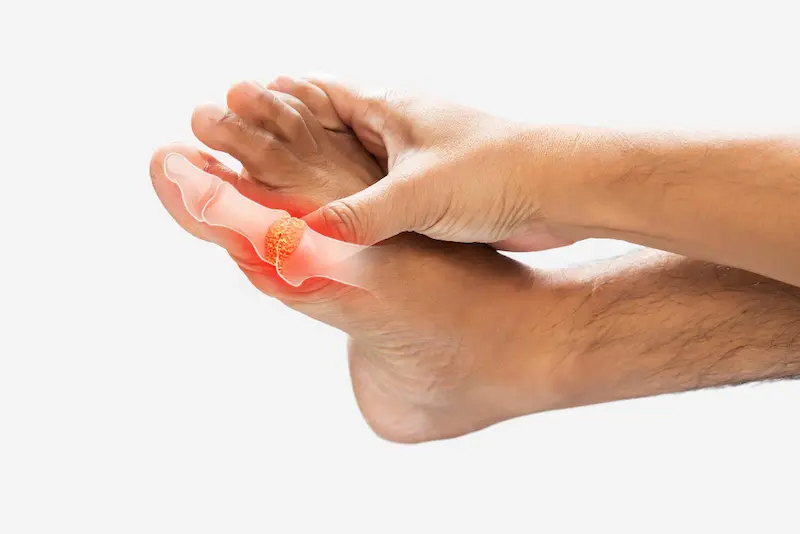
Gout is a form of inflammatory arthritis typically caused by the overproduction or underexcretion of uric acid in the body, a condition known as hyperuricemia. Uric acid is a waste product produced when the body breaks down purines found in the body and the foods we eat. Uric acid is usually filtered out by the kidneys and excreted by the kidneys in urine. However, in individuals with gout, the body produces too much uric acid, has impaired renal function, or has difficulty eliminating uric acid. Excess uric acid leads to a buildup of uric acid crystals in the joints. Gout most commonly affects the joints in the big toe but can also occur in other joints, such as the ankles, knees, elbows, wrists, and fingers.
The intense pain, swelling, and inflammation associated with gout can be debilitating and last several days or weeks. Dietary and lifestyle factors, as well as certain medical conditions, can contribute to the development of gout. Treatment typically involves medications to manage pain and inflammation and lifestyle modifications to reduce uric acid levels in the body.
Stress 101: How to Avoid a Flare-Up
Practical tools to lower your chance of an autoimmune flare-up due to stress.

What are the symptoms of gout?
Gout symptoms typically include sudden and severe pain, swelling, redness, and tenderness in the joints, most commonly in the big toe. The affected joint may also feel warm to the touch and become stiff. Gout attacks usually occur suddenly, often at night, and can last a few days or several weeks. Some individuals may experience recurring gout attacks, while others may have periods of remission with no symptoms.
What are the long-term complications of gout?
The long-term complications of gout can be significant and may impact multiple aspects of a person’s health. One of the main complications is the development of joint damage and deformities, which can lead to chronic pain, stiffness, and limited mobility. In some cases, gout can affect a person’s ability to walk, work, and perform everyday tasks. Gout can also contribute to the development of kidney stones and, in some cases, chronic kidney disease.
Additionally, gout increases the risk of developing other health conditions such as hypertension, heart disease, and diabetes. These complications can profoundly impact the overall quality of life and require ongoing management and treatment to prevent further damage and reduce the risk of future gout attacks.
How is gout diagnosed?
Gout is typically diagnosed using a combination of medical history, physical examination, and laboratory tests. The doctor will ask about the symptoms experienced by the patient, such as sudden and intense joint pain, swelling, and redness. They will also inquire about any risk factors or medical conditions that may increase the likelihood of developing gout.
During a physical examination, the doctor should assess the affected joint for tenderness, inflammation, and tophi (deposits of uric acid crystals).
To confirm the diagnosis and rule out other possible causes of joint pain, laboratory tests such as blood tests to measure serum uric acid levels, joint fluid analysis to check for uric acid crystals or imaging tests like X-rays or ultrasound may be conducted. Combining these approaches helps diagnose gout accurately and determine the most appropriate treatment plan.
What is the relationship between gout and hypothyroidism?
Research suggests that people with hypothyroidism have an increased risk of developing gout. One well-known study examined the relationship between the two conditions and found that the prevalence of hypothyroidism was significantly higher in patients with gouty arthritis compared to a control group of euthyroid subjects (people with normal thyroid function).
In that study, 15% of patients with gouty arthritis had hypothyroidism overall, with notably higher rates in women than men. The mean TSH of the gouty patients was also significantly higher (around 5.2) compared to the control patients (about 1.8). The researchers concluded that screening for hypothyroidism should be considered in anyone presenting with gout, or with a history of recurrent gout flares.
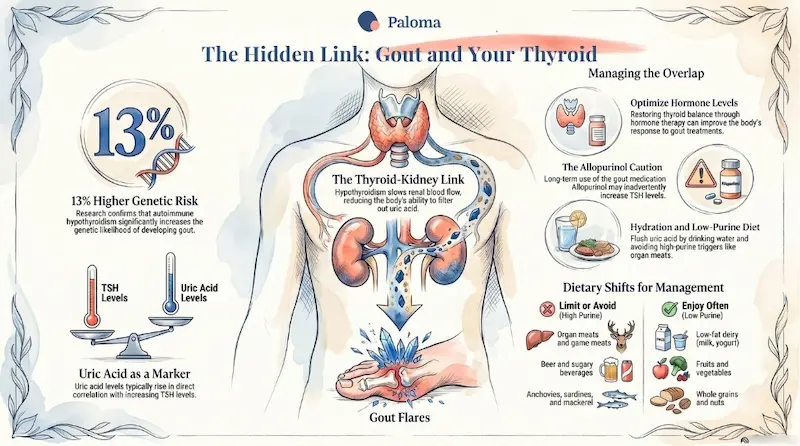
Why the connection? It likely comes down to the role thyroid hormones play in uric acid metabolism. Thyroid hormones help regulate enzymes involved in breaking down and clearing uric acid from the body. When thyroid hormone is in short supply, as it is in hypothyroidism, that enzyme activity can drop, uric acid clearance slows, and uric acid levels in the blood start to climb — setting the stage for gout.
That original study is decades old at this point, but the science has only gotten stronger — and more specific — since then. Here's what's emerged just in the last couple of years.
Even mild, "subclinical" thyroid resistance is tied to higher uric acid
A large 2025 study out of China, published in Frontiers in Endocrinology, looked at more than 22,000 adults whose thyroid function fell entirely within the normal range — no thyroid disease diagnosis at all — and measured how sensitive their tissues were to their own thyroid hormone, using several established thyroid hormone sensitivity indices. The people whose tissues were least responsive to thyroid hormone, even with "normal" labs, had a meaningfully higher risk of hyperuricemia (elevated uric acid), and that risk climbed in a clear dose-response pattern as sensitivity worsened.
Interestingly, the researchers found that elevated total cholesterol accounted for part — but only part, somewhere between roughly 7% and 18% — of that relationship, pointing to lipid metabolism as one of several pathways linking thyroid function and uric acid. The takeaway here is a meaningful one: this connection isn't limited to people who already carry a hypothyroidism diagnosis. Even subtle, sub-threshold thyroid resistance appears to nudge uric acid upward.
New clinical data confirm higher uric acid in people with hypothyroidism
A 2025 study out of Pakistan followed 232 newly diagnosed hypothyroid patients and measured uric acid alongside TSH, free T3, and free T4. The results were striking: uric acid rose right along with TSH (a strong positive correlation), and fell as free T3 and free T4 dropped (strong negative correlations) — and these patterns held up even after accounting for age, sex, obesity, and smoking status. The authors suggested uric acid could potentially serve as a marker of how severe someone's thyroid dysfunction is. It's a single-center study, so it's not the final word, but it's a useful, recent, real-world confirmation that uric acid tracks closely with thyroid status.
The kidneys may be a key piece of the puzzle
A comprehensive 2024 review in Thyroid Research dug into how thyroid hormones affect kidney function, and the findings line up well with the uric acid story even though the review itself didn't set out to study uric acid or gout directly. The authors found that hypothyroidism can disrupt the renin-angiotensin-aldosterone system, reduce cardiac output, and increase constriction of the blood vessels in the kidneys — all of which can lower glomerular filtration rate (GFR) and reduce renal blood flow.
That matters for the gout story because reduced GFR is one of the most well-established drivers of impaired uric acid clearance. So while this particular review didn't connect the dots to gout itself, it helps explain the mechanism other researchers (including the Mendelian randomization team below) have pointed to: when hypothyroidism slows the kidneys down, uric acid has a harder time leaving the body, and gout risk rises as a result.
The strongest evidence yet: a 2023 genetic study points to real causation
Of everything published recently, this one may matter most. Research published in 2023 used Mendelian randomization — a genetic technique that helps separate true cause-and-effect from simple correlation by using naturally occurring genetic variants as a kind of randomized experiment — to ask whether thyroid disease actually causes gout, or whether the two conditions just happen to travel together.
The answer: autoimmune hypothyroidism increased the genetic risk of gout by about 13%, and autoimmune hyperthyroidism increased it by about 7%, while thyroid nodules and thyroid cancer showed no causal link at all. Just as important, the reverse wasn't true — having gout did not appear to cause thyroid disease. That one-way relationship is a strong signal that this isn't just two common conditions coincidentally showing up in the same patients; hypothyroidism (and hyperthyroidism) appear to genuinely contribute to gout risk.
The bottom line
Put together, the newer science increasingly supports what that original study suggested decades ago: hypothyroidism and gout are connected, and not just by coincidence. We now have:
- Evidence that the connection shows up even before someone crosses the threshold into a hypothyroidism diagnosis
- Direct clinical confirmation that uric acid rises in step with worsening thyroid function
- A clearer picture of the kidney mechanisms likely driving that rise
- And genetic evidence pointing toward true causation, not just correlation
If you have gout, or recurrent gout flares, it's worth asking your doctor for a thyroid panel. And if you already have hypothyroidism, it's worth keeping an eye on uric acid, especially if you start noticing joint pain, swelling, or redness — particularly in the big toe. These two conditions show up together often enough that finding one should put the other on your radar.
How is gout treated?
Managing gout in hypothyroid patients requires a comprehensive approach that addresses both conditions simultaneously. In the case of hypothyroidism, hormone replacement therapy is the primary treatment. This treatment restores thyroid hormone levels to normal in the body. Regularly monitoring thyroid hormone levels and adjusting medication dosage are essential to manage hypothyroidism effectively. While treating hypothyroidism does not directly resolve gout, optimal thyroid treatment may help improve the response to gout treatment.
Gout is typically treated through a combination of medication and lifestyle changes. The primary goal of treatment is to manage the pain and inflammation associated with gout attacks, as well as to prevent future attacks and reduce the risk of complications.
Nonsteroidal anti-inflammatory drugs (NSAIDs) are often prescribed to alleviate pain and reduce inflammation during an acute gout attack. Colchicine is another medication that can relieve pain and inflammation associated with gout. Corticosteroids can help decrease inflammation, relieve gout pain, and may help slow damage to the joints.
Additionally, medications such as febuxostat (Uloric) and allopurinol (Zyloprim) may be prescribed to lower uric acid levels in the body and prevent the formation of urate crystals that cause gout.
An important note about allopurinol (Zyloprim)
Hypothyroidism patients and their practitioners need to be aware that long-term use of allopurinol, a common medication used to treat gout, is associated with increasing thyroid stimulating hormone (TSH) levels. Researchers have concluded that the use of allopurinol may induce mild or subclinical forms of hypothyroidism. It’s also possible that in a patient with hypothyroidism, long-term treatment with allopurinol may require adjustments of thyroid hormone dosage to maintain optimal thyroid treatment.
Download our Thyroid Meal Plan
Find inspiration for a healthy way to support your thyroid

What dietary changes are recommended for gout?
Patients with gout should also make the following dietary changes to manage their condition effectively:
1. First, it is important to reduce the intake of purine-rich foods, as purines can raise uric acid levels in the body, leading to gout flare-ups. Purine-rich foods to avoid or limit include:
- Organ meats, such as liver, kidneys, and sweetbreads
- Seafood, including anchovies, sardines, mackerel, and herring
- Game meats, like venison, rabbit, and pheasant
- Beer
- Yeast extracts, such as Marmite and Vegemite
- Specific vegetables that have moderate levels of purine, including asparagus, cauliflower, spinach, and mushrooms
- Sugary drinks, particularly those containing high-fructose corn syrup
2. Second, increasing the consumption of low-fat dairy products such as milk, yogurt, and cheese can help lower the risk of gout attacks. These products contain compounds that are believed to reduce uric acid levels.
3. Third, opt for a diet rich in fruits, vegetables, whole grains, and nuts, as these foods are associated with a lower risk of gout.
4. Finally, it’s important to stay well-hydrated by drinking adequate water each day to help flush out uric acid from the body.
A note from Paloma
Patients with gout should get regular thyroid screening to monitor any changes in thyroid function. The Paloma Home Thyroid Test kit can make it easy and affordable to get a complete thyroid panel from the comfort of your home.
If you have both hypothyroidism and gout, working closely with a healthcare professional to develop an individualized treatment plan that addresses both conditions is crucial. By effectively managing both gout and hypothyroidism, you can enjoy improved quality of life and reduce the risk of complications associated with these conditions.
For diagnosis, management, and optimized treatment of their hypothyroidism, more thyroid patients are choosing to work with Paloma’s top thyroid doctors. Paloma’s thyroid-savvy team of practitioners work with you to develop an effective treatment plan, including thyroid medications and lifestyle changes that can safely normalize your thyroid function for optimal health.
Because nutritional changes are also a key component of treatment for gout, you may want to schedule a consult with one of Paloma’s registered nutritionists. As experts in healthy eating, our experienced nutritionists can help you make nutritional choices to support your overall health.
Frequently asked questions
Can hypothyroidism cause gout?
Hypothyroidism does not directly cause gout, but it can increase the risk of developing it. Low thyroid hormone levels may impair the body's ability to eliminate uric acid, allowing uric acid levels to rise.
Why are people with hypothyroidism more likely to develop gout?
Thyroid hormones help regulate many metabolic processes, including those involved in uric acid metabolism. When thyroid hormone levels are low, uric acid clearance may decrease, increasing the chance of crystal formation in the joints.
What are the most common symptoms of gout?
Gout usually causes sudden, intense joint pain along with swelling, redness, warmth, and tenderness. The big toe is the most commonly affected joint, but gout can also occur in the ankles, knees, wrists, fingers, and elbows.
Should people with gout have their thyroid checked?
Many experts recommend considering thyroid screening in people who have gout, especially recurrent gout attacks. Identifying and treating hypothyroidism may help address an underlying factor contributing to elevated uric acid levels.
Can treating hypothyroidism cure gout?
Treating hypothyroidism alone is not considered a cure for gout. However, achieving optimal thyroid hormone levels may improve overall metabolic function and support more effective gout management.
How is gout diagnosed?
Doctors typically diagnose gout using a combination of medical history, physical examination, blood tests, joint fluid analysis, and sometimes imaging studies. These tests help confirm the presence of uric acid crystals and rule out other causes of joint pain.
What foods should people with gout avoid?
People with gout are often advised to limit foods high in purines, including organ meats, certain seafoods, game meats, and beer. Sugary beverages, especially those containing high-fructose corn syrup, may also increase the risk of gout flare-ups.
What foods may help reduce gout attacks?
Low-fat dairy products, fruits, vegetables, whole grains, and nuts are commonly recommended as part of a gout-friendly eating plan. Drinking plenty of water may also help the body eliminate excess uric acid.
Can gout lead to other health problems?
Yes. Over time, uncontrolled gout can contribute to joint damage, reduced mobility, kidney stones, and chronic kidney disease. It is also associated with a higher risk of conditions such as high blood pressure, heart disease, and diabetes.
Is there a connection between gout medications and thyroid function?
Some research suggests that long-term use of allopurinol, a common gout medication, may be associated with increased TSH levels and mild thyroid dysfunction in some patients. People with hypothyroidism who take allopurinol may benefit from periodic thyroid monitoring and medication review with their healthcare provider.


%20copy.webp)
%20(1).webp)
%20(1).webp)
%20(1).webp)


