



.webp)
In this article
You’ve probably heard of skinmaxxing, bodymaxxing, sleepmaxxing, fibermaxxing, and even hairmaxxing. These viral “maxxing” trends—born on TikTok and Instagram—promise to help you extract every ounce of potential from your looks, fitness, and lifestyle. But here’s the plot twist everyone’s missing: you can do all the skincare routines, hit the gym seven days a week, load up on fiber, and optimize your sleep tracking... but if your thyroid is running on empty, you might never see the results you’re chasing!
Enter thyroidmaxxing—the emerging movement that puts thyroid health at the center of your optimization game. It’s not just about treating hypothyroidism when thyroid lab results go haywire. It’s about proactively supporting your thyroid so it can do what it does best: fuel your metabolism, glow up your skin and hair, stabilize your mood, and help you actually feel the energy you’re working so hard to earn.
Let’s dive into why thyroidmaxxing is exploding on social media, what science says about optimizing thyroid function, and how to thyroidmax the right way—without falling into the trap of over-supplementing or ignoring real medical treatment.
The “maxxing” phenomenon started with “looksmaxxing”—a term coined in online communities focused on maximizing physical appearance through grooming, fitness, grooming routines, and sometimes even cosmetic procedures. From there, the suffix spread like wildfire: sleepmaxxing (optimizing rest through tracking and habits), bodymaxxing (building physique), gutmaxxing (microbiome optimization), fibermaxxing (increasing fiber intake), and now, thyroidmaxxing.
On TikTok, the hashtag #thyroidmaxxing is already appearing in videos about iodine supplementation, Hashimoto’s disease management, hair growth, and metabolism support. Creators are sharing their “thyroidmaxxing techniques for stress reduction,” highlighting symptoms like scalloped tongues and thinning eyebrows (classic hypothyroid signs), and connecting thyroid health to clearer skin.
The core premise is simple but powerful:
You can’t max your looks, fitness, or sleep if your thyroid isn’t working!
Thyroid hormones regulate nearly every cell in your body. When they’re suboptimal—even if you’re technically “in range” on standard labs—you may feel chronically tired, stuck in your weight loss journey, frustrated by dry skin or hair loss, and unable to shake brain fog.
When thyroid health is restored, many people experience increased energy, improved mood and metabolism, and enhanced overall vitality.
Your thyroid is a butterfly-shaped gland tucked at the base of your neck. It produces two main hormones:
- T4 (thyroxine): The inactive storage form
- T3 (triiodothyronine): The active hormone that cells actually use
Here’s the kicker: your thyroid releases mostly T4, which must be converted into T3 in your liver, gut, and other tissues before your cells can use it. This conversion process is where things often go sideways—and where thyroidmaxxing comes in.

When your thyroid is optimized, you may experience a number of benefits:
- Metabolism: Easier weight management, less stubborn fat
- Energy: Daytime alertness without afternoon crashes
- Skin: Less dryness, more moisture, and glow
- Hair & Nails: Reduced thinning and hair loss, stronger nails
- Mood: Less brain fog, anxiety, or depression
- Sleep: Better rest, less fatigue, more consistent circadian rhythms
- Cognitive Function: Better memory, clearer thinking
- Cold Intolerance: No more freezing when others are comfortable
Hypothyroidism (underactive thyroid) affects up to 10–15% of people who may have functional thyroid issues even with TSH levels that fall within the “normal range.” Hypothyroidism symptoms include fatigue, unexplained weight gain, dry skin, thinning hair, constipation, depression, feeling cold, and memory lapses.
Thyroidmaxxing isn’t about buying every supplement on Instagram. It’s about strategically supporting your thyroid with smart testing, nutrients, and lifestyle habits. Here’s your evidence-based playbook:
1. Feed your thyroid the right minerals
Your thyroid needs specific micronutrients to make and convert hormones. Three stand out:
Iodine
- Essential for T4 and T3 production
- Found in seafood, iodized salt, dairy, and seaweed
- Warning: Too much iodine can worsen autoimmune thyroid disease
Selenium
- Critical for converting T4 → T3 via deiodinase enzymes
- Acts as an antioxidant, protecting the thyroid from oxidative stress
- Found in Brazil nuts (just 2–3 daily can meet needs), seafood, and eggs
- Studies show selenium + iodine together improve T4→T3 conversion
Zinc
- Supports thyroid hormone synthesis and TSH release
- Also aids T4→T3 conversion
- Found in oysters, beef, pumpkin seeds, chickpeas
- Zinc + selenium work synergistically to prevent thyroid disorders
2. Check your Vitamin D, B12, and iron
Recent research reveals critical links between nutritional deficiencies and thyroid dysfunction:
- Vitamin D: Deficiency is more common in autoimmune thyroid disease (Hashimoto’s). Supplementation may reduce thyroid peroxidase antibodies and improve function
- Vitamin B12: Deficiency intensifies hypothyroid symptoms like fatigue, weakness, and depression. Common in hypothyroid patients
- Iron/Ferritin: Optimal ferritin for thyroid function is at the midpoint of the reference range or higher. Iron deficiency impairs thyroid hormone production
One 2025 study concluded: “Hypothyroidism is associated with vitamin B12 and ferritin deficiencies, highlighting the importance of micronutrients in thyroid dysfunction management.”
3. Master your stress (cortisol is your thyroid's enemy)
Chronic stress is one of the biggest thyroid killers—and it's everywhere in 2026. Here's how cortisol sabotages your thyroid:
- Blocks T4→T3 conversion, causing T3 levels to drop
- Increases reverse T3 (rT3), an inactive form that blocks thyroid receptors
- Suppresses TSH from the pituitary gland
- Reduces cellular sensitivity to thyroid hormones

The result? You can have "normal" TSH but still feel hypothyroid because your body isn't converting or using hormones properly.
Thyroidmaxxing stress fixes:
- Daily meditation or breathwork (even 10 minutes helps)
- Walking in nature
- Setting boundaries on work/screen time
- Prioritizing rest days from exercise
4. Don't overtrain—Balance your workouts
Here's a plot twist for the gym rats: high-intensity workouts might be damaging your thyroid and affecting metabolic regulation if you're not recovering properly.
High-intensity interval training (HIIT), CrossFit, and excessive cardio all can spike cortisol, which:
- Impairs T4→T3 conversion
- Increases reverse T3
- Slows metabolism
Over-exercising can leave you feeling sluggish, colder, hungrier, and more bloated, not fitter. The key is balance: exercise should energize you, not deplete you for days.
Thyroid-friendly movement:
- Moderate-intensity cardio
- Strength training 3–4x/week
- Japanese walking
- Yoga, mobility work
- At least 1–2 full rest days weekly
One 2025 study found vigorous exercise actually has protective effects on thyroid function—but only when balanced with recovery.
5. Sleep like your thyroid depends on it (because it does)
Sleep and thyroid function have a bidirectional relationship governed by your circadian rhythm:
- TSH rises during early sleep, then is inhibited during restful, deep sleep
- Sleep deprivation disrupts TSH secretion and active thyroid hormone levels
- Poor sleep increases ghrelin (hunger hormone) and decreases leptin (fullness hormone), leading to weight gain—compounding thyroid-related metabolism slowdown
- Consistent bedtime/wake time (even weekends)
- Morning bright light exposure to set your circadian clock
- Reduce blue light 1–2 hours before bed
- Keep bedroom cool, dark, and screen-free
Sleepmaxxing and thyroidmaxxing are inseparable—prioritizing rest is non-negotiable for thyroid optimization.
6. Gut health = thyroid health
The gut-thyroid axis is real. An unhealthy gut lining ("leaky gut") can trigger immune responses that worsen autoimmune thyroiditis (Hashimoto's disease).
What helps:
- Fiber-rich diets: Act as prebiotics, feeding beneficial gut bacteria
- Probiotics: A 2025 study found that a 12-week Mediterranean-style diet plus the probiotic Lactiplantibacillus plantarum 299v improved quality of life and reduced anti-TPO antibodies in Hashimoto's patients.
- Fermented foods: Kimchi, sauerkraut, kefir, yogurt
- Bone broth or collagen: Supports gut lining repair
7. Navigate goitrogens without fear-mongering
Cruciferous vegetables (broccoli, kale, cauliflower, Brussels sprouts) contain goitrogens—compounds that can interfere with iodine uptake by the thyroid.
BUT: A 2025 review concluded cruciferous vegetables "are safe for thyroid function, especially when the proper iodine supply is provided." The risk is mainly for people with:
- Iodine deficiency
- Very high raw consumption (think juicing pounds daily)
Thyroidmaxxing fix: Cook your cruciferous veggies. Cooking removes most goitrogens while preserving the nutrients. You don't need to ban broccoli—just steam or roast it.
8. Eat anti-inflammatory (Hashimoto's is a #1 cause)
Hashimoto's thyroiditis (autoimmune attack on the thyroid) causes 90% of hypothyroidism in developed countries. Inflammation is the enemy.
Dietary patterns that support thyroid health:
- Mediterranean diet: Associated with lower thyroid antibodies (TPOAbs, TgAbs) and reduced inflammation
- Autoimmune Protocol (AIP): Decreased systemic inflammation by 29% and helped patients lose ~6 pounds, though antibody levels didn't significantly change
- Omega-3 fatty acids: From seafood (watch mercury), flax, walnuts—restore immune balance
- A regular eating schedule: Avoid eating on an irregular schedule and confusing your metabolism (“Eating Jeg Lag”)
- Limit: Processed foods, added sugars, excessive saturated fats, red/processed meat
No single diet cures hypothyroidism, but nutrient-dense, anti-inflammatory eating patterns support thyroid function and reduce antibodies.
.webp)
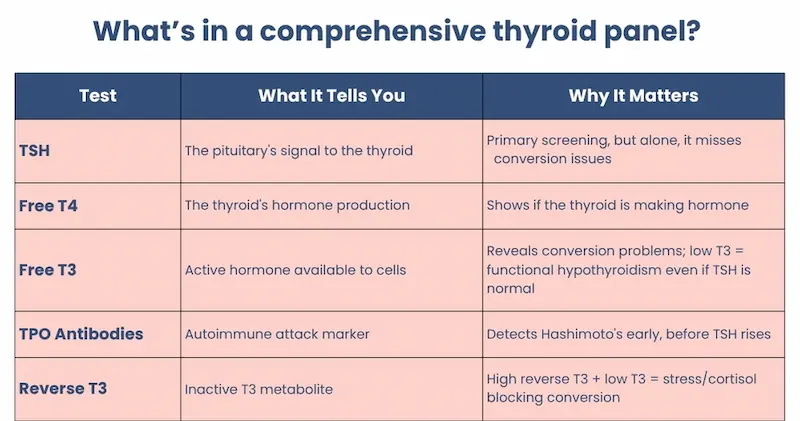
Here's where conventional medicine often drops the ball. Standard thyroid screening typically checks only TSH (Thyroid Stimulating Hormone). But for true thyroidmaxxing, you need the full picture.
The comprehensive thyroid panel should include thyroid stimulating hormone (TSH), free thyroxine (Free T4), free triiodothyronine (Free T3), thyroid peroxidase antibodies (TPO Antibodies), and Reverse T3.
Why Free T3 matters: Someone with normal TSH and Free T4 but low Free T3 is "functionally hypothyroid at the cellular level"—only Free T3 testing reveals this.
For thyroid hormone optimization (not just disease screening), annual complete panels enable "true thyroid optimization, not just adequate screening".
.webp)
Limited offer
20% off your first Thyroid Test
Here's the crucial nuance: thyroidmaxxing works best alongside medical care, not as a replacement for it.
If you have been diagnosed with hypothyroidism, you likely need thyroid hormone replacement medication. Thyroidmaxxing supports this by:
- Optimizing your nutrient status for hormone conversion
- Reducing inflammation and antibodies
- Improving your lifestyle factors that affect hormone use
- Helping you feel better on top of medication
Some individuals benefit from T3-containing medications or combination therapies that directly address both T4 and T3 levels, especially if conversion is impaired.
Thyroidmaxxing is about proactive optimization, not self-diagnosing or avoiding medical care.
Ready to put this into practice? Here's your thyroidmaxxed day:
Morning
- 10 minutes morning sunlight + no blue light screens
- Breakfast with selenium (Brazil nuts, eggs), zinc (pumpkin seeds), iodine (seafood/iodized salt)
- Light walk or gentle yoga
Midday
- Lunch with leafy greens (cooked cruciferous), omega-3s (salmon, walnuts)
- 5-minute breathing break to lower cortisol
- Stay hydrated; eat probiotic- and fiber-rich foods for gut health
Afternoon
- Moderate movement (strength training, walking)
- Vitamin D3 if deficient (common in Hashimoto's)
- Avoid late caffeine (disrupts sleep + cortisol)
Evening
- Dinner with zinc + selenium + iodine, cooked veggies
- Digital sunset 1–2 hours before bed
- Magnesium or herbal tea to wind down
Weekend
- 1–2 full rest days from intense exercise
- Stress-reduction practices (meditation, breathwork, nature)
- Consistent sleep schedule (no "social jet lag")
The maxxing trend can feel superficial—another Instagram filter for your lifestyle. But thyroidmaxxing cuts deeper. It's the realization that your thyroid is the conductor of your metabolic orchestra. You can optimize every individual instrument (skin, sleep, fitness), but if the conductor is off-beat, the symphony sounds off.
The bottom line: When you thyroidmax, everything else works better!
Thyroidmaxxing is about:
- Understanding that thyroid health impacts your looks, energy, mood, weight, cognitive function, and sleep
- Testing comprehensively (TSH + Free T3 + antibodies) (Paloma’s Complete Thyroid Home Test kit evaluates TSH, Free T4, Free T3, and thyroid antibodies, and offers the option to also test Reverse T3 and Vitamin D)
- Addressing nutritional deficiencies and fueling with selenium, iodine, zinc, vitamin D, B12, and iron (Note: Paloma’s Daily Thyroid Care offers a range of thyroid-supporting nutrients in one supplement)
- Balancing stress, exercise, and sleep
- Healing gut health and reducing inflammation
- Working in partnership with—not against—thyroid-savvy health care providers. (Paloma’s team of experts is ready to work with you on your thyroid care.)
Thyroid optimization involves building a customized, integrated plan for your thyroid care that will bring your energy, metabolism, and mood into balance. Many people notice increased energy, better focus, easier weight management, smoother skin, stronger hair, and a more stable mood once their thyroid is optimized.
So, before you buy another retinol serum or download another sleep tracker, ask yourself: have I thyroidmaxxed yet? Because if your thyroid is running on empty, you're trying to drive a Ferrari on empty gas. Fill the tank first—and watch everything else finally click into place.
Thyroidmaxxing isn't magic—it's science-backed optimization. And in a world obsessed with maxxing everything else, isn’t it about time we maxxed the gland that makes all the other maxxing possible?
What is thyroidmaxxing?
It’s a wellness approach focused on optimizing thyroid function to improve energy, metabolism, mood, and overall health.
Why is the thyroid so important?
The thyroid controls metabolism and influences nearly every system in your body, from energy levels to brain function and skin health.
Can you have thyroid problems even with normal lab results?
Yes—many people experience symptoms due to poor T4-to-T3 conversion, which standard tests like TSH alone may miss.
What are common signs of low thyroid function?
Fatigue, weight gain, dry skin, hair thinning, brain fog, feeling cold, low mood, and constipation are all common symptoms.
What nutrients support thyroid health?
Key nutrients include iodine, selenium, zinc, vitamin D, vitamin B12, and iron—all essential for hormone production and conversion.
How does stress affect the thyroid?
Chronic stress raises cortisol, which can block thyroid hormone conversion and make symptoms worse.
Do you need to avoid foods like broccoli or kale?
No—cruciferous vegetables are safe for most people, especially when cooked and consumed as part of a balanced diet.
Can thyroidmaxxing replace medical treatment?
No—it’s meant to complement medical care, not replace it, especially for people with diagnosed thyroid conditions.
.webp)


